【今日语录 】12月12日

许多人问我如何才能成为好的咨询顾问。他们期望我说:要聪明、有逻辑性、能分析等。一部分会期望我说要有团队精神。当然这些条件都是需要的,但它们只能是必要 (necessary) 却不是穷尽 (sufficient) 的原因。最关键的条件其实是责仼心。是对工作负责,定必要在计划内的时空里完成高质量的工作。责任心源自于同理心。更准确的说:对客户的同理心。客户交付了重任给你,你将客户的利益放在首位,自然同理心便会出现,责任感亦随之而来。

【今日语录】12月10日

在高端咨询工作中,最过瘾的阶段是 problem definition。越复杂越不确定越好玩。因这个过程是要考功夫的,需要在貌似浑沌、无棱两可中找出套路来。咨询顾问开始时可能会不知所措、有所恐惧。但只要坚定的抓住重点,回归第一原则,有效利用适当分析框架来分析问题,仔细聆听客户和其他信息来源的输入,团队集体合作,众志成城,你会发觉在某一天某一时刻,你会茅塞顿开。你的 Eureka moment 便已到达!

文章 | 谢祖墀:何谓韧性组织

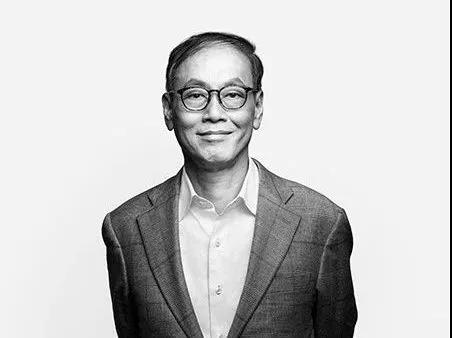
本文是高风咨询CEO谢祖墀博士发表在《今日头条》网站上的文章。谢博士认为,“韧力调节型组织”企业总体较为灵活,能迅速适应外部市场的变化,能始终坚持清晰的经营战略,并围绕它开展业务。它能够围绕客户需求,重新进行自我定义。在他看来,生态和平台是“大组织”韧力的重要来源。即组织的能力判断和建设已从平面、单维朝向立体、多维方面进化,对于如何建立韧性组织的话题上,我们亦需与时俱进。

在快速变化、模棱两可的时代里,企业的韧性日益变得重要。什么是韧性?韧性是如何建立的?

我在博斯公司(Booz & Company)工作的时候开始接触“韧性组织”(Resilient Organization)的概念。当时,我的一位常驻芝加哥办公室资深合伙人加里·尼尔逊(Gary Neilson)提出了组织DNA(Org DNA)的理论。加里和他的团队在对大量企业的组织形态做了详细的研究后发现,企业的原始形态,(亦即“组织DNA”)可归纳为七种,其中三种是健康的、四种是不健康的。而在三种健康的DNA类型中,最好的类型是“韧力调节型”组织(Resilient Organization)。这一内容刊载于2004年夏天的《战略与经营》管理杂志,加里发表的“七种组织DNA”(The Seven Types of Organizational DNA)这篇文章里。按照加里的说法,韧力调节型的组织具有以下特征:

“这种企业非常灵活,能迅速适应外部市场的变化,但同时又能始终坚持清晰的经营战略,并围绕它开展业务。企业具有前瞻性,能经常预测未来的变化,并未雨绸缪地做好准备。它能够吸引积极进取、具有团队精神的人才,不仅为他们提供催人奋进的工作环境,还提供资源并授予他们权力以有效解决各种棘手的问题。”

自从加里·尼尔逊经典之作后,不少其他学者、咨询顾问甚至自媒体人亦在韧性组织的话题上提出了他们的观点。

哈佛商学院教授兰杰·古拉蒂(Ranjay Gulati)在2010年提出了“组织韧性的四个层次”(The Four Levels of Organizational Resilience)。他指出,不同组织的韧性可以从低至高分成四个层次。第四层韧性组织可定义为,“能够围绕客户需求,整合内部和外部伙伴的资源,并能够提出解决方案,而非简单的产品和服务,甚至能够根据客户需求重新进行自我定义”。古拉蒂以苹果公司(Apple)作为第四层韧性组织的代表案例。为了满足用户对直观、简洁的操作、以及丰富应用的需求,苹果与美国电话电报公司(AT&T)合作,在iPhone上开发了可视化语音邮件,简化用户注册流程;并与第三方公司合作开发了超过十万款应用。

在今年8月份《战略与经营》杂志上的一篇名为《如何打造颠覆性战略飞轮》(“How to Build Disruptive Strategic Flywheels”)的文章里,桑德尔·苏布拉曼尼亚和阿南德·饶(Sundar Subramanian and Anand Rao)提出了韧性组织所需的三种特性:

一是不断感知和适应市场的变化,并通过清晰的思考模型,不断进行尝试、甚至作出赌注,让企业能够应对不同策略决定下可能出现的场景和可期待的结果;二是发展强化的因果反馈机制,并不断根据该框架测试、放弃或修改想法。在颠覆性的市场趋势出现时,这种机制能够提供巨大的优势;三是关注WTP(Way to Play,即“打法”),通过一套能力驱动的战略,扩展与其相关的能力体系,并根据动态反馈的需求来扩展和完善业务模型。”

苏布拉曼尼亚和饶认为,奈飞(Netflix)和亚马逊(Amazon)是具有强大韧性的组织的佼佼者。奈飞打造了三个良性循环系统作为它的颠覆性战略飞轮:一是定制化循环,通过AI带来更多观众、更多观看、更多信息,从而带来更好的定制化服务;二是决策频率循环,通过订阅模型带来每分钟更多的用户决策数,从而带来更多数据与更好的定制化服务;三是内容生产循环,通过更好地理解每位观众的偏好,成为内容生产者眼中更好的合作对象。

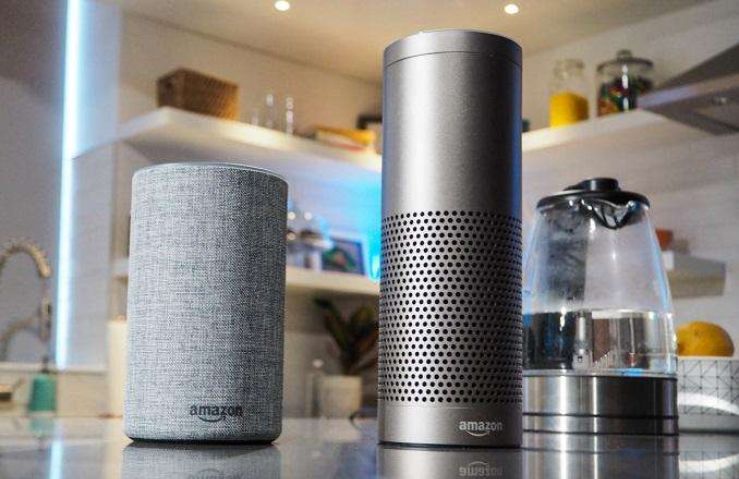
亚马逊则是另一个通过建立深层能力打造战略飞轮的绝佳案例:它通过挖掘数据以了解用户需求和行为模式,并在此基础上扩展了经营范围,从线上内容流到云服务,以及IoT中的一系列硬件产品。尤其是亚马逊通过旗下智能语音音箱Alexa打造了第二个因果反馈闭环,即通过Alexa适配更多硬件设备,提高销量,从而吸引更多合作伙伴。

自从博斯公司在韧性组织的突破性研究之后,在过去15年间,有不少其他人提出了他们在这方面的理论和观察。最近数年,我亦觉察到国内亦有不少观察者提出了他们在这方面的观点。

当然,一个企业的成长和演变取决于许多不同的因素。领导者的风格和能力往往是决定性的原因。

在我从业战略咨询的生涯中,最为难忘的一段话是2004年担当时任《战略与经营》杂志的主编,我的旧同事,兰德尔·罗森伯格(Randall Rothenberg)以“改变与韧性”为题说的以下这段话:

“复杂性和不确定性是挑战。战略转型是道路。韧性是目标。尽管商业领导者在认识到战略转型是一个持续的旅程后会有些不安,但为了达到韧性这一超越物理境界的目标——亦即获得不断适应非连续变化的能力(the ability to adapt continually to discontinuous change)——让领导者、员工及股东都在这个旅程中深深地觉得很有价值。”

“在不断适应非连续变化。”——这确实精准地描述了当代企业必须具备的能力。这段话是罗森伯格在“前移动互联网时代”所说的,当时还没有脸书、推特、领英等公司,谷歌、亚马逊、阿里、腾讯等也还是规模很小的公司,但罗森伯格已经将企业转型和韧性的精髓用几句话便清晰地提了出来,很了不起。

那时亦是“前生态系统”、“前平台”时代,对于组织韧性的分析和研究主要还是从单一企业角度来看的。今天我们已经习惯了生态、平台等组织概念。在我看来,生态和平台是“大组织”韧力的重要来源。换句话说,组织的能力判断和建设已从平面、单维朝向立体、多维方面进化,对于如何建立韧性组织的话题上,我们亦需与时俱进。

【今日语录】12月03日

咨询是一个学习的好地方。你可以遇上很多不同的客户,从他们身上观察到不同公司和个人的情况。有管理良好的、亦有管理不善的。有扁平开放文化的、亦有官僚封闭的。有卓越领导能力的、亦有不知所措的老板。林林总总,看多了,你便能知道企业世界中多样性的存在。久而久之,你便能更有能力辨别出什么是真、什么是忽悠,什么是可持续的、什么会是昙花一现;谁是真正有料的、谁是南郭先生。

【今日语录】11月25日

许多人以为 “无限的游戏” 代表将业务边界无限引伸,亦即无序的多元化。其实 “有限的游戏” 是指在特定的时空里,界定好的游戏规则下进行竞争,首要的目标是要打败对手。”无限的游戏” 的时空却可特定或不特定、游戏规则可特定亦可不特定、边界可特定亦可不特定。目的不一定是要打败对手,更是要追求更高的理想,超越简单物理的目标。懂得怎样玩无限的游戏的企业领导者是真正的智者、艺术家。

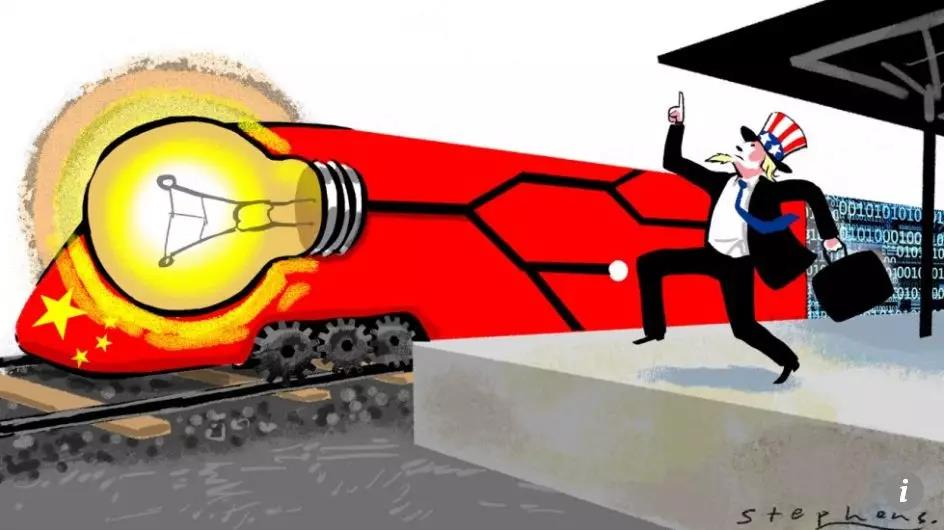
SCMP | China and the US on Technology: Racing or Dancing?

Originally published in South China Morning Post with title, “Why the US Should Not Try to Thwart China’s Blockchain and Digital Currency Ambitions.” All rights reserved.

In the October 23 Congress hearing on Facebook’s digital currency Libra, Mark Zuckerberg, the founder and CEO of the social media giant, warned Washington that blocking Libra would give way to China’s growing technological supremacy, which would eventually jeopardise America’s democratic values.

Zuckerberg’s remarks, though somewhat apocalyptic, fit into the rhetorical framework of the battle for technological leadership between the world’s two largest economies, the United States and China. Identified by the Trump administration as a revisionist power and strategic threat, China has been at the forefront of tech-enabled innovations, such as digital currency, since 2014.

During a meeting last month, President Xi Jinping endorsed blockchain as the nation’s core technology. China’s plan to launch a sovereign digital currency is also triggering new appetites for start-ups, traders, investors and researchers.

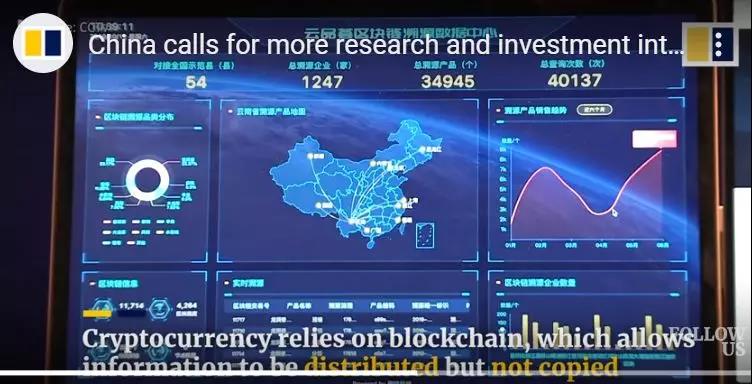
As the underlying technology of digital currencies such as bitcoin and Libra, blockchain is a distributed, decentralised and public digital ledger system which allows information and data to be immutably stored and transparent to all. The technology promises unparalleled efficiency, security and transparency and carries profound implications in a variety of scenarios from finance to manufacturing and energy.

In the finance sector, for example, blockchain can help traditional banks reduce operation costs, allowing individuals to perform transactions in a secure environment. The technology is also set to be involved in the development of smart, digitally connected cities. Blockchain-enabled parking platforms, for instance, would provide real-time information on parking spaces for drivers to reserve spaces, thus reducing congestion and on-street parking.

Source: SCMP

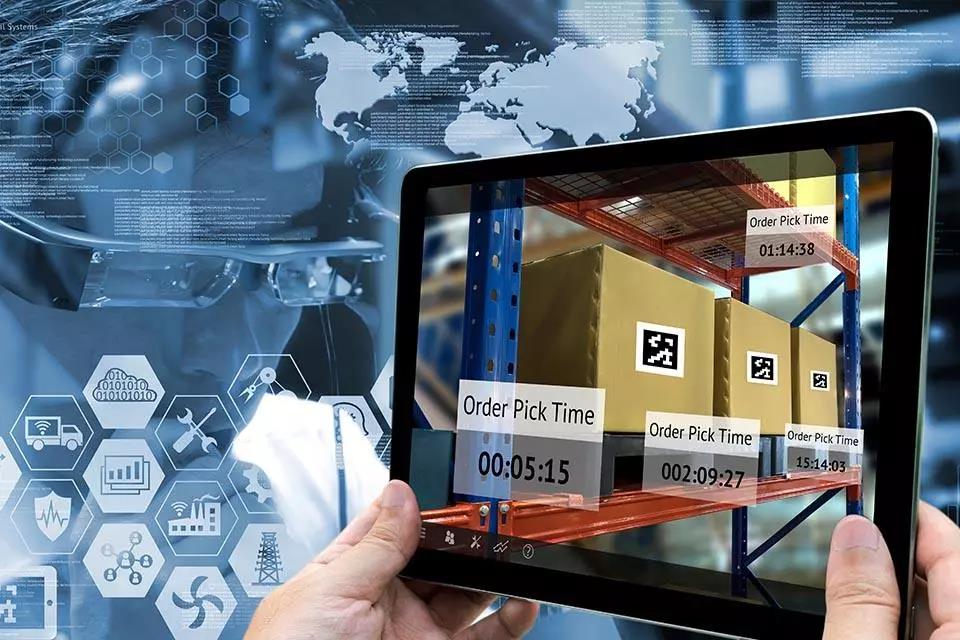
In the private sectors, demand for blockchain solutions for supply chain and logistics is quickly expanding. In a traditional supply chain, payments can take up to days, and contractual agreements involve different layers of third-party costs; the increasing globalisation and complexity of trade makes it almost impossible to trace products back to the source, compromising supply-chain integrity.

According to PwC, 40 per cent of food companies find food fraud difficult to detect with current methods, and 39 per cent believe their products are easy to counterfeit. Blockchain could be the answer to such supply-chain frictions.

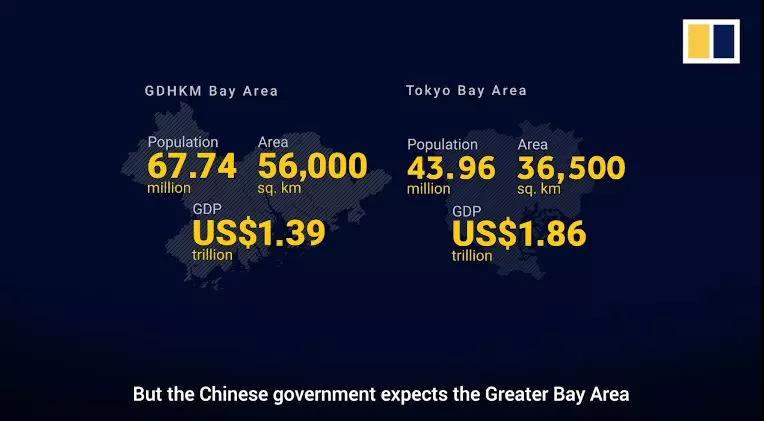
China’s three-layered development model has lent resilience to its development. The central government sets the overarching strategy of developing a technologically advanced, innovative society while thriving entrepreneurial, private-sector companies drive business innovations, with local governments in the middle as liaisons. Guangzhou’s Huangpu Development district authorities, for instance, recently published regulations on blockchain use to cater for a major increase in applications, while a blockchain platform was launched last year in Shenzhen to serve the Guangdong-Hong Kong-Macau Greater Bay Area.

Source: SCMP

The US, meanwhile, is unsettled by China’s rapid expansion into the frontier technologies. President Donald Trump is set to help the US solidify, or regain, its position as a global innovation hub, despite his complicated love-hate relationship with the tech industry. In February, Trump signed an executive order to maintain America’s leadership in artificial intelligence. Last month, the White House revived the President’s Council of Advisors on Science and Technology, a group of experts who work to inform public policy on science, technology, education and homeland security.

The private sector is an important source of innovation in the US, as epitomised by Google’s milestone achievement in quantum computing – a technology that will produce a strong symbiosis with artificial intelligence and cryptography.

The de facto punchline of Trump’s tech move, though, was to cut Chinese companies off America’s technology value chain, especially the core scientific know-how. Over the course of the year, Washington repeatedly put pressure on Chinese telecom equipment and smartphone maker Huawei and blacklisted it, citing the company’s alleged coziness with the Chinese government, while reining back China’s dominance in 5G technology. Another 28 Chinese companies were later added to the blacklist, including the supercomputer maker Sugon along with three of its microchip subsidiaries.

Given the intensity and speed at which the rivalry is escalating, Zuckerberg’s warning is not totally unjustified. If China’s digital currency is adopted in more countries, America’s oversight and regulation of the global financial system will become challenging. This gap will only increase as the two countries diverge further into separate trajectories of the technology.

Hostile competition is likely to result in a zero-sum game. Continued blacklisting will do more harm than good, wreaking havoc on jobs and disrupting the global technology supply chain. As China develops applications of blockchain system, it should adopt best practices and international benchmarks, and establish a clearer, full-bodied legislative framework.

Source: SCMP

Though differences exist, and will continue to exist, the world will benefit if the two leading economic powers can seek commonalities, rebuild trust, cooperate on technological initiatives, and establish global governance and a code of conduct on blockchain technology as well as its applications. After all, increasingly, the issues facing humanity transcend national borders and require big powers to work together.

On the business level, such collaborations are already happening. For instance, IBM, Walmart, Chinese retailer JD.com and Tsinghua University launched a project in December 2017 to develop food safety solutions using IBM’s blockchain platform. The project also involved major food suppliers such as Dole and Kroger, benefiting offline and online consumers across the globe.

On a global level, blockchain’s potential trade-related applications could transform various aspects of international trade, including finance, customs and certification processes, logistics, and intellectual property. But for the technology to empower global growth, countries would have to cooperate with one another.

【今日语录】 11月19日

真正优秀的咨询顾问是社会中精英的精英,是 1%。这1%代表能力、视野、学问和态度。但他却属于社会的99% 的。优秀顾问不能 “离地”。必须与社会融合,通过工作特别是思想领导力和对客户的亲和力,为 99% 增值。

【今日语录】11月6日

出色的战略咨询顾问一定是思想领导者 (thought leaders)。 关键词是思想。思想是如何建立起来的?它是透过长时间对周围的事物作出观察、分析而出来的,没有任何捷径。通过第一原则的分析,了解事物的本质,而不人云亦云。同时透过适当的分析框架和架构将众多的信息点系统性地整合到面上,甚至立体或超立体。本来貌似无序的数据突然好像变成有序了。如果你能持续地做到这样,恭喜你!That’s thought leadership!

【今日语录】11月1日

高端咨询除了是一个学习如何建立专业态度和精神的地方之外,它亦是给予个人在能力方面进行修练的地方。不单只是知识而已,更重要是培养如何在高度不确定、快速变化、模棱两可的情况中能够解决难题。这种能力只是可意味,而不能写在任何天书里的。但当你体会到你本来面向无名的恐惧感有一天你发觉已经具有足够信心可以克服了,你已经在高端咨询工作里取得了金矿。你已是富者。

SCMP | Foreign Businesses Need to Better Understand China

The NBA and Apple Cases Show Foreign Businesses Need to Better Understand China, and Its Boundaries

By Edward Tse
October 21, 2019

Original published by South China Morning Post titled The NBA and Apple Cases Show Foreign Businesses Need to Better Understand China, and Its Boundaries on October 21, 2019. All rights reserved.

Gao Feng Advisory’s CEO Dr. Edward Tse’s latest op-ed was published on SCMP. In this article, Dr. Tse pointed out all countries have their own “boundary of sensitivities”, and foreign companies doing business should be mindful of the host country’s boundary. This applies to the recent cases of the NBA and Apple in China and will also apply to Chinese companies as they expand overseas.

The months-long protests in Hong Kong have not only attracted international attention, but have also begun to involve major foreign powerhouses like the NBA and Apple. The fallout caused by Houston Rockets general manager Daryl Morey’s tweet led Tencent and China’s predominant broadcaster CCTV to suspend the airing of NBA games, and Chinese companies such as Ctrip.com (China’s major travel booking platform) to terminate NBA sponsorship.

Meanwhile, Apple’s approval of an app which allows users to track protest activities received an immense backlash from the Chinese government and consumers. Apple has since removed it and released a statement that the app “violate[d] our guidelines and local laws”.

Some critics were quick to jump to the conclusion that China is victimising foreign companies and preventing freedom of expression. However, as in every country, China has certain boundaries of sensitivity.

Issues such as racial discrimination are highly sensitive in the US. In 2014, Donald Sterling (the former LA Clippers owner) was fined US$2.5 million and banned from the NBA for life because of his racist remarks. The NBA reacted to the unacceptability of these comments in US society, even with freedom of expression considered.

It is common sense that companies doing business in a foreign country need to observe and understand the host country’s boundaries of sensitivity and understand what is, and is not, acceptable. Not doing so is generally the result of ignorance, incompetence, arrogance or a combination of these things.

In 2012, many pundits were quick to say that Japanese companies had no chance of succeeding in China during a period of anti-Japanese sentiment (regarding a territorial dispute over the Diaoyu/Senkaku Islands). During this time, some Toyota and Honda dealerships in China were burnt down and their sales in China plunged.

Today, Japanese carmakers are actually doing well. Japanese brands’ market share in China has steadily increased, and today is the second-largest in terms of foreign passenger car brands (measured by country where the companies’ headquarters are based).

I agree with the assertion in The Economist’s June 28, 2018 Schumpeter column that “[t]he sense of victimhood is over the top; American firms have done reasonably well in China”. The NBA has been very popular and was on the rise in China for over a decade before Morey’s tweet.

Were the Chinese people’s reactions appropriate? It depends on your point of view, of course. The negative impact for the NBA in China is likely to be temporary. After all, a company’s success is a function of its competitive advantages, especially its products and brand, so the NBA can recover.

Despite the recent controversy, passionate Chinese fans turned out for a preseason NBA basketball game between the Brooklyn Nets and Los Angeles Lakers at the Mercedes Benz Arena in Shanghai on October 10. Photo: AP

There are already signs of this, as Tencent lifted its temporary ban on live-streamed NBA games, and recently streamed two NBA games in China. Of course, the NBA and its stakeholders should continue to work on damage control.

Apple remains a strong brand in China, even while facing competition from local players like Huawei and others. The uproar regarding the Hong Kong app was simply China’s view on how a sensitive boundary had been crossed (by design or not, the app helped Hong Kong protesters organise around the city).

Apple’s response was swift and, from the Chinese perspective, appropriate. On its own, this episode will have a limited impact on Apple’s position in China.

These two episodes do not represent the institutional barriers causing difficulties for foreign companies in China. Beijing continues to open up its market, sector by sector, for foreign companies, especially since the US-China trade war started.

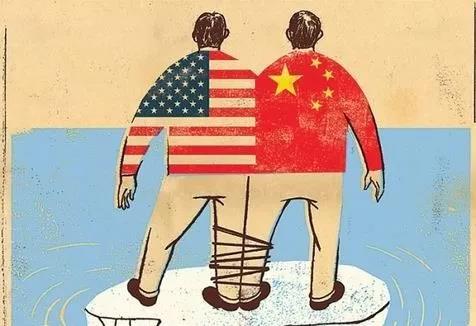
However, foreign companies’ success in China increasingly requires a recognition that the world is diverging into “two systems” – one led by the US; another by China. Multinationals are finding that they need to develop different strategies for each system. Striking a balance will be critical for global operations and success.

In the auto industry, for instance, global companies such as Toyota and BMW need to create strategies to meet the dynamics of these very different markets. Toyota has developed completely different and separate ecosystems, recognising the need to meet China’s unique communications, IT and software requirements.

This includes building different “mobility as a service”, technological (such as autonomous vehicle technology) and business model solutions. For example, Toyota partners with Monet (a mobility-as-a-service joint venture between Japanese carmakers and the tech investment firm Softbank) and Uber in Western markets, and with Guangzhou Automobile Group and Didi Chuxing in China.

Foreign companies in China need to step up their game if they want to capture the full potential it offers. Increasingly it’s not just about the China market but also the nation’s impact on the rest of the world, especially developing markets, which are increasingly evolving in a fashion similar to China.

They need to understand China much better. While this may sound like a broken record, significant gaps remain, partly due to the context of China, which continues to evolve and is in many aspects proceeding into unknown territory.

Foreign companies need to adjust their products, services and business models to the Chinese context. To this end, they should seek to better appreciate and incorporate China’s quickly developing innovations, and integrate them into the core of what they do in China.

At the same time, they need to be extremely perceptive of where China’s boundaries lie and respect them, while deploying measures to anticipate and manage risks.

About the author
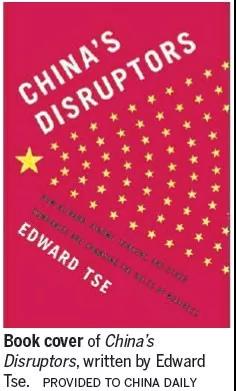
Dr. Edward Tse is founder and CEO of Gao Feng Advisory Company, and a founding Governor of Hong Kong Institution for International Finance. One of the pioneers in China’s management consulting industry, he built and ran the Greater China operations of two leading international management consulting firms for a period of 20 years. He has consulted to hundreds of companies, investors, start-ups, and public-sector organizations (both headquartered in and outside of China) on all critical aspects of business in China and China for the world. He also consulted to the Chinese government on strategies, state-owned enterprise reform and Chinese companies going overseas, as well as to the World Bank and the Asian Development Bank. He is the author of several hundred articles and four books including both award-winning The China Strategy (2010) and China’s Disruptors (2015) (Chinese version of 《创业家精神》).You may visit Dr. Tse’s blog to explore more of his intellectual capital: www.edwardtseblog.com

【今日语录】10月31日

在高端咨询领域里,没有人从一开始就会知道问题的答案是什么。解决难题是一个过程,需要所有相关人士参与,包括咨询团队各员和客户。突破的想法往往都透过讨论而产生的结果。每个参与项目的团队成员都有责任和义务积极参于讨论,为寻找事实真相作出贡献。It’s our job!


重温《边缘上竞争》- 组织篇

本文是高风咨询CEO谢祖墀博士发表在《亚布力观点》10月刊上的观点文章。谢博士重温了《边缘上竞争》在组织方面的思考。他认为在快速变化和复杂的经营环境中,领导者在带领组织开发新产品时,关键是要专注于不断发生的外部环境的变化。这可以通过在不同力量之间不断取得动态平衡的组织结构,广泛的沟通和对未来产品的低成本实验来进一步实现。

2019 年8 月21 日,我在《今日头条》发布的文章《重温< 边缘上竞争>》中提到了《边缘上竞争》(Competing on the Edge)这本书(注:在内地亦被译为《边缘竞争》,由华章出版社于2001 年发行)。此书由美国斯坦福大学一位女性学者肖纳• 布朗(Shona L. Brown)和她的博士论文导师凯思琳•艾森哈特(Kathleen M. Eisenhardt)在1998 年所合著。其理论为管理界内首次提出的较完整的动态战略理论,有划时代的意义。在这篇文章里,我想与大家重温《边缘上竞争》在组织方面的思考。布朗的理论在企业组织型态方面有三点主导思想:

一,优秀的组织领导者能使用最小规模组织结构,并通过广泛的沟通来提供员工明确的角色定位和清晰的工作优先次序。

二,优秀的组织领导者能有效地选择运用低成本的方法去尝试和测试新的想法,以便为将来的新项目开拓新路径。

三,优秀的组织领导者能成功地带领组织团队从一个项目过渡到另一个项目。

在第一点中,布朗指出她在写书之前的研究结论:宽松灵活的工作描述、不制定组织结构图、较少的工作规则规范、组织内部高质量和高频的沟通均可以促进组织的创新。她的研究表明:成功的组织需要在明确的工作角色定位、清晰的工作优先次序和良好沟通水平这三者之间取得平衡。这有助于组织领导者采用较为全面的方法,而不只是让团队成员们独立专注于自己所负责的领域。领导者的另一个关键成功要素是安排工作的优先次序。通过进行市场研究和对未来的预判,使项目与可确定和预判的经济效益保持一致——只有那些符合标准的项目才会继续进行。之后他们将相应地分配资源。这能够帮助团队成员维持合理的工作进度。团队成员不仅在项目内被鼓励进行交流,在不同项目间也进行交流。这将使团队成员们在不同的顶目中彼此交流,并基于已经完成的工作进行讨论。员工也可通过正式或非正式的渠道进一步沟通,例如电话会议、电子邮件(注:例如今天的微信、钉钉等),甚至是集体午餐等。这些沟通方式可以产生积极的绩效反馈,从而提高员工的积极性。这可以帮助管理人员集中精力在外部环境的变化上,并适应环境的快速变化。

在第二点中,公司需专注于他们当下所拥有的知识,这意味着他们可以采取过往的经验。此外,展望和预判未来并为之做好充分的准备也十分重要。布朗指出,成功的领导者会在按时交付产品(注:这里的“产品”是广义的含义,包括传统意义的产品,服务模式及商业模式)与投资低成本创意继而测试其可行性两者之间取得平衡。通过专注于实验产品,与合作伙伴进行频繁地沟通来实现这一点。在原有产品中添加少量创新元素来拓展新产品,如果新产品成功被客户使用,便会将这些实验成功的产品添加到最终产品中,这能有效地加快产品创新和更新迭代的周期。他们创办战略联盟(注:用今天的术语来说即“生态系统”),为未来创造更好的愿景,因为这可以预测市场趋势,并提供强大的未来合作伙伴关系。成功的企业往往还会利用顶尖的人才来研究不同领域,并与高层领导讨论其发现,这将有助于创建对未来的分析及预测。同时,低成本的实验提供了重要的学习经历。长远来看,每次学习经历都可以帮助企业预测未来的市场需求,并帮助组织领导者在快速变化的市场上变得更加主动而不是被动。

在最后一点中,布朗提到成功的组织领导者在当前项目和未来项目之间实现了无缝衔接和过渡,这是通过预测项目间的时间间隔和精心设计转变过程来完成的。成功的企业能够预判产品更新及其所需的周期。他们会在周期前就拟好项目间的过渡计划。一旦公司想要增加额外产品,原计划的周期就会被打破,资源将会被消耗,而领导者则会面临失败。当没有计划好并以随意的方式过渡时,组织将只剩下很少的成员和资源,如若加之缺乏资源规划,产品将最终宣告失败。在项目间通过特定的时间表,计划的过渡来创建节奏是至关重要的。

总结以上三点,在快速变化和复杂的经营环境中,领导者在带领组织开发新产品时,关键是要专注于不断发生的外部环境的变化。这可以通过在不同力量之间不断取得动态平衡的组织结构,广泛的沟通和对未来产品的低成本实验来进一步实现。

虽然《边缘上竞争》这本书是布朗女士20年前的著作,但我们可以看到她划时代的观念。无论在战略方面亦或企业组织思想方面,她都看到了整个商业社会发展的趋势。这是非常难得的,特别是当时还是“前互联网时代”。她20 年前提出这些主导思想,到了今天还未完全过时,仍然能成为现今企业发展或组织建造时考虑的重要思想依据。当然,今天的社会因为科技的高速发展,特别是移动互联网的出现,很多地方发生了根本性的重大变化,无论在战略方面还是在组织设计方面都需要很多新的调整;但我们已经隐约地看到“小微裂变” 、“试错”、“迭代” 、“MVP”(Minimum Viable Product,最小可用产品)、“灰度”、“平台” 、“生态系统”、“韧性组织”等今天好多人琅琅上口的管理术语的浮现。

在企业战略和组织发展理论的历史洪流中,能成为殿堂级改变人们观念的理论其实不多,大概是每十年或之上才会出现一次。在我看来,《边缘上竞争》是其中之一。发酵在人类进入一个新时代(互联网时代)拐点之前(不是之后),实为难得。在斯坦福大学取得博士学位之后,布朗到了麦肯锡工作,之后到了谷歌,协助谷歌制定它的战略、组织原则和执行,是谷歌成功的奠基者之一。其实大家仔细地观察一下,不单是谷歌,亚马逊、阿里、腾讯、华为等今天我们视为极为成功的企业,甚至美团点评、字节跳动等新锐企业身上,也可以看到布朗理论的痕迹。从这些现象来说,20 年前的布朗女士所提出的思想观点是非常到位的,也非常值得大家重温和深入研究。
注:本文图片均来自网络

本文发表于《亚布力观点》(2019年10月刊)并保留所有权利

作者简介
谢祖墀 (Dr. Edward Tse) 是高风咨询公司的创始人兼CEO。同时他也是香港国际金融学会创会理事。谢博士是中国管理咨询行业最早的从业者之一,在过去20年中,他曾带领两大国际管理咨询公司在大中华区的业务。他为包括国内外的数百家企业提供过咨询服务,涉及在华商业的各个层面,以及中国在世界的角色。他曾为中国政府提供过战略、国有企业改革以及中国企业走出国门的建议。他已撰写数百篇文章以及四本书籍,其中包括屡获殊荣的《中国战略》(The China Strategy,2010年)和《创业家精神》(China’s Disruptors,2015年)。

如果想了解更多前沿资讯,请访问谢祖墀博士的博客(www.edwardtseblog.com)。


SCMP | Under ‘One World, Two Systems’, Companies Must Evolve

Under ‘One World, Two Systems’, US Companies that Stay in China Must Evolve

By Edward Tse and Bill Russo
27 Sep, 2019

Original published by South China Morning Post titled Under ‘One World, Two Systems’, US Companies that Stay in China Must Evolve on September 27, 2019. All rights reserved.

More US companies are staying in China than are deciding to leave, despite Donald Trump’s trade war rhetoric. But there is an increasing need to devise different strategies, as China’s market conditions become more sophisticated and unique

In a recent business report by the American Chamber of Commerce in Shanghai, 77 per cent of the surveyed companies reported that their China operations are profitable. Around 60 per cent are optimistic about the five-year business outlook and nearly half are increasing investment in 2019.

The findings were consistent with those of another report, by the US-China Business Council in August, suggesting that 87 per cent of the US companies operating in China do not want to leave.

Both are slaps in the face for US President Donald Trump, who earlier called for American companies to leave China and to return to the US. Very few, if any, have followed.

In July, 100 academics and policy advisers around the US wrote an open letter to Trump, advising that Beijing is neither an economic nor national security threat that must be confronted in every sphere.

US animosity towards China will eventually damage its own reputation, as well as the economic interests of all nations. There can be no winner in a zero-sum game.

The above-mentioned survey results and reactions are consistent with our first-hand experience of consulting for the senior management of many US companies in China.

As Trump’s trade war drags on, while some foreign companies have chosen to leave China – usually those in labour- or cost-intensive sectors such as shoe and apparel manufacturing – most have chosen to stay, simply because of the size of the China market or the high degree of integration of their supply chain with Chinese suppliers and manufacturers, or both. Paradoxically, after Trump’s plea, US retailer Costco opened its first store in Shanghai.

Also, electric vehicle maker Tesla is set to start production by the end of this year in its wholly owned manufacturing plant in Shanghai.

Among those that have chosen to stay, there is an increasing need to devise different strategies for China and the US. As China’s operating environment evolves, its market conditions are becoming more sophisticated and unique. For example, in the tech sector, some aspects of the two countries are diverging and companies will need to consciously adapt.

Terry Gou, founder of Apple supplier Foxconn, expects a divide in 5G technology between China and the US, because of underlying differences in strategic positioning, development and market needs. As fifth-generation cellular networks and their commercial applications evolve, the divergence will only increase.

On a broader scale but in the same vein, the G2 – the US and China – will replace the G20 in a new leadership framework: “one world, two systems”.

China’s three-layered development model is the key to the country’s resilience. At the top, the central government sets the overarching strategy for developing a technologically advanced, innovative society. At the bottom, the thriving entrepreneurial, private-sector companies are driving China’s business innovations.

In the middle, local governments connect the central government and businesses by building infrastructure (not only the physical kind but also, increasingly, smart infrastructure) and by being a funding source and incubator for start-ups. The smart infrastructure, for instance, is empowering the automotive industry as vehicles become more intelligent, connected and ultimately autonomous.

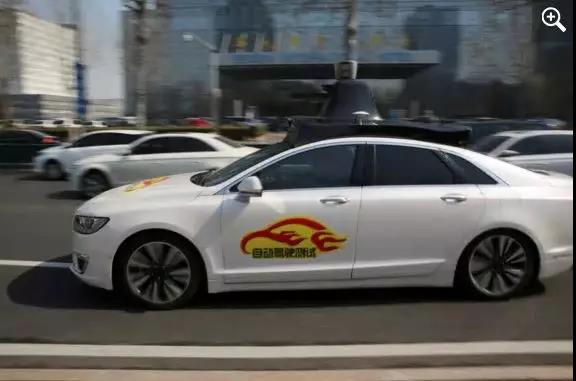
An integrated smart city allows real-time governance of a city’s major functions. Local governments are raising the stakes: for example, Hangzhou is managing traffic congestion with the City Brain and Wuxi is establishing a pilot zone for autonomous driving.

Some companies are already aware of the importance of a strategy of “one world, two systems”. For example, Toyota has realised that striking a fine balance between China and the US will be critical for its global operations. Meanwhile, it faces the delicate task of creating a strategy for meeting the industry and technological specifications unique to China.

This trend began to emerge even before the trade war began. China is evolving into a leader of innovation with new disruptive technologies such as artificial intelligence, the internet of things and blockchain, and is moving ahead of the US to build the world’s biggest 5G networks.

Businesses – in particular, the entrepreneurs working in concert with governments, both local and central – will take China through new paths onto new platforms.

As a result, the industry structure, competitive conduct and financial performance for all sectors in China will evolve in their own ways. Companies, no matter whether headquartered inside or outside China, should adjust their strategies going forward.

US companies that choose to stay in China need to be much more sophisticated. Copying and pasting business models from the US to China won’t necessarily work any more. Local innovation will be critical and, in many cases, US companies will need to join with local companies and governments.

While differences exist, the world will benefit from cooperation between the world’s two largest economies. Both Andrew Ng, the former leader of the AI teams at Baidu and Google Brain, and Jack Ma, founder of Alibaba, have suggested there is plenty of room for technology partnerships between China and the US.

Huawei founder Ren Zhengfei has said the company is open to selling 5G technology to US companies to create competition and a more unified global technological environment. Companies so far only focus on beating their competition, and the idea of creating competition and sharing advantages would be a breakthrough, if implemented.

There is more room for the US and China to collaborate than fight in the face of global challenges, many of which will transcend national borders.

About the authors

Dr. Edward Tse is founder and CEO of Gao Feng Advisory Company, and a founding Governor of Hong Kong Institution for International Finance. One of the pioneers in China’s management consulting industry, he built and ran the Greater China operations of two leading international management consulting firms for a period of 20 years. He has consulted to hundreds of companies, investors, start-ups, and public-sector organizations (both headquartered in and outside of China) on all critical aspects of business in China and China for the world. He also consulted to the Chinese government on strategies, state-owned enterprise reform and Chinese companies going overseas, as well as to the World Bank and the Asian Development Bank. He is the author of several hundred articles and four books including both award-winning The China Strategy (2010) and China’s Disruptors (2015) (Chinese version of 《创业家精神》).

Bill Russo is Managing Director of Gao Feng Advisory Company, he is also Founder and CEO of Automobility Ltd.

【Quote of Today】September 26th

,


From fringe to core and from core to fringe. A simple but powerful concept that was built on the Multiple Jumping strategy framework. We introduced this concept in 2014. New innovative ideas often begin at the fringe of a company’s business. When it grows, it often would move into the core of the company and become the mainstream. In some cases, companies would reinvent its original core business to make it great again. At some other times, however, the importance of the original core will diminish and eventually become a fringe business. This can be an ongoing cycle that goes back and forth for many times. And therefore at heart it’s dynamic strategy with duality as its nature.

谢祖墀:如何应对“无人区”

游戏的边界是在机会与能力之间的比较和抉择。新的机会往往以曲线形式出现,而能力也不只是过去或今天的能力,它应该是企业在极小的时空里能够通过自身和生态体系打造的综合能力

在上世纪90年代初期回国之后,我就发现一个非常独特的现象:当外资跨国企业聘请我去帮他们研究如何进入中国市场之际,不少中国的企业,特别是民营企业,却不断来问我究竟如何能够学习欧美企业的经营管理之道。成功的欧美企业是如何成功的?为什么?中国企业家们不断询问他们如何能够学习到外资跨国企业成功的秘诀。他们往往会提出希望学习的对象。在科技领域,摩托罗拉,诺基亚往往是对标的对象。在快消领域是宝洁、联合利华或可口可乐是对标的对象。在电信方面是思科、爱立信或北电是对标的对象。对标(benchmarking)是许多中国企业要求我们替他们做的工作。

这段时期一直持续到了2000年代初期,甚至到中期还有一部分继续存在。许多人说中国企业喜欢抄袭,是copycat,但我觉得至少最优秀的企业家并非是抄袭,他们更多是在观察和学习,并从中吸收教训或精华。在这点上,反而在众多我的跨国客户中,包括大型企业总部的CEO,并不常见。可能他们以为自己已经很有见识了,不用再去学习,特别在诸如中国这样的“发展中国家市场”(emerging countries market),根本没有什么值得去学。

但从踏入移动互联网时代(大约2007年开始),中国企业特别是互联网企业,在创新方面经历了史无前例的高速发展,创造了不少非常成功的以创新为主的企业。这些企业不少在最开始的时候是以模仿美国某些商业模式为起点的,但它们往往在短时期内就会演变出新的独特的商业模式。快速和灵活的迭代变成了这一代企业的主要特性。与此同时,他们亦逐渐发现在过去他们还可以对标其他(特别是西方的)企业,但今天他们已经进入了全新的境界,往往是以前无人到达过的地方,亦可以说是已经到达一个“无人区”。

这种现象不只存在于互联网企业中,不少“传统企业”亦面临同样的窘境。传统企业同样面对科技的崛起、消费者需求的变化,创新的必然性要求它们并需要进行改革、变化。他们逐渐亦发觉已经没有了什么“对标”企业可言。到了无人区,该怎么办?


最近我在YouTube看了软银主席孙正义的一个演讲,他的主题是“投资与未来”。他列举了许多例子,从历史的角度说明了人类社会巨大的发展往往是基于某段时间技术的突破。他以汽车行业为例,在1900年之后的13年间,汽车的普及以指数式增加,是因为亨利·福特(Henry Ford)发明了标准的汽车制造工序。

孙正义同时指出,从最早的1995年到2018年,互联网网络的流量增加了100万倍,而在这23年来,全球互联网公司的市场价值(市值)也完全成比例的同等暴增。这足以证明,过去这二三十年来,互联网是最大的投资趋势和发展方向。今天,2019年全球市值排名前十的的公司中有七家是互联网公司:微软、亚马逊、苹果、谷歌、脸书、阿里巴巴、腾讯。孙正义预测30年后,世界市值排名前十大的公司里,一定有大量的人工智能(AI)公司。未来将会是人工智能的未来。处理器的运算能力、记忆体的储存能力、互联网的传输能力,在这30年来,都成长了一百万倍,再过30年,将会再成长一百多万倍。也就是说再过30年,AI将比现在再聪明一百万倍。AI最强的能力其实是预测,将AI用在预测领域,前景非常好,AI就是未来精准预测重要的工具。

而在机器人的应用方面,孙正义指出机器人的数量不止会增长及其中的 AI应用也会随之大幅增长,机器人并不一定就长得像个“机器人”,它可以以不同的形态为人类提供全方位的服务。孙正义提出未来你去麦当劳,都将是机器人点餐,而且这些机器人都是高度智能的,他们会对你的行为进行精准预测,当你走进这家店时,他可以使用“大数据”分析出你需要什么。

另一个趋势会是物联网(IoT,Internet of Things)。在未来世界,一切东西都是IoT,都是彼此相互连通、相互关联的,处理效率将会更高、更快速。在未来,不止是人和物品的沟通,物品和物品间也会相互沟通。据孙正义预测,物联网市场的规模将在2035年比现在大1亿倍。

《人类简史》的作者、著名历史学家赫拉利 (Yual Noah Harari) 指出影响人类未来发展的两大趋势是AI和生物科技。我们将会进入自从智人出现之后首次这种物种在生理上因科技而有所改变,即物种的变异。人类不只在寿命上有所延伸,在基本能力上亦会蜕变。

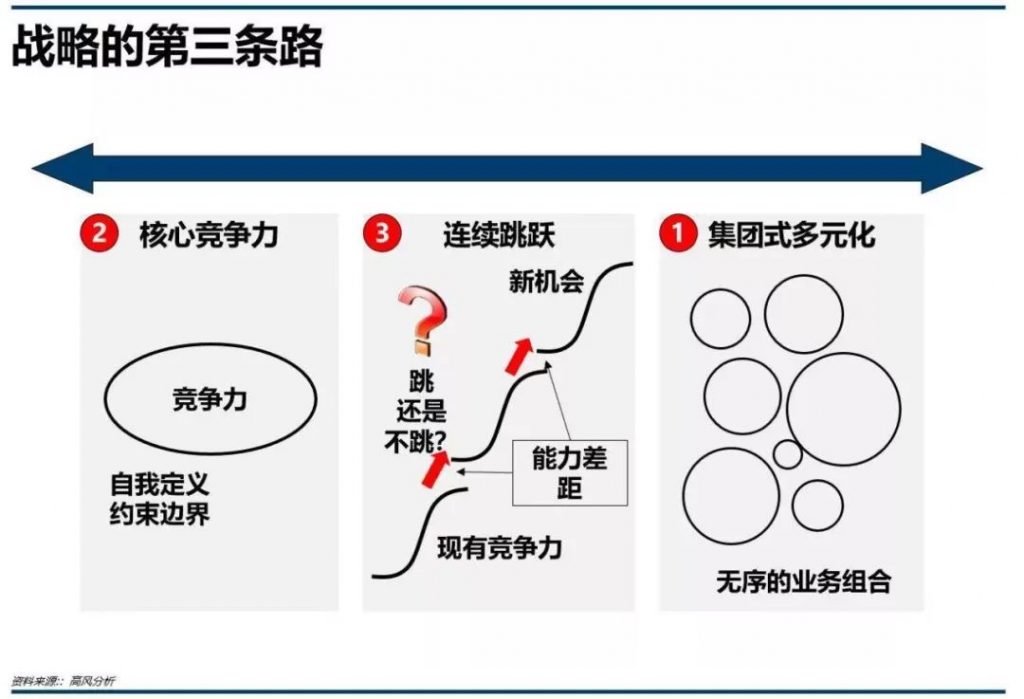
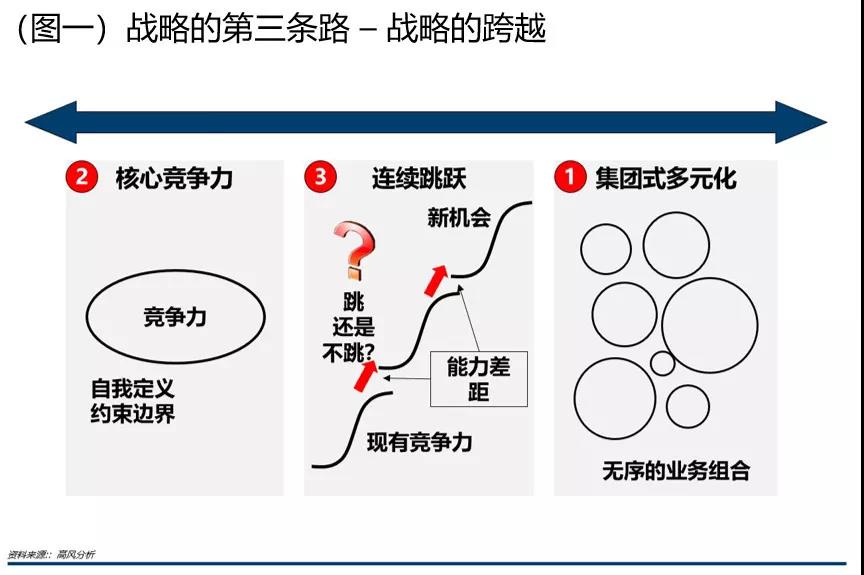
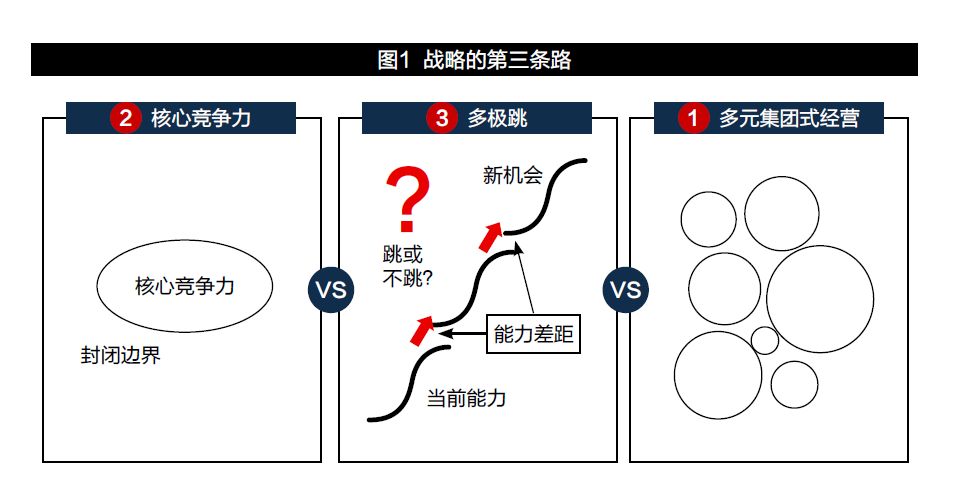
2014年我提出了第三条路的战略思想,即连续跳跃的跨越战略理论(图一),提出了在传统的定位论之外,在快速变化、指数增长的时代,企业不能固步自封,以过去的核心竞争力作为自己的枷锁,限制了自己的发展空间。但企业也不能漫无目的的乱跳,无序地去参与与其缺乏协同效应的业务。变成一堆没有内在逻辑的多元业务。游戏并非是有限的,但亦非无限的。

游戏的边界是在机会与能力之间的比较和抉择。新的机会往往以曲线形式出现,而能力亦非只是过去或今天的能力,它应该是企业在极小的时空里能够通过自身和生态体系打造的综合能力。那么“机会”是什么?当然,机会是具体的业务,不只是泛泛而谈的概念,也不应该只是一连串的无序“点子”。成功的战略跨越者必定是擅长洞察和掌握到未来发展的趋势带来的机遇。因此,他们无时无刻都在思考未来会是什么样子的。what is the vision of the future? 未来的场景将会带来什么巨大的改变和机遇?

奉行第三条路的战略家不是投资于“点子”,而是投资于趋势。这就是孙正义所讲的核心意义。当你的企业已经进入了无人区,已经没有其他企业可以对目标时,你的对标对象就是未来。而未来是非线性、多维和模糊不清的。如何在不确定状态中做出正确大胆的抉择(making the right and big bet),这才是无人区时代所需要的领导能力。

未来就在当下。

本文发表于《亚布力观点》(2019年9月刊)并保留所有权利

作者简介
谢祖墀 (Dr. Edward Tse) 是高风咨询公司的创始人兼CEO。同时他也是香港国际金融学会创会理事。谢博士是中国管理咨询行业最早的从业者之一,在过去20年中,他曾带领两大国际管理咨询公司在大中华区的业务。他为包括国内外的数百家企业提供过咨询服务,涉及在华商业的各个层面,以及中国在世界的角色。他曾为中国政府提供过战略、国有企业改革以及中国企业走出国门的建议。他已撰写数百篇文章以及四本书籍,其中包括屡获殊荣的《中国战略》(The China Strategy,2010年)和《创业家精神》(China’s Disruptors,2015年)。


【今日语录】 9月23日

What is your Right-to-Win? 你凭什么赢?这是所有企业在考虑战略问题时必须回答的问题。你凭什么赢是靠你的与众不同和能足够防御竞争的一套能力(a set of differentiated and defensible capabilities). 这些能力可以自生亦可从生态伙伴中提取,但必须符合上述两个条件。许多企业或其咨询顾问缺乏严谨考量,没法将 Right-to-Win 正确地定义,以致战略无效。


【今日语录】9月20日

企业战略里的一个核心问的问题是:”你凭什么赢?” (What is your Right-to-Win?” 即是你有什么独特的能力是比你的竞争对手更强的?㫫然,这是核心竞争力理论的延伸。在西方,特别在美国,企业领导者往往会从过去式来判断他们的能力在那里。在今天快速变化的时代裡,这当然是不足够的。关键不是你目前能力如何,而是你能在有限时空内通过什么方法来建立你的独特竞争优势。熟悉吗?这就是”战略第三条路” 的核心理念。What is your Right-to-Win?


Nikkei Asian Review | Debunking Myths on Chinese SOEs

Edward Tse

Debunking Myths on Chinese SOEs

Original published by Nikkei Asian Review titled “Chinese SOEs are Focused on Business, Not Politics” on September 13, 2019. All rights reserved.

In the eyes of some politicians and media in the West, Chinese state-owned enterprises are little more than corporate vehicles for carrying out Beijing’s policy agenda. This perspective has led to calls to restrict SOEs’ investments and acquisition of other companies and technologies.

This is a shortsighted view. Although I am from Hong Kong, not mainland China, and am not a member of the Communist Party, I have served at different times as an independent board director at four Chinese SOEs since 2006: Shanghai Pharmaceuticals Holding, Baoshan Iron & Steel (Baosteel), the holding company of carmaker SAIC Motor, and currently, China Travel Service (Holdings) Hong Kong.

In inviting someone like me to join their board, these companies sought an external perspective to help ensure proper governance. At no point before or during any board meeting was I ever asked to vote a certain way. No one tried to interfere with my professional judgment on what would be good for the companies.

In all these years of board meetings, I cannot recall any discussion that centered on serving a certain political agenda. Rather, the discussions were inevitably about business. Just as with a large Western company, the talk was of revenue, profit, market share, cash flow and returns on investment and how to improve them.

Of course, government policy would at times be a matter for discussion. Beijing has for some years been pushing through a consolidation of the steel sector, for example, so that inevitably surfaced in deliberations when I was a director at Baosteel.

It is also important to note that Chinese SOEs are far from uniform in their governance or outlook. For companies involved in sectors that touch on national security, discussions about the government’s agenda would be much more natural than in consumer-focused sectors like travel and autos.

Other SOEs are tasked with providing public services, such as infrastructure, health care and education. Notably, their evaluation of projects is generally based more around addressing utility for the public than a simple internal rate of return.

In open sectors like retail, consumer goods or pharmaceuticals, however, Chinese SOEs have to survive in perhaps the world’s most intensely competitive market.

Many of these SOEs feel they are falling behind their private-sector peers in innovation and are under pressure to catch up or collaborate with them. They are particularly concerned with whether they can continue to effectively compete as China opens up more sectors to private-sector participation, especially by foreign companies.

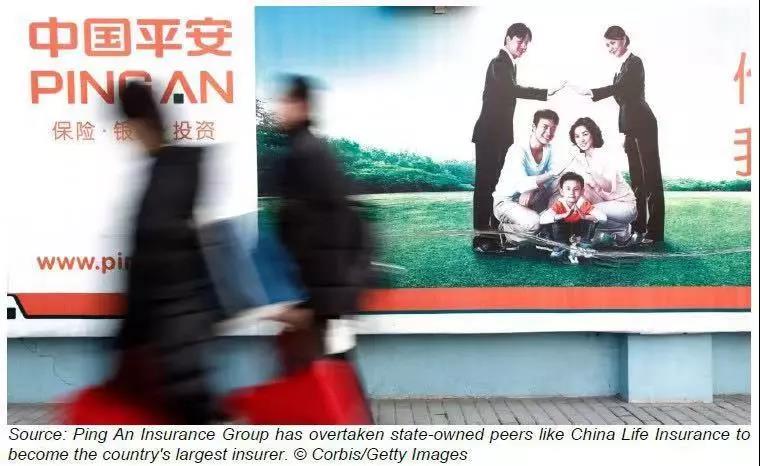
Even in sectors like banking and insurance where SOEs traditionally held unshakable positions, they are no longer immune to competition from the private sector. Consider how Alibaba Group Holding affiliate Alipay and Tencent Holdings’ WeChat Pay now dominate online payments. With a focus on adapting technology, Ping An Insurance Group has overtaken state-owned peers like China Life Insurance to become the country’s largest insurer.


Chinese SOEs do enjoy some advantages because they are owned by the state, but this is most true in sectors involving national security or public infrastructure, like energy and telecommunications. In such cases, the SOEs’ ownership of key assets and their protected operating franchises are somewhat comparable to those of public monopolies like water companies or postal services in Western countries.

A number of them, such as telecommunications infrastructure company China Tower, also benefit from having other SOEs as their main clients.

Local governments in China also tend to favor purchasing from SOEs based in their region as a means of supporting them as significant area employers and taxpayers. This can come into play, for example, with orders for official vehicle fleets.

Further, state companies have long had a significant advantage in getting access to bank credit from the SOE-dominated banking system but this has been changing.

According to Moody’s Investors Service, SOEs accounted for 52.6% of outstanding bank corporate lending as of Dec. 31 even though they have been generating less than 40% of overall output.

But after President Xi Jinping declared private enterprise to be an essential part of China’s economic system late last year, the country’s financial regulators pledged to widen access to credit and financial support for the nonstate sector.

These changes are taking time to implement, but policy is headed in the right direction and technology is helping to take the place of ownership in assessments of the creditworthiness of individuals and small businesses.

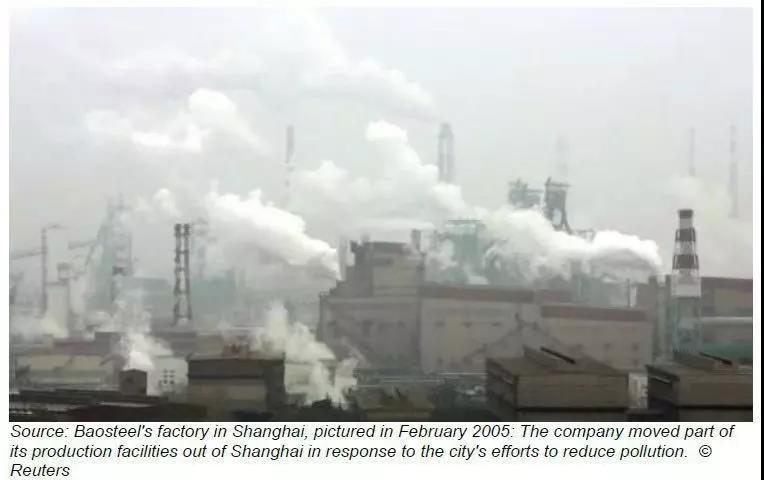
Chinese SOEs also carry social burdens much more often than private companies. As an SOE, Baosteel had to invest considerable time and effort to address the labor and community impact when it shut down older factories in urban areas to move to cheaper locations.

Until now, China’s parallel structure of SOEs and privately owned companies has largely worked well. As a whole, this duality has been a source of resilience for China, not a drag.

Yet officials in Beijing have identified reform of state-owned enterprises as an imperative. Of late, this effort has focused on diversifying the shareholding of many SOEs. This has included the introduction of private capital in some cases.

To make mixed ownership reform a success will require the establishment of proper corporate governance structures and principles. The role of the state agency that oversees SOEs will have to shift over time from direct control to being one among a number of shareholders. These changes will help SOEs to be able to compete effectively in China’s fast-changing and increasingly innovation-driven environment.

About the author:Dr. Edward Tse
CEO of Gao Feng Advisory
Dr. Edward Tse is founder and CEO of Gao Feng Advisory Company, and a founding Governor of Hong Kong Institution for International Finance. One of the pioneers in China’s management consulting industry, he built and ran the Greater China operations of two leading international management consulting firms for a period of 20 years. He has consulted to hundreds of companies, investors, start-ups, and public-sector organizations (both headquartered in and outside of China) on all critical aspects of business in China and China for the world. He also consulted to the Chinese government on strategies, state-owned enterprise reform and Chinese companies going overseas, as well as to the World Bank and the Asian Development Bank. He is the author of several hundred articles and four books including both award-winning The China Strategy (2010) and China’s Disruptors (2015) (Chinese version of 《创业家精神》).


【Quote of Today】 September 17th

The Resilient Organization. This organization is flexible enough to adapt quickly to external market shifts, yet it remains steadfastly focused on and aligned with a coherent business strategy. This forward-looking organization anticipates changes routinely and addresses them proactively. It attracts motivated team players and offers them not only a stimulating work environment, but also the resources and authority necessary to solve tough problems.


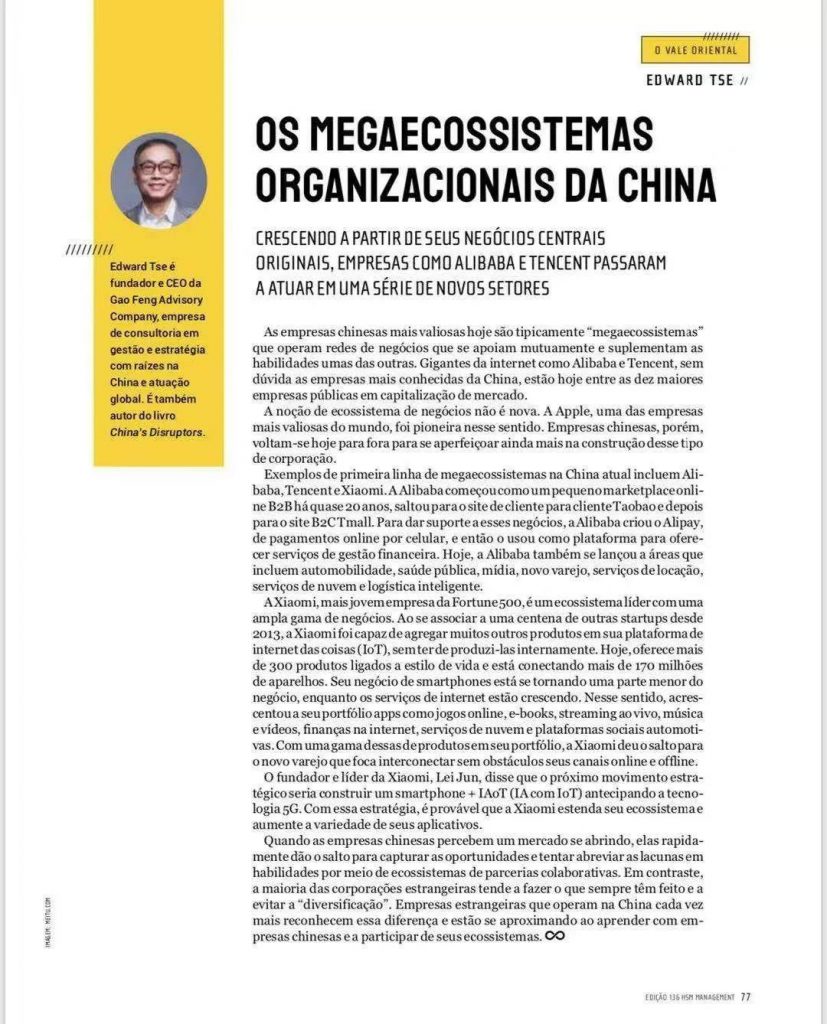
HSM | China’s Mega Platforms Organizations

Edward Tse

Gao Feng Advisory’s CEO Dr. Edward Tse’s article was published in his regular column on Brazil’s HSM Management Magazine. In this article, Dr. Tse wrote about China’s mega platforms companies. China’s innovations are not just about monetization. It’s an inspiration for new intellectual capital on how businesses generate their strategy and innovations. They enrich the world’s thought leadership.


English Version
China’s Mega Platforms Organizations

The most valuable Chinese companies today are typically “mega ecosystem” players which operate networks of businesses that can support each other and supplement each other’s capabilities. Internet giants, Alibaba and Tencent, arguably the most well-known companies in China, are now in the top ten of public companies by market capitalization.

The notion of a business ecosystem is not new. Apple, one the world’s most valuable companies, was a pioneer in this regard. Other leading U.S. tech companies such as Amazon and Alphabet are also ecosystem players. Chinese companies, however, have turned out to be even more adept at building such organizations.

Prime examples of mega ecosystems in China today include Alibaba, Tencent, and Xiaomi. Building out from their original core businesses, they have jumped into a string of new sectors.

Alibaba started as a small business-to-business online marketplace almost 20 years ago and jumped in with consumer-to-consumer site Taobao and later business-to-consumer site Tmall. To support these businesses, Alibaba started Alipay to support mobile online payments and then used it as a platform to offer wealth management services.

Today, Alibaba’s has also branched into areas including “automobility”, “big health”, media, “new retail”, location services, cloud services, and smart logistics.

Xiaomi, the youngest Fortune 500 company, is a leading ecosystem players with a range of businesses in hardware, internet services and new retail. By partnering up with a hundred more start-ups since 2013, Xiaomi has been able to add many more products onto its In-ternet of Things (IoT) platform, without having to produce them in-house. Today, Xiaomi offers more than 300 lifestyle products and are connecting more than 170 million devices (excluding mobile phones and laptops).

Xiaomi’s smartphone business is becoming a smaller part of its business, while internet services are growing. To this end, it has added to its portfolio apps ranging from online games, eBooks, live streaming, music and videos, internet finance, cloud services and automotive social platforms. This allows them to monetize on ser-vices after selling low-priced hardware, which could drive a large part of revenue going forward.

With such a large range of products in its portfolio, Xiaomi has made the jump into new retail that aims at seamlessly interconnecting its online and offline channel. Over the years, Xiaomi has built interac-tions and close relationships with its supporters, affectionately called the “Mi-fans.”

Xiaomi’s founder and leader, Lei Jun, has said that the next strate-gic move would be building a smartphone + AIoT (AI and IoT) in anticipation of 5G technology. With this strategy, it is likely that Xiaomi would extend its ecosystem, and increase in the variety of Xiaomi applications.

When Chinese companies sense a market opening, they would quickly make the jump to capture the opportunities and try to make up the gaps in capabilities through ecosystems of collaborative part-nerships. In contrast, most foreign corporations tend to focus on what they have been doing all along and avoid “diversification”. Foreign companies operating in China have now increasingly recog-nized this difference and are catching up by learning from Chinese companies and participating into their ecosystems.

About the Author
Dr. Edward Tse is founder and CEO of Gao Feng Advisory Company, and a founding Governor of Hong Kong Institution for International Finance. One of the pioneers in China’s management consulting industry, he built and ran the Greater China operations of two leading international management consulting firms for a period of 20 years. He has consulted to hundreds of companies, investors, start-ups, and public-sector organizations (both headquartered in and outside of China) on all critical aspects of business in China and China for the world. He also consulted to the Chinese government on strategies, state-owned enterprise reform and Chinese companies going overseas, as well as to the World Bank and the Asian Development Bank. He is the author of several hundred articles and four books including both award-winning The China Strategy (2010) and China’s Disruptors (2015) (Chinese version «创业家精神»).


重温《边缘上竞争》

本文是高风咨询CEO谢祖墀博士的最新观点文章,他重温和回顾了《边缘上竞争》(Competing on the Edge)的理念。在此理念的指导下,于五年前提出了“战略的第三条路”的概念。

最近华章出版社与我联络,他们说他们计划在2001年出版的《边缘竞争》(华章出版社用了《边缘竞争》为中译名字,我觉得《边缘上竞争》与英文原文较吻合)一书,在近期重新发行,并希望征求我的意见。

这比较突然而来的邀请,让我再度想起来这本书在企业战略管理历史上的重要性,很可惜,这本书在国内几乎没有什么人听过,对这书里提出来的理念几乎完全不知道。所以在这次的专栏中,我想写一篇对这本书的重温和回顾。

我接触这本书应该已经有20年左右,看的是它的原文英文版本。它给我留下来非常深刻的印象。因为我的工作关系,一直以来我非常关注有关企业战略的书籍。这本书应该是第一本从真正意义上介绍动态战略的一本书。于90年代末出版,对今天还未过时,是一本真正掌握到动态战略真谛的书籍,说它是超时代并不过分。

《边缘上竞争》(Competing on the Edge)一书于1998年出版,由美国斯坦福大学两位女性学者肖纳·布朗(Shona L. Brown) 和凯思琳M. 艾森哈特(Kathleen M. Eisenhardt) 合著,主要作者是布朗女士。该书针对当时的计算机行业的发展给企业和管理界带来的新的问题。在书中她们提出的一个在当时来说全新的战略管理理论。该理论吸收了环境复杂性理论(Complexity Theory)和进化理论(Evolutionary Theory)等前沿思想,并对分布于全球的12家企业进行了实地调查和深入研究。

在这本书出现之前,几乎所有的企业战略理论都是以静态为主的,其中有代表性的包括波特五力模型,BCG矩阵,以及蓝海战略等。主导思想是:企业致胜之道是要为自己寻找到一个最优胜的定位。

在1990年代初期于学术界和管理咨询界出现的重要的新的战略理论。于1990年美国密歇根大学商学院两位教授C•K•普拉哈拉德(C.K. Prahalad)和加里•哈默(Gary Hamel)提出了核心竞争力理论。该理论指出一家企业要成功必须按照自己的优势来做,亦即所谓核心竞争力。而1992年时,我当时在BCG时的三位合伙人斯托克(George Stalk, Jr.),埃文斯(Philip Evans)和舒尔曼(Lawrence E. Shulman)发表了《基于能力的竞争》(Competing on Capabilities)。他们认为,企业的持续成功来自企业已建立的内部能力,而战略的精华在于它能否以动应变,从而确立并形成一种他人难以效仿的组织能力。按自己的强处和能力来做事所讲当然是一般的常识,这套理论后来亦是成为了在过去二十多年支配着西方商界和投资界的主流战略思想理论。

以后,不少咨询公司仍然用这些理论来标榜自己。如贝恩(Bain)咨询公司的祖克(Chris Zook)和艾伦(James Allen)在2001年出版《从核心盈利:动荡时代的增长战略》(Profit from the Core: Growth Strategy in an Era of Turbulence) ,书中提出了基于核心竞争力的增长战略。这一理论和密歇根大学的核心竞争力理论和BCG能力竞争理论有着相同的原理。

以至2008年,亦即原来核心竞争力理论出版18年后,博斯咨询公司(Booz & Company)才提出“以能力驱动战略”(Capabilities-Driven Strategy)的概念。其核心思想是:企业必须依赖3至6个最强的能力和它们形成的能力体系来进行竞争。从本质上,与原始的核心竞争力方面理论没有很大的突破。

在此期中,有些学者和咨询顾问们曾经尝试将动态的思想注入能力战略理念之内。较著名的是加州大学伯克利分校的教授大卫·J.蒂斯(David J. Teece)于1997年他提出了动态能力(Dynamic Capabilities)的概念。基本上他将能力从原来的静态状态延伸到动态的状态。举例来说,他说速度、感应和应变能力对企业是非常重要的。但蒂斯的理念没有超越原来的核心竞争力/能力的思想范畴,本质上没有突破。

《边缘上竞争》是第一本将动态战略从本质上整体介绍出来的一本书。“动态”不只是将静态能力重新包装一下而已,而是在思想和理念方面整体上的一种提升,亦是一种系统思维。它书名的副题是《有序中混沌的战略》(Strategies in Structured Chaos),它说明了我们处于的竞争和经营环境将是在有序(Structure)和混沌(Chaos)之间的徘徊,没有任何时候,我们所处于的环境将是完全的有序但亦没有任何时候是完全的混沌。战略最基本的真谛就是在有序和混沌之间不断的动态平衡。肖纳•布朗(Shona L. Brown)在书内提出了几点非常重要的观点。她说未来企业经营环境的主要特征是高速变化和不可预测性,因此,战略管理最重要的是对变革进行管理,这主要表现在三个方面:一是对变革做出预测;二是对变革做出反应;三是领导变革,即走在变革的前面,甚至是改变或创造竞争的游戏规则。
在当时1990年代末期,这些观点是划时代的,布朗应是第一个将这些理念做系统性介绍,同时她亦提出了动态战略的十项原则:

1. 优势是短暂的;2. 战略是多样化的,迭变的和复杂的;3. 不断地自我发现是目标;4. 组织简单化,作用极大化;5. 从过往而来;6. 向未来延伸;7. 保持适当的节奏和步伐;8. 将战略拓展出来;9. 从业务层面启动战略;10. 将业务与市场紧密挂钩和不断整合到企业整体。

从战略角度来说,我认为最主要的原则是第一条、第二条、第三条、和第七条。第一条:“优势是短暂的”,说明企业的所有优势都是短暂的,没有什么是“持续”的。企业应该不断地发掘和发展新的优势来源,将改变视为机遇而不是威胁。第二条:“战略是多样化的,迭变的和复杂的”,说明了战略不是死板和静态的,它必须是动态调整的。第三条:“不断地自我发现是目标”,亦是动态思想的核心,企业没有停下来的时间,必须不断发掘新的目标。第七条:“保持适当的节奏和步伐”应是我第一次在有关战略思想的文献上看到的,不只是速度重要,保持适当的节奏和步伐一样关键。

在这本书写完以后的20年来,企业所处的经营环境经历了加速的改变,不确定性越来越高,静态的战略思想已经完全不行,作为第一个提出整体动态战略的布朗女士,她的预见的确令人佩服。当然,随着时代的变化,布朗的理论亦需进行微调。不过,她当时的视野和感觉在今天而言还是非常到位的。

在《边缘上竞争》的理念指导下,我从五年前开始就提出了“战略的第三条路”的概念。此概念是说企业在快速发展的市场环境里,可以考虑多级跳作为动态发展的手段,而不一定需要以传统的核心竞争力/能力作为自我限制发展的枷锁。多级跳理论的基础是边缘上竞争,亦即动态战略。在未来科技发展的超快速,国际上地缘政治关系和日趋复杂的大前提下,动态战略的重要性将更加重要。在这个时候,重温布朗女士划时代的巨著《边缘上竞争》恰是最好的时机。

(注:本文图片均来自网络)
作者简介
谢祖墀 (Dr. Edward Tse) 是高风咨询公司的创始人兼CEO。同时他也是香港国际金融学会创会理事。谢博士是中国管理咨询行业最早的从业者之一,在过去20年中,他曾带领两大国际管理咨询公司在大中华区的业务。他为包括国内外的数百家企业提供过咨询服务,涉及在华商业的各个层面,以及中国在世界的角色。他曾为中国政府提供过战略、国有企业改革以及中国企业走出国门的建议。他已撰写数百篇文章以及四本书籍,其中包括屡获殊荣的《中国战略》(The China Strategy,2010年)和《创业家精神》(China’s Disruptors,2015年)。

【今日语录】8月29日

做好咨询必须拥有将客户利益凌驾于首位的情怀。对客户有着强烈的同理心。特别是客户将他们最棘手的问题托付给你的时候,你必须尽你的能力去协助你的客户。做不到的就不是称职的顾问。

【今日语录】8月22日

战略咨询与市场调研有着本质的差别。市调是找数据或信息,从下而上。战略咨询是解决难道,从上而下,再从下而上。往往几上几下才能找到答案。有市调背景或思维的必须将它 unlearn。 否则他/她必定不能做好战略咨询的工作。

【今日语录】8月21日

有人说组织要像水,但水没有宏观架构,这样的组织有可能吗?应该说组织应该具有韧性调节的内在能力。它必须具有必要的柔性,同时亦需要必要的刚性。这是博斯艾伦组织 DNA 理论的核心。世上所有事物都是二元 Duality 的。

文章 | 今日头条《智慧的领导》

我们身处在一个充满变化的社会,经济的高速发展和价值观的急剧转变,使得企业想要在未来保持自身的稳定性和独特性变得异常艰巨。造成这种境遇有诸多因素,包括地缘政治、科技、竞争等。与过去不同,企业不应亦不能只是盲目地追求无尽的增长,而是在这种变化多端的环境里掌握适当的节奏并进退有度——能进亦能退,能攻亦能守,能聚亦能散。归根到底,企业要把握的是“如何活下去”的秘诀,其中,企业的领导者扮演着极其重要的角色。企业“活下去”且“基业长青”究竟需要怎样的领导力?
在我看来,一家成功企业的领导者首先自身需具备清晰的意识,通过个体的张力产生组织牵引力,带领整个企业朝着正确的方向前进,帮助企业在清醒的意识下去思考问题,思考“我们是谁”、 “我们需要做什么”、“我们的追求和价值观是什么”等最基本又最容易忽视的问题。

故此,优秀的领导者必须具有极强的警觉能力。在不确定的环境里,企业在做决定时,警觉型的领导者的作用是协助企业提高做出正确决定的概率,他亦能不断地提醒整个组织,在清醒的意识下去思考潜在的风险与挑战,并为之做出准备,建立起强大的防御机制和自愈能力。

在这个瞬息万变的时代,任何企业的优势都是短暂且不断变化的。一些曾经被誉为是全球最优秀的企业,如柯达、诺基亚、摩托罗拉和朗讯等,都在大浪淘沙中消失或面目全非。显然,仅仅拥有优良的品格和明确的追求已经不能确保企业“活下去”并“基业长青。企业同时需要进行“修炼”,以增强自身的“韧性”。唯有如此,企业才能在受到外界的威胁,面临不可控的风险,尤其是强劲的外来冲击力时,通过对未来的预见,有效的战略部署和投资,以及一致的组织形态和执行,不断地调整而活下去。

而企业领导者的主要责任,就是带领整个企业进行修炼。企业的修炼可以通过不同的方式来达成,集体学习就是其中重要的一种。美国管理学者彼得•圣吉(PeterM. Senge)也在其著作《第五项修炼》中提出“对话交流“(dialogue)的概念,认为团队必须摒弃固有的成见进入真正无拘无束的”共同思考“(thinking together)。美国著名的对冲基金桥水公司(Bridgewater)的领导者雷•达里奥(RayDalio)是团队共同学习的实践者。他定期让基金的投资经理聚在一起,就国际形势在没有干预的氛围里进行讨论甚至激辩,来激发团队思考的潜能。

如今,我们时常要对大量的信息进行分析,超负荷的信息和开展多重任务的工作模式侵占了我们的注意力,而注意力的缺失导致人们缺乏深度思考和深度体验,无法形成洞见,也无法将信息和知识转换为能力。所以,企业内部各级成员对于Mindfulness的学习和训练也越来越重要。Mindfulness这个词源自佛教,本意为用清晰的思维去思考事情,时刻处于一种清醒的状态。在中文里,Mindfulness常被译为“正念”,我个人并非完全认同“正念”这个翻译,更准确的的含义应是“用心来做事” 。以色列著名历史学家尤瓦尔•赫拉利(Yuval Noah Harari)选择每天花两个小时冥想,让头脑保持在一个清晰的状态,有助于更深刻地思考问题。他曾提及,如果没有冥想练习,他不可能写出《人类简史》和《未来简史》这些巨作。同理,在遭遇挑战时,保持正面积极的态度,不被情绪绑架,拥有清晰的头脑去做出最佳决策则变得十分之重要。正念能提升人的专注力、组织的开放度,并让人自我觉知,从而产生良好的正面影响。由此观之,持续学习正念将提升员工们的心智容量,发展原认知力。这样,他们才能专注于当下所经历的事务与身处的环境中,更好地参与工作。

近年来,随着Mindfulness知识的普及和其影响力的扩大,不少企业开始关注如何利用正念来提升整个企业的效率,其中不乏例如谷歌、安泰医疗保险公司(AetnaInsurance)、领英(LinkedIn)等我们耳熟能详的西方企业。Mindfulness已经在愈来愈多地渗透进这些西方领先的企业的运营与管理中,并彰显其显著的效应。“活下去”且“一直活下去”以达到“基业长青”更需要智慧的领导,引导企业与员工、客户、甚至竞争对手和生态伙伴共同领悟和发展。其实对于企业来说,这并非高深莫测的概念。不仅仅是西方企业,中国企业对此也有所领悟。华为公司就明确地指出,企业应当时刻保持“自我批判”的精神,用以强化和稳固核心价值观。在这过程中,领导者的作用尤为关键。同时,员工作为企业的个体,亦应当不断地去思考“我们做得够不够好”、“我们如何规避风险”等最关键的问题,也唯有这样才能避免在庞大的组织中迷失自己。这些问题虽看似简单,但如若不思考清楚,整个组织就会陷入被潜意识支配的状态,最终被潜意识拉入无尽的深渊之中。随之而来的,是组织的腐败和懈怠,最终恶变为不治之症。那么,究竟如何开始进行修炼呢?企业领导者可以从以下三点着手进行提升:
帮助整个企业认识到(build awareness)清晰的意识(consciousness)的重要性。
与企业内部保持良好的沟通,让整个企业清晰其目的和追求是什么,并帮助企业建立良好的品格。
带领企业进行“修炼”。通过不断重复地做一些事情,把企业不良的潜意识转换为清晰积极的显意识,使整个企业处于一种比较清晰的状态。在Mindfulness的状态下“用心做事情”,从而减小犯错的机会,并提升做对的事情的概率。无论在机会或危机来临之前,就做好准备。
企业“活下去”,是最低也是最高的组织目标。“活下去”且“一直活下去”以达到“基业长青”更需要智慧的领导,引导企业与员工、客户、甚至竞争对手和生态伙伴共同领悟和发展。

原文发表于《亚布力观点》(2019年8月刊)并保留所有权利(注:本文图片均来自网络)
作者简介
谢祖墀 (Dr. Edward Tse) 是高风咨询公司的创始人兼CEO。同时他也是香港国际金融学会创会理事。谢博士是中国管理咨询行业最早的从业者之一,在过去20年中,他曾带领两大国际管理咨询公司在大中华区的业务。他为包括国内外的数百家企业提供过咨询服务,涉及在华商业的各个层面,以及中国在世界的角色。他曾为中国政府提供过战略、国有企业改革以及中国企业走出国门的建议。他被称为“中国于国际上最富经验和具权威的商业战略专家”。他已撰写数百篇文章以及四本书籍,其中包括屡获殊荣的《中国战略》(The China Strategy,2010年)和《创业家精神》(China’s Disruptors,2015年)。

Share this:


【Quote of Today】 August 16th

Innovations and entrepreneurship have become core to China’s culture. Young people from all over are trying to become successful. Many will fail and they know but a small number will make it. A small % of a large number is a large number. And the ones who make it will become role models for others.

Inspiring Innovations through Curiosity in the China Context

By Edward Tse

December 2018

This article is the introduction to the China highlights in the State of Curiosity Report 2018 published by Merck Group

Source: Google

The last 40 years of China’s reform and market liberalization have brought profound changes and tremendous progress to the country’s economy, especially to its business landscape. Along the way, China has evolved into its own development model without consciously planning for it – a “Three-layer Duality”. At the top, the central government sets the overall development priorities. At the grass-root level, the private sector entrepreneurs are now a major driving force in the Chinese economy. In the middle, various local governments, in response to the directions from the top, compete, and sometimes collaborate in regional clusters, often by teaming up with the entrepreneurs. With both a state sector and a private sector co-existing – in some cases competing and in others playing their own distinctive roles – this duality is a defining feature of the Chinese economy.

This three-layer working paradigm has stimulated the exponential rise of curiosity-driven business innovations, especially from the private sector. The rise in workplace innovation is reflected in Merck’s 2018 State of Curiosity survey, a multi-dimensional model that measured the importance of curiosity and innovation across several countries. China, above the US and Germany, found that innovation played a meaningful role in its workplace culture. With this value on innovation, the country has shed its copycat stigma and emerged as an epicenter of tech-enabled innovations. According to reports by Xinhua News Agency last year in 2017, the internet and technology sector – ranging from AI, big data, IoT, and robotics – grew twice as quickly as the overall gross domestic product over the past decade. Born with a different set of characteristics in each generation, Chinese entrepreneurs are thriving in what is now the world’s second-largest birthplace of unicorns (unlisted companies valued at or above US$ 1 billion that established within 10 years).

Source: Google

What has enabled China to move from copycat to curious innovator?

1. First and foremost, it is due to the “why not me?” mindset. Realizing the huge gap between China and the rest of the world, especially in the early days of the country’s reform and opening, Chinese entrepreneurs were compelled to show the world that they too could succeed.

2. As the economy transformed, China’s societal pain points that once were hidden became exposed. Coupled with the prevalence of technology, especially the commercial application of smart devices through the wireless internet, these new conditions provided the breeding ground for innovations.

3. While state-owned counterparts are typically slower in responding to these changes, private sector entrepreneurial companies rose to the challenge and took on the opportunities.

4. At the same time, China’s massive market allowed companies to rapidly scale up and its hyper-competition spurred companies to speed up their innovations to stay ahead in the game.

5. Finally, along the way, Chinese companies have benefited greatly from the vast capital pool and angel investors, and the investors, in turn, have benefited from exceptional returns on their investments in China.

Regardless of whether these investors came from abroad or home, Chinese entrepreneurial companies, especially tech companies, often pattern themselves after companies in the US Silicon Valley. Leaders of these organizations often work alongside the team, making it easy for them to capture market changes and make quick decisions. These leaders (usually founders and managers) are typically strong and visionary – a common trait of Chinese entrepreneurial organizations and culture. Structures of these organizations especially during their early phase tend to be flat thereby allowing efficient response to the ever-changing business environment.

While these companies have strong leaders at the top, they also have appreciable empowerment across the organization, which may sound like a paradox. However, institutional curiosity manifests itself often in a profound manner, particularly in tech companies during their entrepreneurial phases. A few key drivers are noted for these organizations in the form of Curiosity dimensions, as defined by Merck.

The first is the openness to people’s idea: The relatively open organization structure in Chinese tech companies enables more openness and better communications among team members.

The second is stress tolerance: There are more ambiguity and uncertainty in China’s rapid and disruptive evolution. Entrepreneurs must be willing to try and embrace pressure.

The third is joyous exploration: Growing income and better living conditions over the past decade have uplifted people’s expectation that the future will be better. They’re more willing to explore a life that’s better and more joyous.

Last but not least is deprivation sensitivity: Entrepreneurship makes people more sensitive to deprivation. If there is a gap, Chinese entrepreneurs are curious about it and more determined to close the gap.

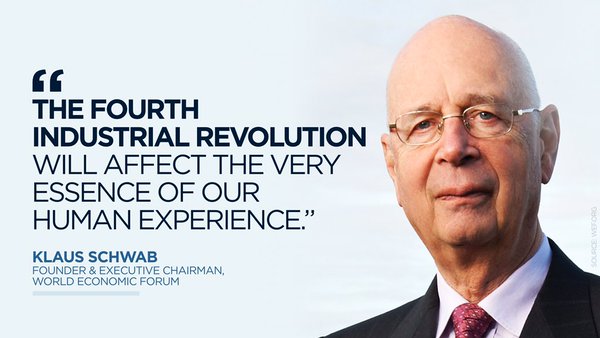
With these highly adaptive characteristics, Chinese tech companies are embracing new and emerging technologies, and China as a whole is at the front seat witnessing the Fourth Industrial Revolution – the merging of physical, digital and biological means. With technologies such as AI, IoT and Blockchain are here and 5G coming just around the corner, the Chinese are significantly embracing them to enable the next generations of innovations.

Going forward, we expect more tech-enabled innovations driven by heightened organizational curiosity from China. Though it is a universal phenomenon that the bar for success remains high, given the scale of the China market, its fast growth, its increasing prevalence of various forms of technologies and the prowess of its “three-layer duality” paradigm, the “odds of making it” are expected to be on the Chinese side. China’s path towards an innovative economy will inevitably involve many ups and downs, perhaps at times becoming quite turbulent and wasting some resources. However, one should acknowledge China’s consistent drive toward better livelihood for its people and a “community of shared future” for the humankind. At the heart of it, the source of this inspiration is the intrinsic curiosity of its organizations.

【今日语录】8月5日

咨询的关键是quality。这包括质量与素质。优秀的咨询顾问确保工作的质量做到极致。这需要他本身拥有良好的素质。多读、多思考、沉下来,心要静。凡事以客户为中心、以团队精神为纽带。

【今日语录】7月22日

多级跳是当今时代企业发展战略的重要指导框架。但多级跳并不是盲目的乱跳,甚至不是从某业务跳到另一业务而已。成功的多级跳战略者首先是对未来的主要发展趋势产生㓊察,然后从洞察之中发掘了能够改变或可创造游戱规则的机会。跳或不跳是基于战略者对机会带来的机会大小与自己目前能力的对比中作出比较后的判断的结果。

China Daily | Many Unicorns Don’t See Profits

China Daily Global

Updated: 2019-05-27

The Hurun Research Institute, which compiles lists of China’s wealthiest individuals, released the Hurun Greater China Unicorn Index 2019 Q1 along with the Hurun China Future Unicorns 2019 Q1 on May 7.

According to Rupert Hoogewerf, chairman and chief researcher of the Hurun Report, which is a research, media and investments business, the total number of unicorns-startup companies valued at $1 billion or more-in China has reached a record 202, possibly the highest across the globe.

These Chinese unicorns include Alibaba’s financial technology affiliate Ant Financial, which is valued at $150 billion, and ByteDance, an internet company behind machine learning-enabled content platforms like TikTok (also known as Douyin) and Toutiao.

Tech startups today have not been able to replicate the financial success of well-known tech giants such as Google, Facebook and Alibaba. For example, China overtook the United States in AI investment in 2017, but around 90 percent of the AI companies were unprofitable.

This phenomenon is not exclusive to China. Some of the biggest names around the world have yet to make money, such as the publicly listed electric car maker Tesla and music streaming company Spotify, which are losing billions. Ride-hailing platform Uber lost $1.8 billion last year, but still made its debut on the New York Stock Exchange this month.


Although there are many startups that are unprofitable, it is probably unfair to compare established tech companies with the internet unicorns of today. The nature of entrepreneurship implies that there will always be winners as well as losers, best illustrated recently by the dotcom crash.

So what is driving the rapid valuation growth of many internet startups that are still incurring huge financial losses? Favoring growth over profit, investors are embracing so-called “growth companies” like Amazon, the world’s third most valuable company despite pale profits. As capital is currently cheap, creating growth is more valuable than improving margins.

Why then, do some startups fail but some eventually succeed? First, many of those that failed were not able to address an essential need. The digital boom and fast money in the 2000s created plentiful space for first-generation technological companies, especially in sectors like e-commerce.

However, it is becoming harder for the current generation of tech companies to tap into that growth, since low-hanging fruit has already been taken.

As investors continue to search for the next Alibaba or Google and more unicorns appear, some might just need time to prove themselves, while others will simply be growing for the sake of growth without any prospects for profit.

文章 | 新浪财经 《科技推动产业变革》

“科技改变将给人们带来更多的有益的结果。对个人来说,他们的生活将会更加地便利。而对企业来说,在科技发展的助力下,他们将有更多的创新机会,发展新的产品、服务、甚至建立新的模型等等。”

在迈入21世纪后,科技爆发式的进步让世界变化加速。机器算力的不断提高、及物品的互联互通给人们生活的各个方面都带来了极大的改变,从人们的零售行为到大健康、智慧出行等等。即使在这个节点,算力的发展与革命也还未结束,科技带来的影响仍在不断地加速产业改变的进程。

随着科技的发展,越来越多颠覆性的科技,从物联网、人工智能(AI)到5G和区块链,都将改变我们的生活方式。在互联网蓬勃发展的十几年中,企业逐渐由IT(信息技术)企业转化为DT(数据技术)企业。IT主要关注的是企业内部的管理能力,建立良好的IT系统将大幅提升企业的内部能力,而DT则趋于向外的能力打造。随着科技的进步,飞快提升的算力让企业将无处不在的数据讯速地输送到企业中心,从而利用大数据帮助企业很好地做出决策。

科技改变将给人们带来更多的有益结果。对个人来说,生活将会更加地便利。而对企业来说,在科技发展的助力下,企业将有更多的创新机会,发展新的产品、服务、甚至建立新的模型等等。

在这样的变革中,企业所选择的战略尤为重要。由于过去的企业战略思考环境较为固定,企业管理者习惯用线性思维,在已经固化的环境中延伸,思考企业的未来。由于科技推动产业的变革,如今,企业家需要迅速改变来适应新环境。

在过去几十年的主流概念中,企业有两条竞争的道路,一种是多元化发展,涉猎多种领域,而另一种是凭借企业的核心竞争力,进行聚焦竞争。在科技对社会的影响力越来越大,市场环境变化越发迅速的时候,企业家需要转变思维模式,才能在快速变革的环境中存活下去。时代改变让很多问题变得不确定,在过程中,我看到,部分企业在这个瞬息万变的时代走出了与完全不同的第三条路,通过把握机会与能力的灰色地带,抓住了新的机会,成功“连续跳跃”。

那么,企业在转变的过程中如何成功“跳跃”呢?许多因素将决定企业“跳跃”的结果,其中包括:他们是否能在“跳跃”的同时弥补自身的能力空缺,产生强大的势能,最后获得所需要的结果。或者,他们是否意识到了企业变革的几大基本元素,如:领导力、愿景和战略,及组织架构和形态。

组织的意识会影响企业的决策。通过与很多企业的合作,我发现企业像人一样,都被其意识所支配。在不知不觉中,潜意识支配了我们90%以上行为。大部分的企业失败往往是由集体的潜意识导致的。因为组织由上到下都没有建立良好的企业潜意识,所以最后走上衰落、最终失败之路。

领导者的角色也尤为关键。良好的领导者必须帮助组织建立自己清醒的意识,让他们对外界变化保持警觉。领导者需要不断地提出“我们是谁”这个问题,让组织拥有共同的目标。另外,由领导者所带领团队的执行力,将对最终成果起到至关重要的决定性。优秀的领导者很快就意识到团队执行力的重要性,并加以警惕和鼓励。马明哲就曾对此评价过“拥有执行力才能让你强大,一个人做事情快点,顶多叫执行,一百万人的同进退,那才是执行力”。

不仅如此,领导者还需要在变化莫测的商业战场上,带领员工着眼于未来。在科技的影响下,数字化变革已经带来了许多机会。在这个变革的时代,企业该如何改变思维模式,如何通过互联系统打造与消费者更紧密的连接,将对他们的发展起到不可或缺的影响力。正如高风咨询高级顾问黄林所说的,在这个科技推动产业变革的时代,领导者应该意识到,企业的发展策略应以客户为中心,打造其业务定位、用户定位、及战略定位,才能让公司持续发展。

首先,企业应该抓住科技进步带来的机会,发展以客户为中心的策略,打造“千人千面”的信息推送。在科技和算法蓬勃发展之际,企业应该精益求精,进一步分析消费者的行为、社交、交易消费信息和需求,围绕产品打造从产品到营销、服务的个性化全链路体系。

不仅如此,企业应着力打造业务定位、用户定位、及战略定位。在变革之际,改变思维模式,将电商作为首要销售渠道,并为之设计更适用于电商的营销活动。这样,企业才能利用线上线下销售平台的优势,为消费者打造沉浸式的服务体验。

另外,科技的发展给予消费者更多发声的机会,而企业也应该采取措施适应用户的新定位。在过去几十年中,传统企业早已习惯与消费者的单向沟通,通过各类媒介向消费者传播信息。但是,在互联网普及后,企业与消费者的双向沟通渠道越来越多。通过 AI 写作、语音交互等功能,企业不仅可以更精准地与客户沟通,了 解客户需求,客户也可以从更多渠道发表自己对产品的看法。从另一方面,企业也可以通过互联网,基于更多消费者的个人信息与消费行为数据进行数据分析,更好地与客户进行一对一的沟通与交互,给予客户个性化、定制化的服务。

随着消费升级的全面展开和新零售的到来,传统企业不仅需要展开线上销售服务,更需要对战略定位做出及时调整,将电商或互联网平台置于企业战略的重心。随后,可以通过分析客户信息、实现人群洞察、市场评估成功实现制造端的千人千面。

在科技推动产业变革的时代,企业家需要重塑观念模式,拥抱变革,及时调整领导力、愿景和战略,及组织架构和形态,将企业的不良潜意识通过集体修炼转成清晰的正面意识,用“心”来做对的事,才能在新的时代里继续发展下去。

原文发表于《亚布力观点》(2019年4月刊)并保留所有权利

(注:本文图片均来自网络)

HSM | China’s Age of Innovation and Game-Changers

Dr. Edward Tse’s article was published in his regular column on Brazil’s HSM Management Magazine. In this article, Dr. Tse discussed how China’s system works to the favour of the country’s tech-enabled business innovations.

English Version

China’s Age of

Innovation and Game-Changers

Branded for decades as a “copycat nation”, China has now re-emerged as a global epicenter of business and technological innovations. The internet and tech sector – ranging from ride-hailing to e-commerce, robotics and artificial intelligence – grew 20 percent in 2018 to a total of 142 billion USD value. Two Chinese companies, Tencent and Alibaba are now among the top ten of the world’s most valuable companies. China has also become the second-largest birthplace of unicorns (unlisted companies valued at or above US$1 billion), and has filed the largest number of domestic AI-related patents, trumping Silicon Valley by as much as seven times, according to CB Insights.

Several drivers contribute to China’s rapid transformation. First, a “why not me” mindset drove the Chinese entrepreneurs who, realizing the huge gap between China and the rest of the world, in particular during the early years of China’s reform and opening, want to show that they too could succeed.

Second, as its economy transformed, China’s once-hidden societal pain points became exposed; coupled with the prevalence of technology (especially the wireless internet and smartphones), these pain points provided the breeding ground for innovations.

Third, while their state-owned counterparts are typically slower in adaptation, privately-owned entrepreneurial companies rose to the challenge and took on the opportunities. At the same time, China’s massive market allowed companies to rapidly scale up, and its hyper-competition spurred companies to continuously innovate.

Finally, Chinese companies have benefited greatly from the vast pools of venture capital and angel investors. Many of the investors, including both foreign and local, have also benefited from exceptional returns on their investments in China.

The innovative ecosystem arose from China’s unique “Three-layer Duality” development model. At the top, the central government’s guiding hand sets goals and directions for the country, giving the rest of the country clear targets to follow. At the grass-roots level, the private sector entrepreneurs have re-emerged since the end of China’s Cultural Revolution and is a major force in driving the growth of China’s economy. And, In the middle, China’s local governments channel their resources into national and local priorities, often collaborating closely with entrepreneurs who bring innovative ideas to bear. Local governments often compete with each other, but they also cooperate within regional clusters. Though the model occasionally suffers from glitches, in general, the coexistence of private and state-owned players provides tremendous resilience for the growth of both sectors.

China’s path towards an innovative economy will, however, not simply be a straight line; it will inevitably involve many ups and downs. The probability of successful innovations for anyone – either large corporate or startups – is low. Nonetheless, with the scale of the China market, its relatively fast rate of growth, the increasing prevalence of various forms of technologies such as artificial intelligence, Internet-of-Things, blockchain technology and 5G, as well as the prowess of its “three-layer duality” paradigm, one would expect that China could continue to drive innovations in significant ways.

China Daily | Finding a Third Way Forward

By Edward Tse | China Daily Asia

Agile Chinese entrepreneurs are emerging as business thought leaders with their ‘multiple jumping’ expansion strategy

Ever since Deng Xiaoping hit the gas pedal on China’s economic reform when he made his famous Southern Tour to Shenzhen in 1992, companies in China — big and small — have been looking for ways to better manage, develop strategies and capture value.
For the first 30 years of the People’s Republic of China, the country was organized under a planned economy. There was no notion of companies, shareholder value, management or strategy. So when China’s economic reform started and when entrepreneurs first emerged, they by definition would not have had any formal education in modern management or prior experience in actually running a company.

The rapid growth of China’s market and the emerging competition drove many of these entrepreneurs to look for ways to better plan and manage their businesses.
The first wave of management consulting firms and business schools came to China from the West in the early to mid-1990s, and brought along established knowledge, theories and frameworks. Chinese businesspeople were attracted to these new ideas as they searched for ways to help run their businesses better.

In the West, from the 1970s to 1980s, the notion of conglomerates was dominant. Companies like ITT and Tyco in the United States and Hanson Trust in the United Kingdom grew into large amalgamations of businesses, often across a range of unrelated sectors.

The notion was that “big is good”. After a while, the capital market decided that conglomerates were not such a good idea after all, because of the lack of synergies across the various businesses.

In 1990, Gary Hamel and CK Prahalad from the University of Michigan published an article called The Core Competence of the Corporation, focusing on this trend. They argued that well-performing companies compete based on their strengths, or what they called core competences or capabilities. This theory caught on quickly in the Western business community and became the governing thought for companies’ strategy formulations.

Today it is still the case. Using this theory, the capital market suggests that companies should focus on their areas of strength. And, by implication, companies should not expand arbitrarily beyond their areas of strength.

When management consulting firms and business school academics first came to China, they brought along these concepts and used them as guiding frameworks to advise Chinese clients. However, the Chinese executives, while intrigued, quickly came to the realization that something was missing.

While useful, these frameworks could not quite explain the overall context of doing business in China. The consultants and academics also quickly realized that business in China is somewhat different, although they could not explain exactly what the difference was.

In the meantime, the external operating environment was evolving fast, both in the world and particularly in China.

China’s fast economic growth, its gradual but consistent transition from planned economy toward market economy, the emergence of highly intensive competition in the open sectors, and the increasing prevalence of technology and the availability of angel investing and venture capital funds, all contributed to the emergence of waves of entrepreneurship and innovation in China that the country had not seen before.

In their search for growth strategies, these Chinese entrepreneurs were typically fast and agile. Some of them developed diversified conglomerates, and there were others that decided on a narrow focus, taking the core competence approach. The results have been mixed.

Interestingly, some of them, through trial and error, discovered a third way of strategy development. We call it “multiple jumping”.

When these entrepreneurs see new opportunities evolving, even if they do not have all the capabilities to fully operate the new business, they decide if they should jump over or not.

So far, some of the companies that have jumped have been successful in latching onto the new business sector. Often, they will repeat the process when newer opportunities turn up. When these companies jump, they try to fill their capability gaps either through their own efforts or by collaboration with other companies, or by using both approaches.

This multiple jumping approach to strategy is different from a conglomerate approach because, despite their involvement in multiple sectors, these companies generally keep their original heritage as their core.

On the other hand, multiple jumping clearly defies the core competence approach, because these companies are willing to enter new areas of business without having the expected core competences established.

So, this multiple jumping approach is another way to think about strategy beyond the conglomeration and core competence approaches. We call it The Third Way.

It provides another way for companies to decide how they should develop their business strategies in a fast-growing, discontinuous operating environment abounding with fertile opportunities.

A prime example of a company that has successfully adopted this approach is Alibaba, which has interests in industries including healthcare, the media and consumer finance as well as its core e-commerce business. Coincidentally, US companies such as Amazon and Google have also grown through this approach.

As China’s operating environment continues to rapidly evolve, innovation and entrepreneurship are thriving. Companies are looking for even more inspiration for growth. Many entrepreneurs continue to look at the West, especially at the US, for inspiration in technology, management and investment models. Some are also examining Chinese historical philosophies for guidance.

Today, in addition to a growing number of consulting firms, business schools and training companies in China, many corporations have also set up their own “universities” or “academies”. Business executives, successful or not, are eager to share their experiences in running businesses and some have turned into modern philosophers.

Conferences and seminars organized around themes of business, innovation and transformation take place regularly in different cities throughout China. Airport bookstores, where business traveler traffic is heavy, stock a proliferation of business books. Videos showing various “experts” talking about the secrets of successful business are now commonplace.

Social media, in particular, has become a popular medium for people to share their points of view — freely critiquing others’ successes and failures, with or without any real business experience of their own. Online celebrities emerge from the corners and some have captured many eyeballs with their opinions on business trends and remarks on individual businesspeople.

A fair number of Chinese entrepreneurs are still relying on brute force and guanxi (relationships) to run their businesses, but increasingly, some regard knowledge as the key source for building their companies’ sustainable competitive advantages. To this end, they actively search for new ways of building businesses.

On the surface, these attempts may seem unsystematic and perhaps some will prove futile. But some are creating new patterns that could become cutting-edge thinking, and they could form a new cornerstone for business thought leadership that will bring about future inspirations for the rest of the world.

Edward Tse is founder and CEO of Gao Feng Advisory Company, a global strategy and management consulting firm with roots in China. He is also the author of China’s Disruptors (2015).


SCMP | Common Goals : the US and China should Collaborate instead of Simply Focusing on Competition

Original published by South China Morning Post on May 6, 2019. All rights reserved

Embroiled in a trade war with China, the Trump administration, in February, signed an executive order aiming to spur the development of artificial intelligence, in response to the rising fear in academia and government that the US is losing the race for global AI leadership to China.

Such fears are not entirely unfounded. China has a well-funded commitment to the development of AI. The leadership in Beijing has outlined its ambitions in various development plans, including the initiative to build “advanced manufacturing”. According to Tsinghua University’s China AI development report, released last year, China has secured a leading position in the AI echelon in both technology development and market applications. China ranked first in the total number of AI research papers and AI-related patents, and second in terms of the size of its AI talent pool.

There are several key drivers of China’s progress. First, it enjoys a fundamental system advantage. In the past four decades since its “reform and opening up”, China has somewhat unconsciously evolved its own “three-layer duality” development model. At the top, the central government’s guiding hand sets goals and directions for the country, giving the rest of the nation clear targets to follow. At the grass-roots level, private-sector entrepreneurs have re-emerged and become a major force in driving economic growth.

In the spirit of driving the development of advanced manufacturing, provinces and cities across China have instituted preferential policies for AI start-ups. For example, Tianjin, a major port city in the northeast, launched a US$16 billion fund last year to bolster the local AI industry. Tech companies collaborate with local governments on AI initiatives such as smart city, health care and autonomous driving. Alibaba’s ET City Brain project uses AI to tackle traffic jams, reducing traffic delays by 15.3 per cent in parts of Hangzhou, the city in which Alibaba is headquartered.

Second, the massive size of the Chinese economy allows companies, especially AI companies, to rapidly scale up. China now boasts more than 800 million internet users, roughly 58 per cent of its total population and three times larger than the number in the US. According to the China Internet Network Information Centre, 98 per cent of them are mobile internet users. The large online population generates an abundance of data, on which algorithms can conduct large-scale research and experiments much faster and more intensely than is possible in the West.

For better or worse, Chinese are more relaxed about data privacy than Westerners, at least for now. What may be viewed as a violation of privacy by some could be advantageous for AI developers wanting to extract a large amount of data. This situation allows Chinese AI developers to achieve more accurate machine learning models in areas such as facial recognition, voice and gesture recognition, consumer behaviour analysis and robotics process automation.

Third, a “why not me” mindset drives Chinese entrepreneurs, who are eager to show that they too could succeed. Today, younger entrepreneurs view their successful predecessors as role models and want to replicate their success. China’s hypercompetitive environment harbours cutthroat commercial activities and transformative business models, allowing the fruits of AI to quickly spread across the economy.

China tops the list of the number of active AI companies and venture capital investment. Leading players, such as Baidu, Alibaba and Tencent, are investing heavily in AI technology. For example, in 2018, Tencent invested about US$120 million in Shenzhen-based humanoid robot designer UBTECH Robotics. Baidu not only poured US$1.5 billion into its Apollo Fund for autonomous driving, but has also developed a neural-network-based machine translation system that has at times achieved speech recognition accuracy higher than that of humans.

Rising start-ups, on the other hand, have created tremendous value. Among those is the previously mentioned UBTECH Robotics, the world’s highest-valued AI start-up at US$5 billion. ByteDance, the company behind AI-powered news and information content platform Toutiao and popular short video platform TikTok, has grown 230 per cent in revenue in the past two years.

While the Chinese tend to favour applications of existing technologies, the West focuses more on the science and infrastructure behind AI. Fundamental research is high-hanging fruit that would take much more time and risk to achieve results than commercial applications.

However, there are signs that this is also beginning to change. The Chinese government is planning support for AI education, research and development. One of the newer projects, the Next Generation Artificial Intelligence Development Plan, offers a forward-looking blueprint for basic theory and common key technologies. Another project on brain science and brain-inspired research is comparable to Europe’s Human Brain Project and the US’ BRAIN Initiative. Inevitably, some of these technological experiments will fail but others will make it. It is through experimentation that progress can be made.

Should we simply focus on the winner of the “race” between China and the US? “Race” implies a zero-sum game, as if the two countries must treat each other as “strategic competitors” and acknowledge a mutual threat. While there is competition, there is also plenty on which to collaborate. In today’s increasingly interconnected world, we need organisational means to address issues that transcend national borders, including those of AI development and governance.

Some level of collaboration in AI among American and Chinese researchers is already under way. For example, the Partnership on AI, an organisation founded by Amazon, Google, Facebook and others, announced last year that Baidu would join its network. The consortium of companies recognised the importance of global discussion around the future of AI and showed a desire to counter the arms-race narrative. There is a need for China and the US to focus more on similarities and common goals for the betterment of the entire world.

Picture Source | Google

头条 | 《外商投资法》的启示

刚刚通过的《中华人民共和国外商投资法》(下称《外商投资法》),是一项将取代现有外商独资、中外合资企业管理制度的新法律。为了应对不断变化的全球商业环境,进一步满足经济开放的需要,该项法律增加了许多致力于为国内外企业创造公平竞争条件的新规定。

《外商投资法》不容许“强制技术转让”,“强制技术转让”是一直以来被美国政府方面用以推动中美贸易摩擦的主要理由之一。 新法律还强调保护外国投资者和外商的知识产权,鼓励技术合作。其他激励政策包括建立具有税收和商业制度吸引力的经济特区、允许利润与资本收益外移,并缩短外商投资项目的负面清单。除此之外,中国还将鼓励外国投资者积极参与国有企业的“混合所有制”改革。

这些政策变化对于外国投资者和外商来说无疑是个好消息。长期以来,不少外企一直抱怨在中国缺乏市场准入的机会。可是如今,对于许多外国跨国公司而言,中国即便不是最大的市场,也已成为它们最大的市场之一。即使对于一些还未进入中国市场的公司来说,缺席了中国市场,它们全球的商业模式也不完整。然而,我认为仅仅依靠政策和法律层面的改革并不能确保外企们最终能在中国市场上取得成功。

在过去的十多年中,中国的市场环境早已发生了翻天覆地的变化。中国本土企业(不论是国有企业还是民营企业)的实力实现了大幅的提升,不少早已成为外国跨国公司强劲的对手。不可置疑的是,即便在一些领域(如:奢侈品、高端汽车、原创药等),外国跨国公司依旧占有较大的优势和份额,但中国的本土企业已经在电商、金融科技、移动出行等新兴市场领域上成为主导者。

在这些来自中国的竞争对手中,有一些是大型的国有企业,尤其是在较多依赖国家和政府政策支持的行业,如能源和电信等。然而在其它更加开放、公平的领域(如:快消品、零售、消费电子等)中,大多数最具竞争力的公司则是由民营企业家创立的。领先的民营公司均高速发展,并具有极强的敏捷性和创造力。

这些现象是中国过去几十年改革开放和商业创新兴起所取得的成效,并还是方兴未艾;是日益普及的技术与地方、中央政府政策及基层创业的综合结果。通过发展新的互联网模式和技术——从共享出行到电子商务、机器人和人工智能,中国的企业家正逐渐摆脱中国过去“模仿者”的形象。

令人遗憾的是,大多数在中国经营的外国跨国公司很大程度上只是中国创新的旁观者,没有大幅度参与中国创新的历程。但中国近年来充满创新并快速变化的商业环境迫使它们对此做出相应的反应。例如,在汽车出行行业,诸如电动化、自动驾驶、智能车联网及出行服务等变革趋势推动了全球领先的汽车制造商和出行服务提供商进行调整和变革。不仅如此,不少外国跨国公司也渴望通过中国创新模式,诸如微信、支付宝等在线生态系统,与中国消费者建立更密切的联系。

在中国经营的外国跨国公司如今也意识到它们需要向中国学习,在中国,乃至世界的市场上不断创新。但这并非易事,因为有此战略的外国跨国公司需要将中国视为创新的温床和战略的核心。要做到这一点,它们必须将中国置于其全球战略的核心,而不仅是其众多地理区域的其中一个(即便是其中很重要的一个)市场。

目前为止,大多数外国跨国公司的“本土化”依旧做得比较表面,就是在全球总部或是地区总部制定战略规划,安排中国本土的管理者执行下达的任务。这种决策过程和模式不仅不够迅速,并且忽略了整个中国市场环境的快速变化。这些变化很可能对中国乃至全球的战略都产生重大影响。要想达到真正的“本土化”,外国跨国公司应在中国安排具有战略思想能力的领导者,给予足够的决策权和资源,从而让公司在中国深入地了解和适应其独特的商业环境。

新的法律标志着更加友好的环境,将使外国跨国公司的潜力在中国得以释放。在这个不断变化、竞争愈发激烈的环境中,创新尤为宝贵。

近年来,越来越多的外国跨国公司开始意识到这一点并进行改变。起初,它们仅在中国试水,将国外持之以恒的产品或商业模式带到中国来,不做任何调整。经过一段时间之后,当它们逐渐意识到中国的特点从中积极学习,会开始改变自身,逐渐地适应中国市场。近年来,越来越多的外国跨国公司开始汲取中国创新者的经验,采取以中国为核心的本土化战略,积极与当地公司携手搭建庞大的生态系统,以便真正立足于中国市场。

对于中国的企业家与投资者而言,新的《外商投资法》带来的既是挑战也是机遇。更加开放的中国市场将涌入更多的竞争者,让市场竞争更为激烈。中国企业家必须保持其源源不断的创造力才能在这个瞬息万变的环境中保持自己的竞争力。与此同时,中国本土企业也需保持开放的态度,尝试探索与外商合作的可能性。尽管部分外国跨国公司在中国依然存在水土不服的状况,但在一些领域上(如:核心技术、企业管理、品牌、文化与价值观等),比较优秀的外企依旧有许多值得中国企业借鉴和学习的地方。

对投资者来说,该法律也带来了许多机遇。在适应中国独特环境的过程中,一部分外国跨国公司会对自身业务进行调整,出售一些业务单元。在资本的支撑下,本土的投资者可以利用外企的基础(如:知识产权、产品、品牌等)和自己对中国市场的了解进行投资,通过庞大的潜在市场来提升公司的价值,从中得到相应的回报。

新的法律标志着更加友好的环境,将使外国跨国公司的潜力在中国得以释放。在这个不断变化、竞争愈发激烈的环境中,创新尤为宝贵。不论是身处中国的外国跨国公司,还是中国本土的企业,都需时刻依据市场环境和宏观政策及时调整战略,提升竞争力,从而把握机会,获得更大的优势和利益。

原文发表于《亚布力观点》(2019年4月刊)并保留所有权利

(注:本文图片均来自网络)

Clariant | What Drives Business and Innovation in China?

What Drives Business and Innovation in China?

We are pleased to share with you an interview report on the topic of What Drives Business and Innovation in China?, which was published on Clariant Integrated Report 2018. It includes an interview with us that covers our perspectives on China’s innovations.
Q: Edward, what’s the biggest misconception Western companies have about China?
It’s the presumption that China’s development will follow the path of the West, and that they can simply copy and paste their strategy and business model to China. The typical Western stance is, ‘If this cookie-cutter approach results in success, that’s great and we know what we are doing! However, if it doesn’t, then the problem has got to be with China, and not our strategy’.
Q: What makes China so different?
It’s an ancient civilization going back 5 000 years, but its modern business development is exceptionally young. Only since the reforms and opening of the late 1970s has China started to reconnect with the rest of the world. That development is far from perfect, but it has lifted 700 million people out of poverty. The China that you’re seeing now comes from a rather unique background and makes for a very different context compared to that of the West.
Q: Is the role of the government as big as we think?
Going from a Soviet-style planned economy to a market economy takes time, and China is not entirely there yet. But today, relative to the state sector, China’s private sector is by far the bigger job creator and contributor to the country’s GDP. It’s also the primary source of business innovation. The reemergence of the Chinese entrepreneurial spirit is probably the most profound development in China’s recent history.
Q: It led you to write a book in 2015 about ‘China’s Disruptors’ What contributed to their success?
What certainly helped was the size and growth of the China market, which allowed for rapid scaling of their business models. The prevalence of digital technology, specifically the wireless internet through smart devices, was the critical enabler.
Q: What chapters would you like to add to this book today?
What’s special today is the fact that entrepreneurship is not just for the privileged. It has become the fabric of Chinese culture today. State-Owned Enterprises (SOEs) still play an important role, but many young people have realized that starting a business or working for a start-up rather than an SOE is a path for them to get where they want to be. If I were to write a new book about Chinese innovation today, it would be about the new era we’re entering with technologies like artificial intelligence, the internet of things, blockchain technology, and 5G. Those will have a profound impact on China’s innovation and business. The Chinese entrepreneurs will be at the forefront of that.
Q: Are Western executives in China less open to innovation?
Western executives are very keen – I would even say indoctrinated – to base their strategy on the doctrine of core competencies: ‘Focus on what you are good at and don’t divert your attention to anything else’.
Q: Why is that bad for innovation?
Because it limits what the company is willing to consider. Chinese entrepreneurs don’t necessarily have that ideological baggage. Many of them are happy to develop multiple business ecosystems even if they don’t have all the capabilities in place themselves. When they feel a new opportunity is worth pursuing, often they would rather jump before anybody else does and then fill the capability gaps along the way.
Q: Are the gold rush days over for Western companies in China?
China continues to evolve and to open up. China today is very different from China ten years ago, and it will again look very different ten years from now. There is major potential for more growth. But if you want to make the most out of that, you need to put China at the core of your global strategy and organization, which means making China a part of your corporate brain. Including the ability to evaluate opportunities and to design, innovate, and execute new ideas. It’s impossible for a corporate headquarter that is thousands of miles away to fully appreciate what’s going on on the ground in China.

新浪财经 | 谢祖墀:边界 = 机会 vs 能力

商业的根本在于对客户抱有“以客户为中心”的理念

有限的游戏 vs 无限的游戏

今年来,美团收购摩拜单车,美团、高德和携程进入网约车市场等新闻冲击着媒体的热点。企业的核心与边界问题再次成为大家热议的话题。

此前,一篇名为《王兴的无限游戏》的文章在此问题上进行了讨论,大意如下:

美团创始人王兴曾说:“太多人关注边界,而不关注核心。”关于业务和竞争,他认为不要期望一家独大,也不要期望结束战争,所有人都要接受竞合才是新常态。同时,他认为太多思考边界和终局是错误的。既然大多数人的思考都是错误的,那什么才是正确的思考呢?答案或许隐藏在一本名为《有限和无限游戏》书中,有限的游戏以游戏的终结为目的,旨在以参与者的胜利终结一场比赛;而无限的游戏是有限游戏的延伸,没有终结,游戏本身就是对边界的不断探索。而王兴的思维也正是来源于此,我们急需一个关于“游戏观”的转变,即从有限的游戏转向无限的游戏。

在今年二月的亚布力中国企业家论坛第十八届年会的《激活:个体与组织》会议上,我曾对北京大学国家发展研究院的陈春花教授就组织的边界问题进行提问:“一个组织在一个新的时代中,它的组织边界在什么地方?”陈教授认为,“顾客在哪里,你的组织边界就在哪里”;“提供这个边界的能力可能不是你自己,你要跨界,你要跟别人合作,所以你自己的边界可能就要先被打开。”

战略的第三条路:打破战略的困局

去年,美团创始人王兴和携程联合创始人梁建章以及饿了么创始人张旭豪,关于“企业走多元化之路和专注之路哪个更好”的问题进行了隔空交锋,成为商界关注的一个热门话题。王兴的观点在于,企业不应太多受限于边界,应借助多业务发展和整合来释放更多红利。梁建章、张旭豪的观点则是多元化不利于创新,中国企业更应考虑专业而非多元化发展。

王和梁张之辩的背后,反映了长期存在于广大中国企业家心中的一个非常普遍的困惑,那就是对企业发展来说究竟多元化发展好还是专注好。我们称之为“战略的困局”。

在过去三十年间,核心竞争力理论(即“专注”理论)和多元化集团式经营理论几乎占据着典型西方商学院和咨询公司企业战略的全部。

这些理论都只是考虑企业的内部能力,对外部环境变化几乎完全没有涉及。而全球宏观环境却在过去的5到10年间发生了很大的变化,特别是中国呈现出了快速的增长,及美国尤其是西海岸创新科技的涌现带来了新发展。新的背景下,有两大驱动力在改变和重塑新的格局:一是中国市场的崛起,二是科技的迅猛发展。

科技和数据是企业在连续跳跃和调整边界过程中的主要促进因素

在这种新的背景下,多元化集团式经营和依托“核心竞争力”为本的“专注”化经营已经不能给企业家提供全部的答案,战略的第三条路则弥补了这个空白,我们称之为连续跳跃战略。连续跳跃是指企业面临新的(往往是非线性的)发展机会时,不再囿于现有能力所限定的范围,而是通过不同路径弥补能力空缺,进而抓住新的机会实现延续性的跳跃式发展。当企业通过自建、并购或组成生态系统等多种方式成功跳跃后,它会在新的领域不断地重塑业务边界,不断地进行动态调整。在这动态调整过程中,企业的边界会扩张、膨胀,亦有可能收缩。而谁是你的客户亦会因边界的改变而改变。没有企业拥有无限的资源和能力(这里指调动生态系统的能力)。故此,企业的边界是不会无限扩张的。

当市场上出现新的机会时,企业往往会考虑要不要“跳过去”来抓住这些新的机会,即便它们并不拥有经营新业务所需要的所有能力。有些企业跳跃并成功地跳了过去;亦有一些企业曾尝试却没跳成功。跳跃成功的关键是什么?它是机会与能力之比。这里的能力并不只是企业自己的能力而已,它亦包含企业自建、并购或组成生态系统等隐性能力。

科技和数据是企业在连续跳跃和调整边界过程中的主要促进因素。能够掌握好这些因素而成功,成为大数据型数字竞争者都会遵循以下四大核心原则:

一、无处不在(Ubiquity):海量的客户覆盖,在几乎所有主要线上触点上实现与客户的直接接触。商业活动同时存在于线上和大量线下,能够实时实地为用户提供服务。

二、单客经营(Segmentof One):针对每一个客户的个性化需求,提供定制的产品与服务组合,提高体验感。例如通过数据分析,实现定向推送推荐。

三、全面连接(Connectivity):通过生态系统与客户保持不间断的连接(移动智能设备、物联网等)。

四、互联互通(Interactivity):借助社群把具有相同爱好和诉求的客户聚集起来,进行相互交流,从而增加对品牌的归属感和粘度。

边界的动态调整

美团能够通过收购摩拜,进入网约车领域等行动来调整边界,是因为它做到了以上的四大原则。它以科技和数据作为核心,通过不断的连续跳跃,构建了庞大的生态系统,重塑了企业的边界,亦扩大了自己的用户范围。简而言之,美团玩的是一套“改变游戏规则”的战略。

商业的根本在于对客户抱有“以客户为中心”的理念。许多人都很羡慕亚马逊的业绩表现,但有多少企业和企业家真正理解贝索斯所推崇的“对客户的疯狂热爱”(Customer Obsession )的信条呢?

今天,谁都说要做亚马逊,要“以客户为中心”,但实际却不一定做得到,不少企业们在对客户为中心的理解和实践往往有着巨大的差距。对不少企业来说,“以客户为中心”仅仅只是一句口号而已。

你的边界在哪里?是你在机会和可获取能力之间的选择和两者之间博弈后出现的结果。而谁是你的客户亦是如此。

原文发表于《亚布力观点》(2018年4月刊)并保留所有权利

(注:本文图片均来自网络)

关于作者:
谢祖墀博士(Dr. Edward Tse)是高风管理咨询公司(Gao Feng Advisory Company)的创始人兼首席执行官。中国管理咨询业的先行者。过去的20年里,他创立并领导了两大国际管理咨询公司在大中华区的业务。外界评价他为“中国的全球领先商业战略家”和 “谢博士之于中国企业界就如大前研一之于日本企业界”。他曾为数以百计的公司(总部设在中国及其它地区)咨询过所有关键战略和管理方面的业务,涉及中国的各个方面和中国在全球的地位。他还为中国政府在战略、国有企业改革和中国企业走出国门等方面做过咨询。他已发表200多篇文章并出版了4本书,其中包括于国际获奖的《中国战略》和《创业家精神》。谢博士获得了加州大学伯克利分校工程学博士、MBA以及麻省理工学院的工程学学士、硕士。

新浪财经 | 谢祖墀: 量子信息科学和对企业发展的启示

文| 谢祖墀

对于中国企业来说,领导者要做好量子计算在不久的将来对行业产生重大影响的准备,并逐步开始接触量子科技,鼓励研发人员利用量子计算寻找突破。毋庸置疑,提前做好部署的企业将取得领先。

最近有一些客户来询问我们有关量子信息科学的发展的启示。高风咨询团队做了一些研究的工作,在这文章中我们总结了研究发现的重点内容。有什么不对之处,请指正。

正如人工智能最初进入人类的视野一样,对于“量子信息”,大多数人缺乏准确的概念,也难以分清与之相关的企业都在做什么。而对于企业而言,如何在今天这个指数发展的时代,抓住量子信息的契机,并最终取得持续的成功,亦是难事。量子信息是量子力学与信息科学最尖端领域的结合,在通信和计算方面将会对未来企业运作有至关重要的影响。

简单而言,量子信息领域主要包含信息的传输和计算,即量子通信和量子计算。最先走进产业化的就是量子通信技术。当今社会不断加剧的信息安全问题促使了人们发展这种不同以往的高度保密和安全的通信方式。

量子通信不仅可以应用于国家级安全通信,也适用于国民经济重点领域的数据传输和加密。因此,世界各国都开展了量子通信网络的建设,而在这方面的建设和研究上,中国目前已经走在世界的前列。早在2013年,我国就启动了全长2,000多公里的量子保密通信“京沪干线”工程建设。该项目连接北京、济南、合肥、上海等多个城域网络,按计划正逐步接入金融、电力系统、大数据互联网企业等用户。2016年,中国发射了人类历史上第一颗用于量子通信研究的“墨子号”量子科学实验卫星,开启了全球化量子通信时代的大门。2018年初,“墨子号”量子卫星首次实现了北京和维也纳之间约7600公里的保密通信。该成果被美国物理学会评为2018年度国际物理学十大进展之一。中国科学技术大学物理学家陆朝阳曾表示:“如果首颗卫星表现不错,中国肯定会发射更多。”

中国科学技术大学教授、中国“量子之父”潘建伟也曾提及,量子通讯行业隐藏着巨大的商业机会,“京沪干线将带动整个产业链的发展,特别是在核心元器件国产化和相关标准制定方面。”除此之外,随着量子通信网络的不断发展,量子通信网络运营商和应用服务需求也将快速上升。根据有关研究所估计,量子通信市场规模在未来3~5年内,有望达到100~300亿元。

另一方面,许多专家相信,量子计算将在未来彻底改变信息处理的方式,带来新一轮的信息革命。随着当前互联网数据的日渐复杂和庞大,传统计算模式的增长正趋近瓶颈。而新时代的量子计算机可能只需几秒就能解决传统计算机需要花费数年时间计算的问题。当云计算难以满足庞杂的计算需求时,量子计算机的先进性将助力云计算走出困境,推进整个大数据产业的发展。在未来,量子计算很有可能整合不同平台的数据库,实现数据的完全共享,创造出一个崭新的、系统的量子云生态圈。

从政府,到科研机构和各类企业,都逐步在量子力学领域投入了巨大的资金和人力资源。在《“十三五”国家科技创新规划》中,量子计算已被列入科技创新2030重大项目。2015年,中国科学院和阿里巴巴集团在中国科学技术大学联合成立了“中科院-阿里巴巴量子计算实验室”,这是中国民间资本首次全资资助科研单位进行基础科学研究。欧美等发达国家也都大力投入量子计算技术的研究。IBM在2016年上线了全球首例量子计算云平台。2018年,“Google量子人工智能实验室”宣布推出全新的量子计算器,声称其运行速度比传统处理器快1亿倍。

量子计算的商业热潮已悄然开始。参与量子计算的商业公司主要可分为四类:

第一类是端到端服务提供商,一般为IT或者工业巨头,代表企业有IBM,Google,微软,阿里巴巴;

第二类是硬件系统玩家,代表企业有Intel;

第三类是软件服务玩家,代表企业有QC Ware;

第四类是专业领域玩家,大多数是由科学实验室转化、分离而来的创业公司,致力于利用量子计算给不同公司提供细分领域的解决方案。

整个量子计算生态系统是不断变化的,暂处于动态平衡状态。各类玩家之间的界限比较模糊,将会有越来越多的交集,部分玩家甚至有机会打破生态平衡。现在就已经有许多硬件系统类玩家在朝产业链的应用层发展,触达服务层,试图进行纵向整合。

量子信息技术的发展已经是一种全球的趋势和国家的重点战略部署。

尽管大面积的量子计算应用看起来似乎还需要一些时间,但我们已经开始看到部分功能有限的量子计算在不同行业中的影响。全球最大的汽车集团大众汽车利用量子计算技术来优化交通方案。该公司与量子计算创业公司D-Wave Systems合作建立专业团队,收集了北京约10,000辆出租车的数据,通过量子计算云平台计算并模拟出城市最佳路径,用于缓解城市交通堵塞的压力。除此之外,世界上最大的化工厂BASF和民航飞机制造商Airbus等也将量子计算应用于行业之中。正如D-Wave Systems的首席执行官,维恩·布朗内尔(Vern Brownell)所说:“我们正处于量子计算时代的黎明。我们相信,我们正处在提供传统计算无法提供的功能的转折点。几乎在所有学科中,你都会看到量子计算机产生了这种影响。”

虽然量子计算不是对所有人和企业都有意义,但其带来的量子计算平台、工具和算法,对于行业工作者而言,有望推进研发进程,拓展业务边界。很多原本传统的企业,都已经开始和量子科技相关企业的进行跨界合作,构建量子生态系统,而这样的机会在未来将会越来越多。对于中国企业来说,领导者要做好量子计算在不久的将来对行业产生重大影响的准备,并逐步开始接触量子科技,鼓励研发人员利用量子计算寻找突破。毋庸置疑,提前做好部署的企业将取得领先。

量子信息技术的发展已经是一种全球的趋势和国家的重点战略部署。随着科研技术的进步,市场日趋成熟,将引领该技术的产业化进入新阶段。

原文发表于《亚布力观点》(2019年3月刊)并保留所有权利

(注:本文图片均来自网络)

SCMP | Levelling the Field

By Edward Tse

Levelling the Field: Foreign Firms will Need to Raise their Game in China with New Investment Law

Original published by South China Morning Post on March 23, 2019. All rights reserved.

China has just passed a new law that will replace existing regulations on wholly foreign-owned enterprises and on joint ventures involving overseas companies. In response to changing global realities and the need to further open up its economy, the new law includes many stipulations that aim to foster a level playing field for foreign and domestic enterprises.

Forced technology transfer, one of the main issues driving the US-China trade war, will now be banned. The law also emphasises intellectual property rights protection for foreign investors and encourages technological cooperation. Other incentives include establishing special economic zones with attractive tax and business regimes, allowing the transfer of profit and capital gains out of the country and shortening the list of prohibited investment projects. Moreover, China will encourage foreign investors to participate in the mixed-ownership reforms of state-owned enterprises.

These changes are certainly welcome news for foreign businesses and the circle of politicians and lobbyists in Washington, who have long complained about a lack of market access in China. For many foreign multinational corporations, China has become one of their largest markets, if not the largest, in the world. Even for those that are only considering first-time entry, such as cross-border payment or credit card businesses, their global business models wouldn’t be complete without a credible presence in China. However, though a favourable signal, these legal changes cannot guarantee foreign multinationals success. The market conditions in China have evolved quite significantly over the past decade.

A major shift in the past decade has been the emergence of Chinese companies as bona fide competitors to foreign multinationals. Whereas foreign multinationals still enjoy advantages in sectors such as luxury goods, premium-branded cars and patented pharmaceuticals, Chinese companies have become serious competitors in e-commerce, fintech, fast-moving consumer goods, appliances and logistics.

Source: SCMP

Some of these Chinese competitors are large state-owned enterprises, especially in sectors that require strong state roles, such as energy and telecommunications. However, the most formidable, and the majority, are private companies marked by their speed, agility and creativity, in sectors where the playing field is practically open and even.

This phenomenon is part of the rise of business innovations in China over the past decade, as a combined result of increasingly prevalent technologies, local and central government policies and grass-roots level entrepreneurship. Ridding itself of the “copycat” stigma, China has nurtured a new internet and tech sector – ranging from ride-hailing to e-commerce, robotics and artificial intelligence – that grew 20 per cent in 2018 to a total value of US$142 billion.

Two Chinese companies, Tencent and Alibaba [the owner of the Post], are now among the world’s top 10 most valuable companies. Unicorns – unlisted companies that are less than 10 years old and valued at or above US$1 billion – are thriving. Ant Financial, a Chinese fintech company and an affiliate of Alibaba, is now the world’s largest unicorn with a valuation of US$150 billion. ByteDance, owner of Toutiao, a popular newsfeed app, and Tik Tok, a popular short video app, is valued at US$78 billion, ahead of the US-headquartered ride-hailing app Uber.

Regrettably, foreign multinationals have largely been bystanders to innovation of Chinese origin. However, the rapid changes in China’s innovation context is forcing them to react.For example, in the automotive industry, transformative trends such as electrification, autonomous driving, connected and intelligent vehicles and “mobility as a service”, which combines multiple private and public transport options for users, are forcing even the leading global carmakers to adapt. Across sectors, foreign companies are eager to connect to digitally savvy Chinese consumers through means such as super-apps like WeChat and online payment systems like Alipay and WeChat Pay.

Belatedly, foreign multinationals have began to recognise the need to learn from China, to innovate in China for China and perhaps even for the world. This will not be easy, as foreign companies need to embrace China as a breeding ground for innovation and for new thought leadership in business strategy. To do this right, they have to put China at the core of their global strategy, instead of seeing it merely as a market, albeit an important one.

So far, most of the foreign multinationals’ localisation efforts have remained basic – hiring local managers and assigning them only roles involving execution, while strategic planning and decision-making take place outside China, either in global or regional headquarters. Not only is this process not fast enough, it also does not take into account sufficiently the changes in the overall China context that can have a disproportionately large impact on a company’s China, and even global, strategy. Foreign multinationals should add substance to their localisation plans by appointing local thought leaders to senior levels, with the appropriate decision-making power and resources.

Foreign multinationals have tended to try to run their business in China by themselves, perhaps with some joint ventures here and there. Going forward, that won’t be enough as the changes in China, especially in innovation, will require capabilities beyond those that foreign multinationals are aware of. They should adopt a more open-minded approach with the idea of business ecosystems in China, and form collaborative partnerships with local companies, including established companies, start-ups, academics and research institutions, to augment their capabilities on the ground.

Like every new measure that comes out of China, the new foreign investment law will not be immune from scepticism from outside. However, the new law signals a friendlier environment that enables foreign multinationals to capture greater value in one of the world’s most important and dynamic markets. In the meantime, they should remember that in this ever-changing, increasingly competitive landscape where innovation is critical, they need to step up their game in China to capture the potential that the market offers.

Quote of Today (March 31)

In every consultant, there are bits of being a problem solver, a reporter and a process manager. The way these attributes manifest depends on the person. Most consultants believe they are problem solvers. In reality, lots are more inclined towards the latter two attributes.

China and the Power of Tech-Enabled Philanthropy

By Edward Tse | February 2019

Dr. Edward Tse’s article on China’s philanthropy was published in the augural issue of Social Investor, commissioned by the Chandler Foundation.

From e-commerce platforms and Internet mobility service providers to AI and blockchain developers, Chinese technologies companies are transforming China’s economy and changing entire industries – including philanthropy.

China has a long tradition of giving, although it stagnated for roughly three decades when wealth was nationalized under the rule of Mao Zedong. Today, China is home to more billionaires – 819 in terms of US dollars – than anywhere else in the world, outnumbering the US and topping the Hurun Global Rich List 2018. And China’s super-rich are increasingly engaging in philanthropic causes.

According to Harvard University and UBS, between 2010 and 2016, donations from the top 100 philanthropists in mainland China more than tripled to US$ 4.6bn, and 46 of the wealthiest 200 Chinese billionaires now have charity foundations. Giving is much more common among ordinary citizens as well. It was reported that early in 2016, more than 20% of the total charity in China came from individual donors, a number that has grown steadily over the years.

Corruption and Transparency Woes Impede Progress

Despite those growing numbers, the philanthropic industry has been plagued by corruption and a lack of transparency. These are especially prevalent with non-profit organizations that claim to be government-supported.

In 2011, for example, a woman named Guo Meimei received a substantive amount of money from an official at the Red Cross Society of China, then flaunted her luxurious lifestyle on social media. In 2012, to cite just one other example, the China Charities Aid Foundation was accused of money laundering and embezzling.

For private philanthropists, a number of institutional and social barriers make it difficult for them to build, promote, and sustain charitable organizations. Policies mandating high expenditure rates and low administrative costs are two such barriers. Private foundations are required to spend a minimum of 8% of their previous year’s assets, making it almost impossible to grow an endowment. As a result, philanthropy remains a largely monopolized, state-run sector, and donations are largely limited to a few causes: education, poverty alleviation, and healthcare.


Technology – the Great Gamechanger

However, new technologies have helped bring innovative approaches to philanthropy and encouraged broader participation.

Tech giants, in particular, have already learned to take advantage of their branded merchandises to involve the general public in philanthropic activities. For example, in response to the 2008 Wenchuan earthquake in Sichuan, Tencent, the company behind China’s biggest social network as well as the largest gaming company in the world, established an online donation platform. More than half a million people contributed, raising a total of US$ 2.9m. Tencent added donation options to WeChat, the instant messaging and social media app with one billion monthly active users, and allowed users to give any amount with a swipe of a finger, making philanthropic engagement easier than ever.

New technologies have created more diversified ways of giving. The rising popularity of fitness apps in China has inspired tech companies to incentivize giving among the younger, more health-conscious, generation. Through the Xingshan (“doing good”) app developed by the Beijing-based company iMore, users record the number of steps they take each day, which is then “donated” to charities through corporate sponsors. By the end of 2015, users of Xingshan had walked a total of 2.8 million kilometres, raising more than US$ 4.6m for 52 different public welfare organizations and projects.

Facing the troubled reputations of charitable organizations, new types of charity platforms have stepped in to address both transparency and accountability issues. Real-time updates on donation collections, along with different verification systems, guarantee the funding reaches the right people at the right time. For example, JIAN Charity – launched by Alibaba’s Cainiao Logistics in 2016 – is an online donation platform where people can place orders and then track the real-time location of the items they donated.

When it comes to smaller donations – often a much more manual process – this kind of tracking can be challenging. By encoding the lifecycle of each donation on a blockchain, Ant Financial, a subsidiary of the tech giant Alibaba Group, addresses these transparency concerns and significantly reduces operating costs.

Embedded within a larger digital ecosystem like that of Alibaba’s, philanthropy has an even more magnified potential. On Taobao, an online shopping site, sellers can register for the “Treasures for Charity” program, allowing them to donate a portion of sales revenue to non-profit projects. Sellers not only draw more customers but this also boosts their conversion rate. Even though the per-deal donation can be as low as US$ 0.0058, the cumulative effect is significant: in 2017, 1.8 million participating sellers and 350 million buyers donated a total of 245m RMB (US$ 35.7m) to charity projects the world – owing to the enormous transaction volume and user base on the e-commerce platform.

A New Era for Philanthropy in China

China’s private wealth continues to expand, and philanthropy in the country is on an undeniably upward trajectory. New technologies are unlocking more inventive forms of giving, which become more synergized with companies’ mega business ecosystems. Public awareness about philanthropy is rising, while non-profit organizations are regaining their credibility and trustworthiness. I expect a brighter future.

Quote of Today (March 28)

“Like himan, organizations are driven by their subconsciousness. ‘Business as usual’ is the norm. That’s why many co’s can’t cope with today’s fast-changing environment. The leader’s job is to raise the level of consciousness of the organization so it’s fully alert.”

Quote of Today (March 27)

“The basic requirement of a qualified consultant is to excel in three types of leadership: Thought Leadership, Client Leadership and Team Leadership. Deficiency in any one of these dimensions would make a consultant incomplete.”

Quote of Today (March 22)

Everything in the world is a duality (underpinned by a union or non-duality). Sun and Moon. Yin and Yang. Order and Chaos. Intellect and Creativity. Strategy and organizations all manifest in terms of duality. The best problem solvers are those who are aware of this and can consciously balance the forces within the duality in a dynamic manner.”

Quote of Today (March 21)

With major disruptions taking place on both the demand and supply side epitomized by technological changes, massive market scale and gradual retorms, China has become the world’s leading business laboratory. The country has transcended its identity as a market or a manufacturing and supply base, it has become a definitive source of cutting edge intellectual capital on strategy and business. The radiation of that source to rest of the world will impact how executives, investors, academics and professionals expand their thoughts on businesses.

Quote of Today (March 20)

Organizations are consisted of people. While most people are disillusioned by what their mind tell them, the same thing happen in organizations but with a much bigger scale. This is what we call “organizational subconsciousness.” Left to its own course, this could be dangerous and could lead an organization to deprivation. The job of a leader is to lead the organization to build and sustain its “organizational mindfulness.”

Quote of Today (March 15)

Quantum physics tells us that the world is not entirely physical nor entirely deterministic. Same applies to organisations. While there are physical and deterministic aspects to an organization, there are also non-physical and probabilistic aspects. Leaders must understand this in totality and incorporate this understanding in leading an organization forward.

【今日语录】3月14日

有人说:“我们已经不是咨询公司,而是伙伴公司。” 哦。正确的咨询是专业而不是生意;以客户的价值放在最重要的地位。咨询顾问与客户的关系是一种共生的关系,而不是一项买卖。所以咨询顾问就是客户的伙伴。咨询公司亦即等于伙伴公司。

Quote of Today (March 1)

Problem solving is both a leap and also iteratiions. It’s a leap because at all times, a consultant needs to have clear hypotheses of what the answers to the problem ought to be. However, the hypothesis by definition would evolve as the consultant gathers data and carries out analyses along the way. At any given point in time, the consultant needs to have a vision of what the end answer would be. Usually that vision is pretty blurred at the beginning but as data come in, it would become clearer. However, with more data, newer vision would emerge and that is often blurred. It will become clearer as more data come in. This cycle of iterations will go on for a number of times till an acceptable picture evolves. That picture may have some resemblance with the original hypotheses but often there are plenty of differences. Leaps and iterations are the intrinsics to first-principle problem solving.

SCMP | Fuelling Bright Ideas


By Edward Tse | SCMP

Edward Tse says the trade war is helping to accelerate the mainland’s reform and innovation

Original published by South China Morning Post on February 4, 2019. All rights reserved.

In trying to curb China’s supposedly unfair trade practices and substantially reduce its trade deficit with China, the United States is unintentionally helping to accelerate China’s reform and innovation.

Washington’s trade war has gained support from many in the Sinophobic circle of politicians, businesses and lobbyists, who have long complained about Beijing’s treatment of foreign businesses, especially those from the US, on issues such as intellectual property protection, forced technology transfer and market access.

However, while it is arguable that China’s market liberalisation could be faster, it is unfair to say Beijing has blocked most foreign companies. In the tech sector, pundits lament that Facebook and Twitter are blocked in China, but neglect to mention Apple, Amazon, Bing, LinkedIn, eBay and Airbnb are not.

While Chinese tech giant Huawei has met with the American and other governments’ roadblocks overseas, its American counterpart Cisco continues to do business in China. As The Economist’s Schumpeter column notes in the June 28 edition, the picture of American firms being victimised in China is exaggerated.

Since US President Donald Trump’ tariff war broke out, China has accelerated the opening of its market to foreign companies. Last April, Beijing set a timetable for phasing out foreign ownership limits in the automotive industry. It is also easing curbs on sectors such as banking, securities, insurance, agriculture and aircraft manufacturing. Recently, BT Group became the first non-Chinese telecom company in China to get a nationwide operating licence. S&P Global’s Beijing-based wholly-owned subsidiary was also given a green light to enter the Chinese bond rating market.

Source: Internet

Reform is also coming to the private economy. To boost the private sector, Chinese President Xi Jinping met entrepreneurs last November, and China Banking and Insurance Regulatory Commission chief Guo Shuqing followed up with a statement that no less than 50 per cent of new loans should go to private businesses.

At the same time, China is stepping up mixed ownership reform, that is, diversifying the ownership of parts of the state sector. According to the National Development and Reform Commission, 100 more state-owned enterprises will join the mixed-ownership reform programme. Along the way, many “zombie” enterprises will be eliminated.

To improve the protection of intellectual property right, China’s top court has started to rule on intellectual property cases since the beginning of this year; laws are also being drafted to ban forced technological transfer.

In Davos, Chinese Vice-President Wang Qishan stressed that China would continue to carry out structural reforms and adhere to multilateralism.

Last November, The New York Times wrote in a special report: “The Chinese economy has grown so fast for so long now that it is easy to forget how unlikely its metamorphosis into a global powerhouse was.” In fact, China owes the remarkable resilience of its economy to its own evolving development model of “three-layer duality”.

At the top, the central government sets goals and directions, giving the rest of the country clear targets to follow. At the grass-roots level, private entrepreneurs have re-emerged and become a major force in driving the growth of China’s economy. And in the middle, China’s local governments channel their resources into national and local priorities, often competing but also collaborating within regional clusters. To this end, they work closely with entrepreneurs who bring innovative ideas to bear.

Undoubtedly, the current trade dispute has generated much uncertainty and volatility for China, as well as the rest of the world. It has exposed a fundamental mistrust of China in certain parts of the West, and given some Western businesses an opportunity to amplify their long-standing concerns about China, justifiable or not, through their respective chambers of commerce. This should have woken up the Chinese government to the fact that it needs to adjust its approach. This is why Beijing is reinforcing its commitment to globalisation and accelerating reform.

Source: Internet

The short-term issues brought on by the trade dispute would naturally unsettle some foreign multinational companies operating in China, but for many others, especially the larger ones, China has become so strategically important that they must figure out a way to overcome the challenges.

China’s innovation – the fast-evolving consumer demand patterns, rapidly developing government policies and regulations, increasingly prevalent tech-enabled business innovations, and the emergence of bona fide innovative and competitive local companies – has led many foreign multinationals to the realisation that what they have learned in the West won’t give them an advantage in the local market any more. Their success in China is no longer guaranteed if they rely only on what they already know. They will need to learn how to innovate in China, for China, and also in China for the world – and this won’t be easy for many.

China has reached a turning point. The age of single-minded pursuit of growth is over, and there will instead be a focus on refining the country’s economic structure, quality and sustainability. However, many in the West and even some within China are doubtful about whether Beijing will be able to make the necessary changes in a timely manner.

The challenge remains for the Chinese government to demonstrate its commitment and ability to fully implement the changes. Paradoxically, the pressure from outside, intended to thwart progress, is likely to push China into more reform and opening. Expect new waves of developments and new opportunities for companies from all over. The companies who can seize these opportunities will be among the true winners in the trade dispute.

Quote of Today (February 28)

For a long time, mainstream strategy thinking says a company should seek an advantaged position in their industry based on their core competences and that would be fine. End of story. Some people call this holy grail “Positioning.” But is it? Business is always dynamic. That a static positioning that can guarantee a long-term success doesn’t make much sense. This limitation is exemplified by the increasingly fast speed, high volatility and heightened uncertainty of the operating environment. And industry boundary is constantly being redefined. So today’s strategy must be dynamic in nature and should be based on a continuous balance between opportunities and capabilities; chaos and structure; self-built and collaborative partnerships. A corporate leader’s job is to ensure that the right balance can be made along the way with the right rhythm.

Quote of Today ( February 27)

As consultants conduct problem definition, they also need to go through the entire thought process to address the problem. Problem definition goes first but inevitably its process is somewhat iterative. Thought process development proceeds commensurate with the problem definition process. Without a complete and appropriate thought process up front, many consultants would waste their time along the way. Worst, ultimately they are not able to adequately resolve the client’s problem for the client.

Quote of Today ( February 26th)

Problem solving is done in two ways. The first is based on expertise or experience on addressing similar issues. The second is to resort to first principles, going back to ask the most fundamental questions regarding the problem on hand. In reality, actual problem solving includes a combination of both, but the balance may differ. Expertise or experienced based problem solving is typically more efficient but could become linear and in-imaginative. First principles problem solving is needed to address ambiguous and fluid issues but could take more time. A good problem solver can master both and knows under what conditions what ought to be the optimal balance between the two approaches ought to be. And, adjust along the way.

Quote of Today (February 25th)

Where there is “core”, there is also “fringe.” That’s one way of how duality manifests itself in companies. While for a long time – and still today – consulting firms and many academics advocate “focus” through “core competencies,” the rise of successful businesses like AWS have shown the power of “from fringe to core.” So while there is “core competence”, companies also need to understand the power of “fringe competence.” The two go hand in hand.

Inkstone News | China Enjoys Many Advantages in AI Development

By Edward Tse
31 December 2018

Gao Feng’s CEO Dr. Edward Tse believes China’s sheer market size and lesser concern for data privacy could prove advantageous – but the US still leads in terms of research and creativity. This is a summary of his speech at the Center for Strategic and International Studies, published with the center’s permission but without Dr. Tse’s prior review or approval.

In the last 40 years since the start of China’s economic reform and opening up, a lot has happened. The most profound development in China is the rise of the private sector.

Compared to the state sector, the private sector contributes much more to GDP and the creation of new jobs. But more importantly, the private sector has been embracing emerging technologies, in particular over the last decade.

Ironically, this decade is epitomized by American inventions. The iPhone and the wireless internet have fundamentally changed China, and that has created a large number of innovations along the way.

China has the world’s largest internet economy. There are more than 800 million active internet users and Chinese consumers do everything online: shopping, ordering food and so on.

Artificial intelligence is another emerging technology. For Chinese people, technology has served us well in the past decade, so why not embrace it?

Vast amounts of data are being generated every moment. Whenever we are on WeChat, we tell the app what we are doing.

Whenever we buy anything on Alibaba or JD.com, we tell Alibaba and JD.com what we are doing. It’s the same thing here in America with Facebook and Twitter. The difference is the scale.

Source: Internet

Artificial intelligence is really about a lot of iterations. The larger the amount of data you have, the greater the opportunities for machine learning and fine-tuning the pattern recognition. Therefore, better results are yielded for commercialization.

Rightly or wrongly, China has gotten itself into a situation where data privacy protection is perhaps not as stringently applied, compared to many of the Western economies.

China fundamentally has a system advantage. It’s not only about the scale of the market, but also the state and the Communist Party.

When someone decides something, they will push it all the way down to the whole country and everybody has to obey.

But that’s not the only thing that happens in China. There is a large number of entrepreneurs, who are coming up with all sorts of innovations.

Chinese companies are investing significantly in new technology. But they’re nothing compared to the Googles, the Amazons and the Microsofts of the world.

The gap is still very significant. Americans are way ahead in terms of creativity and original research. The Chinese certainly would like to close the gap, but only time will tell if they could succeed.

I think China is likely to be a leader in AI, perhaps the leader in commercial applications. But it won’t be the leader in original ideas.

Edward Tse is founder & CEO of Gao Feng Advisory Company, a global strategy and management consulting firm with roots in Greater China. He is also author of China’s Disruptors.

Quote of Today (February 14th)

The boundary of a company’s business is a function of opportunities versus the company’s capabilities. As such, it’s dynamic. Of course, one doesn’t change its business boundary every day; however, a mechanical “focus” approach that never adjusts one’s business boundary may also not be that appropriate. The job of the company leader is to know how to consciously evaluate the trade-offs between opportunities and one’s own capabilities and decide if one needs to “jump over” to grab the new opportunities or not. Capability gaps can be filled along the way through self built and/or collaborative partnerships through ecosystems.

今日头条 | 谢祖墀: 企业的品格

文| 谢祖墀

本文摘自《亚布力观点》(2019年1月刊)谢祖墀博士的专栏文章。谢博士阐述了一个企业需要把意识变成企业行为和文化的一部分,并达成高度的一致性,长此以往,企业的品格才能逐渐建立起来。他举了‍美国的默克(Merck)公司为例。

一个企业需要把意识变成企业行为和文化的一部分,并达成高度的一致性,长此以往,企业的品格才能逐渐建立起来

最近,有位在一家世界知名的跨国企业工作的朋友兼客户请我帮助她回顾一份关于企业品格的研究结果。 她所在的公司已经进入中国较长时间,在品牌的建设和企业的可持续发展上投入了大量的人力和资源,努力不懈地尝试在中国市场建立强大的地位。然而他们近期意识到,仅仅在建设品牌和保持可持续发展上投入资源是远远不够的。他们在思考,如何与消费者建立更加紧密的联系?或者说他们需要在哪些方面有所提升?后来他们发现企业美誉度的涵义可能比较狭隘,而“企业的品格”则更加适合。

经过调查和研究,他们认为更应该研究如何在中国建立正面的企业品格。事实上,在如何建立企业品格的过程中,有一个非常基础的问题,那就是“我们是谁?(Who are we?)”这使我想起2008 年时,我在博斯咨询公司(Booz & Company)写的一篇文章《如何成为受人尊重的公司》。在文章中我提出企业赢得尊重的四个主要方面,包括:1. 管理手段和领导力的创新;2. 消费者关系和消费者信任;3. 业务和技术的创新;4. 负责任的企业公民(corporate citizen)。

管理手段和领导力的创新,是指企业用声誉吸引最优秀的人来工作,进而充分地培养这些人才的领导力,使其发挥自身的创造力,成为未来行业的领头羊。消费者关系和消费者信任,是指一些优秀的企业已与客户建立充分的信任关系,他们在业内成为众所周知的消费者利益的拥护者,提供物有所值的产品或者高品质服务。在业务和技术的创新方面,如能独辟蹊径, 将创新转化成建立声誉的有效途径。优秀的企业会投入大量时间、精力以及资源来了解当地的社会、政治和经济环境各方面的相关背景,因为负责任的企业公民是企业最坚实的基础。

事实上,企业所影响的并不仅仅是大多数人通常所讲的顾客、员工和股东而已。“顾客 – 员工- 股东”这个圈是企业的“物理边界”,是距离企业最近的能够被影响的圈子。在这个圈子的外部,还有很多被多数企业忽视了的问题。

许多企业,特别是那些规模较大、和社会接触较频繁的企业,它们在社会上的影响力往往远远超过此狭义的物理边界。在物理边界之外,它们亦会影响到各个社会阶层。以滴滴为例,它在中国乃至海外的品牌影响力,已经超越了一家普通的互联网公司,它已经成为中国社会的核心组成部分之一。

坐拥5.5 亿的注册用户和3000 多万名司机,在全国400 余座城市中运营,这使滴滴与当地政府构成了不可分割的命运共同体。诸如滴滴这种类型的公司,有着庞大的责任和义务去履行模范企业公民的角色,其企业的品格在庞大的用户规模下则变得更加重要。正因此,企业的品格往往关乎一家企业的命运。在中国,这样的公司为数不少。

企业的品格与企业的意识是不可分割的。和人类一样,企业也具有其显意识和潜意识。显意识是“看得见,摸得着”的,而潜意识则是根植于企业的深处,“看不见,摸不着”的意识。在日常运作中,企业绝大部分的行为都是在不知不觉之间,由潜意识推动,尽管这些行为在表面上看似没有什么特别大的问题,一切都看似正常,但往往在不知不觉中将企业逐渐引导到失落、迷茫甚至于走上衰落之路。而企业花了大量资源来建立的过程、系统等“看得见,摸得着”的方法和工具,往往只能调控企业最表面的东西。

企业的品格和企业的意识是有关联之处的。一家企业创立的初衷是什么?一家企业存在的意义和原因是什么?一家企业应该追求什么?一家企业的领导人应不断地问自己这些问题。一家企业不能被潜意识所驱动,需要在一个很清晰的意识下做每件事。假如一家企业只是盲目、单独地追求经济上的绝对回报,或者最大化估值的话,我可以说,这些企业已经迷失了自己。

在企业品格方面,美国的默克(Merck)公司可以说是一家典范。1989 年,默克公司以700 万美元的价格将最先进的重组乙肝疫苗技术转让给中国,在这一商业决策中,默克公司非但没有盈利,而且公司的中国工程技术人员以及派遣员工到中国的费用,已经超过了由此产生的盈利。时任默克公司首席执行官兼董事会主席罗伊·瓦杰洛斯表示:“我认为这是默克公司在20世纪做过最好的商业决策之一,虽然没有利润,但它有望拯救的生命超过了默克曾经做过的任何事情的价值。”以当时中国每年2000 万新生儿计算,1993至2018这25年间,中国至少有5 亿新生儿接种了这种转基因疫苗。

企业的意识是提高企业品格的基础

默克公司这样的行为并非偶然。根本原因在于他们的高层管理人员和领导者在社会责任感上有着清晰的意识。他们的意识告诉他们,帮助中国社区是他们不容忽视的社会责任之一。对其他企业来讲,它们的领导者也需要有这样的意识。

相反,中国的一些企业,诸如三鹿奶粉、长春长生,和近期在被调查中的某保健产品公司的行为,在企业品格上则都是反面的例子。

企业不仅仅要服务它的顾客,员工和股东,更需要服务于整个社会。尽管全球的政治、经济局势变幻莫测,不少负能量充斥于我们之间,但我认为无论我们所处的环境和世界如何,企业和个人应该始终站在正义的一方,坚持正确的理念和价值观,做对自己、对他人、对社会都有意义的事情。

企业的意识是提高企业品格的基础。一个企业需要把意识变成企业行为和文化的一部分,并达成高度的一致性,长此以往,企业的品格才能逐渐建立起来。做到这一点,企业便能顿悟其所以然。而在此场景中,企业中的每一个人很自然地就会知道“我们究竟是谁?”

原文发表于《亚布力观点》(2019年1月刊)并保留所有权利

(注:本文图片均来自网络)

关于作者:
谢祖墀博士(Dr. Edward Tse)是高风咨询公司的创始人兼CEO。他是中国管理咨询行业的先锋,在过去20年中,他曾带领两大国际管理咨询公司在大中华区的业务。他为包括国内外的数百家企业提供过咨询服务,涉及在华商业的各个层面,以及中国在世界的角色。他曾为中国政府提供过战略、国有企业改革以及中国企业走出国门的建议。他被称为“中国于国际上最富经验和具权威的商业战略专家”。他已撰写过数百篇文章以及四本书籍,其中包括屡获殊荣的《中国战略》(The China Strategy,2010年)和《创业家精神》(China’s Disruptors,2015年)。

Quote of Today ( February 11th)

Like individuals, every organization has a character. Or personality. More fundamentally, it’s about “Who are you?” Lots of companies put their “vision”, “mission” or “values” which are crafted in plagues in the most visible locations. But do people really believe in them and internalize them in their daily behavior? Often not. Many companies do not have a clear sense of who they really are. They let their subconsciousness lead their behavior and end up being disillusioned. And eventually lose their direction and are trapped.

FT中文网 | 国际大趋势对企业领导者的启示

文 | 谢祖墀

总结2018年,展望2019,国际局势有什么重要的趋势,对企业领导者的启示是什么?高风CEO谢祖墀博士为FT中文网撰稿,分析了国际大趋势对企业领导者的启示。

1. 单边主义和保护主义抬头与多边主义和全球化所引成的张力。

过去二十多年来,全球化和多边主义为全球的主要趋势,全球各国在全球化的浪潮中合作互补,在经济、政治、文化等各方面都取得了极大的进展,经济方面尤为显著。然而,2018年来,以特朗普执政的美国政府牵动的单边主义和保护主义抬头,跟一直以来全球奉行的多边主义、全球化背道而驰。这两者之间的矛盾造成了很大的张力。

2. 原有价值观被逐渐颠覆。

全球化以来,各国人民的意识形态逐步交融并演化出了三种主流的价值观。第一,全球化。正如美国记者汤马斯•弗里曼(Thomas Friedman)所说,“世界是平的”。世界各国重新分工,相互协作,优势互补,大大提升整体效益,让大多数参与者都能受益。当然,有些簇群(cluster)会受益较多,另一些利益却受到某程度的损害。第二,全球治理。虽然各国间存在差异,但依然有很多超越国界的问题(如安全、环境、资源、扶贫等),需要大家共同努力去解决,尽管不是所有问题都能妥善处理,但全球各国普遍都愿意参与。第三,和平共处。尽管各国在思想状态、意识形态方面有所不同,但除了某些区域性战争动乱和某些恐怖组织出现之外,不同国家基本可以和平共处。

3. 互联网的全球化与地区化在同时进行。

全球化:技术是具有普适性的。互联网让全球信息交流更加畅通,减少了地理地域的限制。美国学者莫伊塞斯•纳伊姆(Moisés Naím)在他于2013年发表的《权力的终结》(The End of Power)一书中预言在全球化背景中出现的互联网的兴起将会驱使权力从原来的拥有者手中下放到一般老百姓之中。

不过,在与全球化交替之际,互联网也在向另一方向——地区化进行发展。因不同地区在互联网法规上的不同,产生了不同地域性的特色,因而衍生出了不同的商业模式。基于互联网的数据隐私就是一个鲜明的例子:在不同国家和地区的政策法规下,数据隐私问题被区别对待。在欧美等西方国家,互联网用户的数据隐私是被严格监管的;而在中国这却不是一个主要问题(起码目前还不是),相反地,人们正享受着海量大数据和精准定位所带来的便利。

4. 新科技带来的新型商业应用已到临界点。

新技术(如人工智能、物联网、区块链、5G等)进入不同商业应用的临界点,新一轮的商业模式将会出现,新的发展曲线将在原有发展曲线的末端中出现。不少新兴的科技企业有着行业领先的技术与海量的数据和资源,然而,如何拥有可持续发展的模式却是不少企业一直以来思考的问题,新的模式正在被探索和开发。

5. 中国经济不均衡发展依然突出。

在不同因素的影响下,今年以来,中国经济的波动性已经提高,且不均衡发展。不少问题较为明显。新技术驱动下互联网曾一度成为中国经济的热潮,电商、社交媒体等行业也因此得以较高速地发展。然而,在一些实体经济领域和某些地理区域中,诸多之前未曾暴露的问题却在逐步凸显。在核心科技领域,今年第二季度的芯片风波就曾是一大信号。

6 . 双创面临重新被激发的需要。

创新创业在过去十年快速发展之后,开始进入调整期。一些所谓创新的打法,如共享单车、新零售等后来大幅度的成效不彰。同时,市场反应初创公司的估值往往极高,不禁令人发问,一个类似2002年的科网股的泡沫是否正在形成?创新创业者和投资者都需要反思,双创需要再次被合理地激发。

以往许多的信条和框架都已经面临巨大的挑战,如全球一体化、多边主义、人类命运共同发展等。世界秩序正在被重塑,但不确定因素却不断涌现。企业家在此环境中需要做好什么?

1. 坚持正确的理念。做好自己应做的事
尽管全球的政治、经济局势变幻莫测,不少负能量充斥于我们之间,但我认为无论我们所处的环境和世界如何,企业和个人应该始终站在正义的一方,坚持正确的理念和价值观,做对自己、对他人、对社会都有意义的事情。开放的阳光最终必定超越围堵的北风。

2. 带领企业建立强大的意识(Consciousness)
企业和人一样,都具有意识,企业和人的行为被其所拥有的意识所支配。在绝大多数情况下,企业和人的意识都是由潜意识所支配的,而潜意识却会在不知不觉中将企业和人带入并非正确的道路。企业领导者的责任就是带领企业培养清晰的显意识,时刻在清晰的意识中做事情,知道自己在做什么,不能人云亦云,被潜意识拉着走。

3. 培养多维度看问题的能力,广泛涉猎各领域知识
看问题不能单方面只从自己以往的认知来解读,必须要从多方面,多维度来判断,对未来做出很清晰的判断。多读哲学,历史(特别世界历史),地理和文化,对世界的问题尽可能全面地了解,不以偏概全。我们知道许多西方国家对中国不够了解和怀有偏见;但我们亦应多从对方的角度来理解他们的观点。

4. 做好防冬的准备之余,仍不忘发展
2018年来,资本市场动荡起伏,一些所谓的新兴行业也经历了大洗牌。正如不少人所说,“冬天即将来临”。虽然并非全部,但至少在某些领域里,冬天可能真的要来临。企业需要做好过冬的防备,但我认为发展依然得继续,只不过对某些领域的一些企业来说,它们的发展模式和经济高速增长时期会有所不同。

5. 创新仍是最关键的任务
当今时代下,全球商业环境瞬息万变,但无论外部环境如何变化,企业最主要的发展动力是创新,企业必须坚持创新,以创新、以技术不断赋能、提升自己。

“祸兮,福之所倚;福兮,祸之所伏。孰知其极?其无正也。”正如中国国家主席习近平所说的,今年是惊涛骇浪的一年。从现在看来,2019年好像不太乐观,但它亦可能是新一轮发展的开始。所有世事都有二元力量同时存在,领导者必须在二元力量之间不断动态调整,管理企业亦需如是。

声明:本文版权归FT中文网所有,如需转载,请与FT中文网联系

(注:本文图片均来自网络)

关于作者:
谢祖墀博士(Dr. Edward Tse)是高风咨询公司的创始人兼CEO。他是中国管理咨询行业最早的从业者之一,在过去20年中,他曾带领两大国际管理咨询公司在大中华区的业务。他为包括国内外的数百家企业提供过咨询服务,涉及在华商业的各个层面,以及中国在世界的角色。他曾为中国政府提供过战略、国有企业改革以及中国企业走出国门的建议。他被称为“中国于国际上最富经验和具权威的商业战略专家”。他已撰写过数百篇文章以及四本书籍,其中包括屡获殊荣的《中国战略》(The China Strategy,2010年)和《创业家精神》(China’s Disruptors,2015年)。


Quote of Today ( January 29th)

All organizations consist of opposite forces. When there is black, there is also white. Same for yin and yang. And structure and chaos. But each of these forces won’t be able to manifest itself without the other. No one knows what black is without knowing what white is. And vice versa. Ultimately, what’s apparently opposite is actually one of the same. Or the Oneness. The job of the leader of any organization is to help the people to see through the illusion of the duality and get to the real core of the non-duality or the oneness. When an organization gets the notion of oneness, it’s consciousness will manifest and it will know what, how and how fast to navigate in the most natural way.

Quote of Today (January 23rd)

We often say we do “projects.”  More appropriately, however, we should say we undertake “engagements.”  Projects signify a transaction. Engagements stand for symbiotic relationship that goes on.  It stands for mutual commitment.  And the relationship extends beyond the contractual duration.

Quote of Today (January 18th)

Consulting should be non-hierarchical, collegial, meritocratic and team-based. Consulting is best conducted through conversations in which both consultants and clients engage in seeking truths. A good consultant is one who can lead the team and client in the discovery process from ambiguity to clarity, from unknown to known, from little logic to logical, and from little consensus to alignment. And ultimately enlightened client and team.

新浪财经 | 好奇心激发中国创新

文 | 谢祖墀

本文摘自《亚布力观点》(2018年12月刊)谢祖墀博士的专栏文章。原文是谢博士在默克集团《2018年好奇心状态报告》(State of Curiosity Report 2018, Merck Group)上发表的文章。

是什么让中国从模仿者转变为富有好奇心的创新者

中国近40年来的改革开放给国家经济带来了深刻而巨大的变化与进步,对商业格局的影响尤为显著。在此过程中,尽管中国政府没有刻意设计,但中国已经形成了一种自己独有的发展模式,即某些人所称的“中国发展模式”。我则认为它更应准确地被称为“三级的二元结构”(Three-layeredDuality)。顶层的中央政府积极地调整国家的发展方向,在资源调配方面发挥积极的作用;在社会中主要来自于私营经济的创新创业的蓬勃发展成为推动经济增长的重要力量;另一方面,地方政府之间常有竞争,同时,区域内城市群内亦有不少的合作。这种三级发展模式已经成为推动中国经济增长的主要韧性的来源,而且仍然持续发展。国有经济和私营经济的共存使得它们时而竞争,时而协同。这是中国经济的一大特征。

这种独特的经济运行模式得以让以好奇心为驱动的商业创新在过往十年内呈现出指数级的增长,尤其是来自私营经济的部分。全球领先的德国科技公司默克公司(Merck)2018 年的“好奇心状态”调查反映了商业创新的兴起:该调查使用一个多维模型,在几个国家中衡量其好奇心和创新程度。该调查显示,创新在中国的商业文化中发挥了极其重要的作用,远高于美国和德国。凭借商业创新的涌现,中国逐渐摆脱了其在过去的“山寨”标签,成为了以技术驱动商业创新的中心。据新华社报道,互联网和科技行业技术企业(包括AI、大数据、物联网、机器人等)带来的增速在过去十年中是中国GDP 增速的两倍。中国每一代企业家都有着不同的特点,他们在中国——目前世界上第二大独角兽公司(成立10年内,估值10 亿美元以上的未上市创业公司)的诞生地蓬勃发展。

是什么让中国从模仿者转变为富有好奇心的创新者?

首先,这源于中国人经常怀着的“为什么不是我?”的心态。特别是在改革开放初期,许多刚下海的中国企业家逐渐意识到中国与世界其他国家之间存在的巨大差距,并努力尝试去向世界展示他们也能取得成功。

其次,随着进步的改革开放,曾经一度被隐藏的社会痛点开始逐步暴露。高新技术的普及,特别是智能设备与无线互联网的商业化,为创新提供了驱动基础。

再次,私营企业与创业公司通常可以迅速地抓住机遇并迎接挑战,同时他们具有应变能力,相比之下国有企业的反应通常较慢。

再次,庞大的中国市场使公司得以迅速地扩大规模,激烈的竞争促使公司加快创新,以在竞争中保持领先地位。

最后,大数目的风险投资资金也使中国的创业公司获益匪浅;反过来,风险投资者们也从在中国的投资中获得丰厚的利益回报。

无论投资者来自中国还是海外,中国的创业公司,尤其是科技公司,通常借鉴美国硅谷的公司的组织模式,并在发展过程中逐步形成自己独特的模式。领导者们经常与团队一起工作,以更容易地捕捉市场中的变化并快速做出决策。不少这些领导者(通常是创始人同时亦管理者)都具有强大的意志且富有远见,这是中国企业组织和文化的共同特征。这些公司的组织架构,特别是在早期阶段,往往比传统企业更扁平化,从而可以有效地应对外部不断变化的商业环境。

这些公司一般在顶层拥有强大的领导者之余,在组织内部也经常有较大的授权。这可能听起来有点矛盾,然而,组织的好奇心往往以深刻的方式表现在创业阶段的科技公司中。为了评估组织的好奇心指数,默克公司定义了以下几个关键因素。

第一是“对他人观点的开放程度”:中国科技公司,特别是初创企业,相对开放的组织结构使团队成员之间的沟通更加开放和高效。

第二是“对压力的容忍”:中国迅速发展的颠覆性经济中存在很多的模糊和不确定性。企业家必须愿意尝试,并接受这一过程中的压力。

第三是“对快乐的探索”:过去十年中不断提升的经济和生活条件造成了人们对“未来会更好”的期望。他们愿意探索更加美好和快乐的生活。

中国正在大力拥抱人工智能、物联网、区块链,以及即将到来的5G 通讯技术,以实现下一轮的创新

最后是“对于差距的敏感性”:企业家精神使人们对差距更加敏感。一旦意识到差距的存在,中国企业家便会对此好奇,并坚定地付诸行动以缩小差距。

这些特质使得中国企业具有高度的适应性,能够很容易地接受并采用新兴的技术。而中国整体正处于正在萌芽的第四次工业革命(包括融合物理,数字和生物世界的一系列技术)的前沿。同时,中国正在大力拥抱人工智能、物联网、区块链,以及即将到来的5G 通讯技术,以实现下一轮的创新。

展望未来,我们期待中国出现更多由组织好奇心所激发、技术驱动的商业创新。尽管每种创新成功的难度仍然很高,但以中国快速增长的市场规模、日益普及的各项技术,以及“中国发展模式”的支撑,中国在未来创新角逐中领先的胜算依然不低。尽管中国走向创新型经济的道路将不可避免地存在起伏,甚至可能在某些领域上有点动荡,并浪费一些资源,中国政府将一贯致力于改善其人民的生活水平,并期望能够建立一个人类命运共同体。归根结底,这种理念的最基本驱动力是组织内在的好奇心。

原文发表于《亚布力观点》(2018年12月刊)并保留所有权利

(注:本文图片均来自网络)

关于作者:
谢祖墀博士(Dr. Edward Tse)是高风咨询公司的创始人兼CEO。他是中国管理咨询行业的先锋,在过去20年中,他曾带领两大国际管理咨询公司在大中华区的业务。他为包括国内外的数百家企业提供过咨询服务,涉及在华商业的各个层面,以及中国在世界的角色。他曾为中国政府提供过战略、国有企业改革以及中国企业走出国门的建议。他被称为“中国于国际上最富经验和具权威的商业战略专家”。他已撰写过数百篇文章以及四本书籍,其中包括屡获殊荣的《中国战略》(The China Strategy,2010年)和《创业家精神》(China’s Disruptors,2015年)。


Quote of Today (January 17th)

Consulting is a marathon not a hundred meter dash. So consultants should pace themselves. Don’t kill yourself by keeping on dashing. Take time and relax. Sometimes get totally out of the rat race for a while. You will see your mind would work better that way. Also your health.

China Daily | Reform, Resilience, Progress and Innovation

By Edward Tse

January 2019

China has figured out its own development model without consciously knowing it

This article is published on the book The Sleeping Giant Awakes by China Watch Institute


The last 40 years of Reform and Opening-Up have brought incredible changes and progress to China, turning the image of the country upside down from a planned economy to one of the world’s most vibrant business landscapes.

While the central government didn’t attempt to change everything overnight—as the International Monetary Fund advised—it made continuous reform and opening the centerpiece of its governance.

With pragmatism and tangible results in mind, China has figured out its own development model without consciously knowing it. At the top, the central government’s guiding hand in Beijing sets goals and directions for the country, giving the rest of the country clear targets to follow. At the grass roots level, private sector entrepreneurs, who were given the opportunities to re-emerge, have become a major force in driving not only the growth of China but the upgrading of the global economy. In the middle, China’s local governments, in response to the central government’s direction and strategy, channel their resources and focus on areas of national and local priorities. The local governments often collaborate closely with entrepreneurs who bring innovative ideas to bear. As the local governments compete with each other, some of them also often collaborate in regional clusters.

This three-layer working paradigm, though not perfect, has indeed been proven to enable robust momentum driving progress forward and generate resilience for continued development. Between 1978 and 2016, China’s annual GDP growth averaged 9.7 percent, faster than the growth of any other country over the same time period and almost quadruple that of the US.

The symbiosis of state-owned enterprises (SOEs) and private-owned enterprises (POEs) in China’s dual economic structure is also a defining feature of the economy. On the one hand, SOEs take the initiative on nationwide mission-critical projects such as major infrastructure, utilities, natural resources, military and defense; while on the other hand, POEs are great at market-driven innovations, often enabled by technology, that address society’s pain points. While SOEs in many cases enjoy greater advantages in terms of policy privileges, resources and capital, and licensing rights, the private sector embodies more agile organizations, higher business innovative potential, as well as sensibility and responsiveness to market changes.

Though the dual economic structure encounters occasional glitches, the two sides complement each other well most of the time, often without knowing it, and use their respective strengths to generate synergy in society as a whole.

In the meantime, China has accelerated its pace of opening by liberalizing the market access of more key industry sectors. In June, Beijing unveiled a plan for easing foreign investment curbs on the banking, automotive, agricultural and heavy industrial sectors, which signals lower entry barriers and more opportunities for cross-border investors. China will also phase out ownership caps on businesses, including ship and aircraft manufacturing, power grids and some consumer goods sectors. Either in the context of the trade war or the critical juncture of industry restructuring, China has gathered more confidence in the resilience of its domestic businesses and is ready to embrace competition from worldwide, which, in turn, would further stimulate innovation and growth.

The de facto game changers of China, namely the entrepreneurs, have evolved in generations. At the end of the 1970s, the Chinese realized that not only was their economy underdeveloped but also the business mindset backward compared to developed nations. This dose of reality was a shock to those who had subscribed to the nation-state’s self-sufficient, long-standing utopian economy. This situation spurred a new sense of purpose among Chinese entrepreneurs—the desire to strive for success and show the world that they too could succeed. They thought to themselves, if Li Ka-shing and Bill Gates can become men of great wealth, why not me Although it’s been 40 years since the opening-up of China, this question of “Why not me” is still the key engine that drives the Chinese entrepreneurial spirit.


Source Google

At the same time, the size and fast-changing nature of China’s market allows companies to rapidly scale up. Leading Chinese companies are benefitting from high valuations that are based on favorable forward-looking expectations of China’s market potential. Over the past 20 years, plenty of capital needed to fund development and growth was made available through the public capital markets, either within or outside of China, as well as through plenty of venture capital, private equity and angel investors, fueled by the immense aspirations of the governments, entrepreneurs, and investors.

Nowadays, the new generation of entrepreneurs continues to inject vigor into the country. The Internet and technology sector—ranging from ride-hailing to e-commerce, robotics and artificial intelligence—grew twice as quickly as the overall gross domestic product in the past decade, according to Xinhua last year. Deloitte and China Venture, in a 2017 report, said that China accounts for more than a third of the total number of unicorns globally, and has become the world’s second largest birthplace of unicorns.

New dynamics are also emerging among entrepreneurs, who are getting younger and more geographically diverse. China Youth Daily reported in 2016 that the age of first-time young entrepreneurs in China averaged around 25; another study showed that although startups generally prefer top-tier cities, they are also reaching lower-tier cities such as Xi’an and Qingdao.

Women, in particular, are starting to rise to the entrepreneurial center stage. Last year, in the Forbes list of the world’s 56 selfmade women billionaires, there were 21 Chinese, accounting for 37.5 percent of the total. China’s femalemale ratio of an index measuring entrepreneurial activity is 0.87, above the global average of 0.7. The Total Early-stage Entrepreneurial Activity index, published by the Global Entrepreneurship Monitor, reflects the percentage of the 18-64 population who are either a nascent entrepreneur or an owner-manager of a new business.

Altogether, Chinese entrepreneurs dabble in various entrepreneurial pursuits while the Chinese society now accepts entrepreneurs who try and fail. Certainly, only a few would succeed, and much fewer would succeed at the first try, but failures are no longer stigmatized.

With President Xi Jinping’s declared goal of creating an innovation nation by 2030 and strategic goals like Made in China 2025, we expect more innovations from China. The country is now already the second-largest spender on research and development and accounts for 21 percent of the world’s total, according to the US National Science Foundation. From the grass-roots level, patents, trademarks and industrial design have soared in recent years. The World Intellectual Property Organization reported that China contributed to 98 percent of global growth in patent filings, more than the combined total of the US, Japan, South Korea and Europe.

The Fourth Industrial Revolution is imminent, and China is one of the leading nations. As new and emerging technologies like AI, IoT and Blockchain are here and 5G is just around the corner, the Chinese are fully embracing them to further enable innovation.

For example, to support higher levels of manufacturing productivity, China recognized the necessity of automated manufacturing, and added 87,000 industrial robots in 2016, slightly lower than Europe and the United States combined. Chinese growth in robotics is forecast to exceed 20 percent annually through 2020, according to the International Federation of Robotics.

The transition into this new era will have major implications for China and the rest of the world. For companies, new opportunities would at the same time mean greater risks and responsibilities. Today, many private companies are led by their owner-managers. Going forward, corporate survival hinges upon succession planning and transition. Having grown at a breathtaking pace in the last few years, large organizations, such as Didi, which was twice embroiled in safety scandals this year, need to have a clear value proposition and bear in mind their responsibilities—defined not merely as maximizing shareholder benefits but the intangible impact on the society at large. Both investors and management teams must understand and internalize the need for the company to demonstrate corporate leadership well beyond the narrowly-prescribed realm of financials, epitomize what a good corporate citizen really is and turn that into proper governance.

China will be at the front seat witnessing the turning point in the Fourth Industrial Revolution, perhaps ahead of most of, but not all other countries in the world. As the country continues to embrace multilateralism, naturally it will play an even larger and responsible role in future global governance. We expect China to step up further and take on global leadership, and even more and disruptive innovations to come from China’s businesses.

Dr. Edward Tse is founder and CEO of Gao Feng Advisory Company. One of the pioneers in China’s management consulting industry, Dr. Tse built and ran the Greater China operations of two leading international management consulting firms for a period of 20 years. He has consulted to hundreds of companies – both headquartered in and outside of China – on all critical aspects of business in China and China for the world. He also consulted to the Chinese government on strategies, state-owned enterprise reform and Chinese companies going overseas. He is the author of over 200 articles and four books including both award-winning The China Strategy (2010) and China’s Disruptors (2015) (Chinese version «创业家精神»).

Please follow my public wechat account if you want to read more articles EdwardTse_GF

清华管理评论 | 新时代背景下企业战略转型之道

文 | 谢祖墀

原文发布于2018年 第11期《清华管理评论》(Tsinghua Business Review)杂志并保留所有权利

科技创新正在让这个世界加速改变,而科技创新和中国崛起的交汇将带来重大影响。近年来,超级指数型企业和独角兽竞相出现在中国。从BAT(百度、阿里巴巴、腾讯)到TMD(今日头条、美团点评、滴滴),再到拼多多、抖音等,后起之秀不断涌现。这是最好的时代也是最坏的时代,跨界竞争日趋常态化,“野蛮人”随时出现在门口,很多行业都正在被颠覆。

从全球市场来看,以媒体广告行业为例,20世纪以来一直不断增长的纸质报刊营业额,却在21世纪短短的头十年间,被数字化技术颠覆。2000年以来,报刊的广告收入急剧下跌,从巅峰时期的近700亿美元下跌到不足200亿美元。即便后来增设了电子报刊,也没能逃过被颠覆的命运。相对应的是,各大互联网企业纷纷崛起,以谷歌为例,其营业额在短短十年间便达到了660亿美元,并呈现出指数增长的趋势。在中国,创立于2012年的今日头条,利用大数据引擎进行资讯内容的处理与推荐,成为国内首家将大数据推荐算法运用到资讯领域的独角兽公司,颠覆了传统媒体线下为主、低效的商业模式。截至2017年底,今日头条已经有7亿注册用户和2.4亿日活用户。

中国有着世界上最复杂和多变的消费者市场。2016年云栖大会上,马云提出“新零售”概念,随即引发行业广泛关注。2017年来,以腾讯、阿里为代表的各大互联网巨头纷纷开始布局新零售。阿里通过战略入股线下零售企业三江购物、联华超市和新华都,发展新兴业务如盒马鲜生、零售通、淘咖啡无人便利店等,构建了庞大的新零售生态。腾讯也提出了“智慧零售”的概念,它与京东携手,通过与海澜之家、永辉超市、家乐福等现有实体零售商进行投资、合作,并通过微信支付、腾讯云、小程序等进行线上交易连接,构建了自己的“智慧零售”系统。据36氪估计,2017年内,阿里巴巴与腾讯两家公司的线下商业投资总投资额至少在1000亿元以上。

此外,中国的咖啡行业也正在经历巨变。前神州优车COO钱治亚于2017年10月创立中国咖啡新零售品牌瑞幸咖啡,在短短五个月时间内开设门店525家,超过了Costa进入中国12年来的门店总数。瑞幸咖啡采用了低价、补贴和微信病毒式营销方式,快速打响了品牌知名度。通过线上APP下单,线下外送,线上线下相融合的方法,解决了传统咖啡行业“价格高”、“不方便”的两大痛点。今年7月,瑞幸咖啡成为中国首家咖啡行业的独角兽企业,意在挑战传统咖啡巨头星巴克。

新的时代下,企业的优势都是短暂和不断变化的。源自西方的传统静态定位论和能力理论在今天瞬息万变的环境下已不再适用,当今企业的战略要点是在动态环境中实现多维度的平衡。公司应根据市场及自身变化,适时调整战略,和适时进行变革管理,也即“在边缘上竞争”。“在边缘上竞争”理论认为,企业战略中最重要的就是对于变化中产生的变革进行管理。企业需要考虑:是否需要转型?如何转型?什么时候进行转型?

在我看来,企业的战略转型包含三大元素:愿景和战略、领导力、组织形态和意识。

元素一:愿景和战略
企业应该拥有怎样的愿景和战略?清晰和模糊的战略愿景,哪个更有利于企业的发展?我认为,企业在早期不一定需要追求清晰的战略和商业模式。一切都是混沌初开,不可能有清晰的战略。当然,随着企业的发展,愿景和战略可逐渐地清晰化。

当某企业创始时,它会选择某种业务,亦会建立它所需要的核心竞争力。在科技的驱动下,新的机会在不断涌现,而这些机会往往是以非线性、S形状的方式出现。新来的机会可能是真实的,亦可能是虚幻的;可能是庞大的,亦可能是比较小的;可能是现在的,亦可能是过一段时间才会成熟的。面对这些新的机会,企业家会做出判断:在企业未具备所有新业务需要的核心竞争力的情况下,要不要从现在的业务跳跃到新的机会?

战略的第三条路指导企业“跳过去”,并在跳跃之余弥补在跳跃过程中产生的能力空缺。企业在弥补能力空缺时一般会采取两种方法:一是自建,二是通过构建生态系统来建立。第三条路既非无核心的多元化经营,亦非死板的核心竞争力所衍生的“聚焦”经营,而是“连续跳跃”。(参见《清华管理评论》2017年第1-2期,《战略的第三条路——连续跳跃理论》)(见图1)

持续成功的企业在面对快速变化带来的新的机会时,会平衡各机会和自身能力,而决定是否需要“跳跃”到自己原本的“核心”外以抓住这些机会。他们通过“连续跳跃”在“边缘上竞争”,不断地进行调整和优化。通过多级跳跃,企业将不断从核心跳向边缘,并把边缘变为新的核心,不断地扩大业务边界,并向着庞大的生态系统发展。阿里巴巴、腾讯、平安集团和吉利集团等都是通过不断的“跳跃”来拓展边界,并最终形成了庞大生态系统的例子。

企业在跳跃之后,他们必须产生强劲的冲击力来“冲刺”,以弥补在跳跃过程中所产生的能力空缺。执行力是企业能否产生强劲的冲击力的决定性因素。执行力是什么?执行力由三大要素构成:更快的速度——唯快不破;更好的结果——追求卓越;更大的影响——成为驱动者。平安集团董事长兼CEO马明哲曾说,“拥有执行力才能让你强大。一个人做事快点,顶多叫执行,一百万人的同进退,那才是执行力。”

当市场上出现新的机会时,企业往往会考虑要不要“跳过去”来抓住这些新的机会,即便它们并不拥有经营新业务所需要的所有能力。有些企业跳跃并成功地跳了过去;亦有一些企业曾尝试却没跳成功。跳跃成功的关键是什么?它是机会与能力之比。这里的能力并不只是企业自己的能力而已,它亦包含企业自建、并购或组成生态系统等隐性能力。

2010年,美团作为团购网站首次上线。四年后,有着庞大用户数据积累的美团,开始“跳跃”,布局酒店旅游业,并与大众点评合并。近日来,美团点评相继推出打车业务和生鲜零售店,并收购共享单车独角兽摩拜单车,一步步构建属于自己的生态系统。此外,快递商顺丰也在积极地尝试新的“跳跃”,2018年6月,顺丰旗下的首家零售商城“Wow喔噢全球精选店”在重庆开业。该商场主打跨境商品,线下门店体验并下单后,商品将由顺丰物流从海外发货,开辟了新零售海淘的新模式。

此外,我们还发现,这些成功转型的企业,他们都是以客户为中心,并以数据为导向。商业的根本在于对客户抱有“以客户为中心”的理念。许多人都很羡慕亚马逊的业绩表现,但有多少企业和企业家真正理解贝索斯所推崇的“对客户的疯狂热爱”(Customer Obsession)的信条呢?亚马逊的“空凳文化”是对其“以用户为中心”理念最好的说明:在亚马逊开会时,杰夫·贝索斯(Jeff Bezos)通常会在会议室多放一把空的椅子,作为客户的代表,也被称为房间里最重要的人物。房地产中介链家也正在以数据为核心,积极地进行自我转型。2018年4月,链家网正式宣布升级为贝壳找房,为消费者提供二手房、新房、租赁等服务。一方面,贝壳找房是链家旗下子公司的集合,是链家把自己的所有业务进行“平台化”和“互联网化”的载体。另一方面,链家想建立一个房产行业开放型平台,在建立属于自己的企业数据库的同时,为房产中介行业赋能。最终使链家成为一个以技术驱动的房产互联网中介机构。

元素二:领导力
吉姆·柯林斯(Jim Collins)在2001年出版的《从优秀到卓越》一书里提出卓越企业的领导人都是所谓的“第五级领导者”。在他的定义里,这些人作风谦虚,擅长通过他人取得成功,愿意与他人分享成功,同时亦往往愿意第一个承受挫折和责任。他们一般较害羞和谦逊。换句话说,他们是“老好人”。

今天,所有的企业都在面临着一个巨大变革的时代,变化多端,速度特快,不确定性特高,对企业领导力的要求亦特别高。新时代背景下企业的转型需要什么样的领导力?

我在博思艾伦咨询公司(Booz Allen Hamilton)时,我们亦在领导力方面做了不少研究。我们发现,成功的企业领导者都是Zealot(狂热者)”,我想在这里翻译为“疯子”亦不为过。

当今很多领导企业转型的出色企业领导人都具备这种“狂热者”的特质,例如苹果公司的史蒂夫·乔布斯(Steve Jobs),亚马逊的杰夫·贝佐斯(Jeff Bezos),英特尔前CEO安迪·格鲁夫(Andy Grove)。在国内,这样的例子亦有不少。

“狂热”的企业领导者们往往非常努力,并擅长为企业创造价值,他们懂得如何激发人才的潜力以发挥其最大的价值,并最终把价值转化为实际的成果。他们通常是不脱离现实的愿景者,他们对今天取得的成果充满激情,为明天创造出色的业务,并不断为员工开拓发展机会。

在今天,这种“狂热”的特质对一个企业来说更为必要。科技的发展正在加速这个世界的改变。传统行业间的界限正在被技术越来越模糊化,去中心化已成主要驱动因素,股东和员工对其权益的期望日益增长,这要求企业的领导者必须对企业做出改变与转型。我认为,企业自我转型的最大原动力是通过狂热者的力量。

从个人来说,狂热者是拥有独立动机的人,对组织的成功抱有极大的责任感,他们可以超出当前的业务范围和模式,来构思、开发并实施新的业务构想,积极地通过战略性的“跳跃”来扩大自己的业务和边界,从而及时地抓住这些变革和机会,领导企业的变革与转型。换句话,“狂热”的领导者都是“战略第三条路”的信奉者。

从气质的角度来说,狂热者们往往都(至少表现为)充满活力、魅力和创造力,但他们并非仅仅是魅力型领袖或者创意的提出者。在做出勇敢的决定后,他们亦擅长于业务的实施和执行。他们是计划的实施者,能将业务最大化地提升以满足企业转型对业绩的要求。

在文化层面,他们懂得自己的企业的转型需要什么样的基因、文化和组织体系,并用强大的执行力去执行和改造。也因此,他们的个性或风格很可能和现有的外部社会文化体系格格不入,但这种独特的“狂热”文化,正是推动企业不断跳跃、进步和转型的最原始动力。在如今这个被科技高速颠覆的时代,狂热的领导者们亦在高速地不断探索适合时代与企业背景的组织形态,从而不断转型。

他们不一定是传统意义上的“老好人”,不会创造“和稀泥”的文化,但亦不会是“人憎鬼厌”,相反他们往往受人极度的尊敬,因为他们能做到结果,最终引领企业成功转型。

大变革的时代,只有狂热者才能成为最具时代颠覆力的领导者,特别是转型中的组织,将以狂热的魅力带领整个企业,甚至生态系统伙伴之中,领导团队容忍不确定性,在不确定中探索和转型,但始终有着坚定的信念。他们不是没有章法,但亦不会墨守成规。这种领导力就是“有理性的狂热”。

元素三:组织形态和意识
同人类一样,每个组织也都拥有其独有的意识。企业的意识分显意识和潜意识两种。简单来说,显意识是“看得见、摸得着”的东西(如组织流程、架构等),而潜意识是“看不见、摸不着”的东西(如愿景、战略等)。企业的变革与转型需要以企业意识的转变作为基础。企业领导者的工作就是在建立良好的集体显意识之余,同时亦要引导良好的潜意识。

在变革的时代,在边缘上竞争代表企业必须适时地调整和变革其组织形态,以适应新的发展模式。这属于对企业显意识的调整。不少企业在打造其显意识的过程中,往往曾花不少资源去“打造企业”、“做好管理”,并可能聘请了某些咨询公司来帮助他们建立流程、制度、组织构架、管控模式等等。当然这些都是非常必要的工作,没有这些基础建设,企业是很难有效运作的。但这些远非企业意识变革的全部。

显意识的建立比较容易,因为它“看得见、摸得着”,而潜意识的引导较为复杂,因为它“看不见、摸不着”,需要时间和技巧来潜移默化。企业组织的转型,亦需要对潜意识进行变革与管理。长期的固化不可取,但亦不能过度地因改而改。企业对于组织的变革,必须基于自身的追求、价值观和愿景,也即组织的潜意识作为驱动。企业领导者应怎样引导企业建立适合企业转型的潜意识?潜意识的引导和影响可以透过集体学习来达成。一方面由企业领导者不断进行呼唤和提醒,而另一方面通过团队不断和无拘无束的交流。另外,企业的领导者们会不断地与组织进行沟通。优秀的领导者必定不断重复地提醒企业必须建立适当的危机感,提醒企业员工们不可以松懈和安于现状。

除显意识和潜意识外,组织内往往存在“软”与“硬”两种力量,要达到“软”与“硬”之间的平衡,即组织内“相反力量间的平衡”。任何企业运作时都存在正式和非正式两种组织。

正式组织(formal organization)是大公司在发展过程中建立的管理结构,是规则、等级制度和绩效考核等要素的理性结合。在这种组织中,大多数高级管理人员都曾接受金融、技术、运营等“硬训练”,已经学会在正式组织中自如地工作,熟练使用组织结构图、流程图或平衡计分卡等有形工具。

相对的, 非正式组织 (informal organization) 则是公司所有人文部分的结合,包括价值观、情感、表现行为、传言、文化标准,以及潜在的人际关系等,它们潜移默化地影响着每个企业。即便是最理性的经理人也必须承认,公司中的非正式组织能够产生巨大的影响力,尤其是在公司转型过程中,例如基层员工中意外涌现出领导者、业务单元迅速地进行自我更新和迭代等。但是,非正式组织也可能会产生一些负面影响,如暗中的反对者、焦虑和恐惧会阻碍工作推进等。

正式组织代表着组织的显意识,而非正式组织则代表着组织的潜意识。优秀的组织领导者十分懂得如何在保持和改进正式组织结构的同时,积极调动非正式组织,使两者保持同步。在领导能力方面,能够在追求高业绩的同时平衡正式和非正式举措的“跨越界线的领导”(leading outside the lines),往往最为关键。

我们所处的世界越来越复杂,人与人之间联系也越来越紧密,企业的领导者们需要学会规避单一的思考模式,积极面对环境变化中的不确定性,有效利用组织中相反的力量,在控制和混沌中取得平衡。

良好的组织意识和组织意识的控制与平衡是企业意志建立的前提。企业的意识需要适当的组织形态来配合,而组织意识到意志的重要性,将组织的潜能充分发挥出来。良好的企业潜意识亦可以充分激发组织的好奇心。我曾受全球领先科技公司默克(Merck)委托,协助其进行关于组织好奇心方面的研究。最终我们发现,保持好奇心是促使企业创新的重要驱动力。

以战略的第三条路作为指导理论的企业应拥有怎样的组织形态?我认为它们的组织形态往往都是生态系统。正如阿里巴巴和腾讯通过自建或者投资合作,打造围绕消费者“衣食住行”等日常生活的数字化生态圈,在为消费者提供便捷服务的同时,企业也不断实现指数级跳跃增长。

传统的从上到下的组织形态早已不适合时代,赋能前台,建立扁平,去中心化的包容、开放的生态系统,才能充分发挥组织的作用。线下企业中,海尔集团是最早尝试通过“平台+生态型”横向组织形态,来提高对市场变化和客户需求的反应速度。它建立了200多个“小微组织”,形成敏捷前端,并通过整合集团内外部资源的赋能平台,市场化激励手段和合伙人机制,不断提升“小微组织”的生命力。比如专注于游戏笔记本的“雷神小微”,通过利用海尔内部技术支持和股权激励,仅用3年时间即挂牌新三板,估值超过12亿元。同样,线上企业京东最近提出一种有开放性和有延展性的“积木型业务单元”组织形态,其核心是集团内部的各业务单元和模块像积木一样可以灵活拼接、叠加,以满足内外部客户偏好和个性化需求。

此外,组织还需要时刻保持警觉,勇于主动转型。热力学中的熵增加原理表明,世界上一切事物发展的自然倾向都是从井然有序走向混乱无序,最终灭亡。引申至社会科学,任何企业,如果任由企业自然发展,必将会“熵增”,失去活力走向混乱,并最终消亡。鉴于此自然现象,华为公司通过组织变革对抗“熵增”。具体来说,它通过破格提拔人才,打破平衡,同时保持开放,吸收新思想,以保持组织活性,推行艰苦奋斗价值观,目标是实现组织的有序平衡。

一致性及挑战
企业的战略转型,除愿景和战略、领导力、组织形态和意识之外,更需要在其三者之间建立足够的一致性。唯有当它们最大化协同时,企业才能够取得最终的进步与成功。

同时,战略转型中的起伏和痛苦是难以避免的,随着时间和组织积极性和时间的发展,企业会往往经历起伏和不同的发展阶段。项目启动初期,随着转型的开始,企业会面临计划停滞、受挫等危机,但总体来说,组织内部的积极性会随着转型的推进而不断提升上涨,而进一步达到企业转型的关键阶段。在此之后可能会有在转型过程中积累的问题逐步暴露出来,有些企业成功地化解问题并成功转型,而另外亦有一些企业因没能成功化解问题而失败。企业转型成功的关键是什么?是对企业每层制定明确目标,并对企业每层进行有效沟通(见图2)。

2015年新成立的GE Digital计划作为变革的引擎,用五年时间将通用电器(GE)这家传统工业巨擘打造成为全球十大软件公司。然而GE Digital作为集团内的新部门,既继承了大公司传统的基因和流程,又背负P&L,导致其疲于获得收入和盈利,忽略了带领GE转型的大目标。截至2017年末,GE股价下跌40%,市值缩水至1600亿美元。反观科技巨头微软,在新CEO萨提亚·纳德拉(Satya Nadella)的带领下,反复强调同理心和谦卑,大刀阔斧改革封闭傲慢的企业文化,强调开放和团队精神,并从用户需求出发,出售Nokia手机业务,大力投入企业云服务。经过三年努力,微软员工满意度从44%升至93%,市值超过8000亿美元。

总结
新时代背景下企业的战略转型不是一蹴而就的,它要求企业有动态的愿景和战略、狂热者的领导力、适应转型的组织形态和意识,并让这三者具备高度的一致性,不断在“边缘上竞争”,不断取得动态中的平衡。

案例:同仁堂健康的战略转型
近期,北京同仁堂健康药业股份有限公司(同仁堂健康)设计了新的战略和组织架构,并不断通过研讨会、战略共识会等形式促进集团转型。作为一家拥有300多年历史的企业,凭借“炮制虽繁必不敢省人工,品味虽贵必不敢减物力”的古训,同仁堂经历了无数次变革和起伏,并总能走在时代发展的最前沿。在技术飞速进步,消费升级和“新零售”的大背景下,同仁堂健康正在从一家传统生产、销售保健品公司,转型为一家全面、专业的健康和慢病管理的生态型组织,服务数亿级客户。

为实现这一战略目标,同仁堂健康将打造“一体两翼”的三大生态圈:健康管理生态圈,C2M智能供应链生态圈和创新创业生态圈。针对健康管理生态圈,同仁堂健康正在搭建OMO(线上线下融合)平台。OMO平台本质上是技术赋能的“新零售”,是对传统线上线下分离(O+O)和线上到线下(O2O)的升级。它既包括建立线上平台吸引流量,开放线上端口与各大互联网巨头合作引流,也包括提升线下实体店数字化能力,使之能与线上平台互相导流,实现消费者数据线上线下统一并实时更新,最终促进流量的商业变现(见图3)。同时,同仁堂健康OMO平台将拓展现有的保健品产品和中医诊疗服务,未来将打造新的产品和品牌,提供体检、保险、健康管理等综合性解决方案,并与各细分领域的企业共同打造“以患者为中心”的大健康生态系统。通过搭建OMO平台,同仁堂健康将逐步具备当今万亿市值企业的四大成功要素,即“无处不在、全面连接、互联互通和单客经营”。

为促进转型成功,同仁堂健康从运营型公司升级为控股集团,并采用合伙人机制,激发组织的创新创业精神(见图4)。在新的控股集团架构下,同仁堂健康还建立了“小前台+大中台+强后台”的平台生态型组织结构,区别于传统的“金字塔”式管控结构,平台生态型组织将更注重对内对外赋能。

作为战略转型的延伸,同仁堂健康还梳理了集团传统的分销模式,并采用“产业路由器(B2F)”新打法。“产业路由器 (B2F)”的核心是赋能和共享。它将价值链两端的碎片化市场进行对接,左边需求端是小b,代表小商户,右边供应端可以是工厂或者任何关键资源的供给方。产业路由器通过团结并全面赋能碎片化的需求端,把中间一些低价值的供应链环节消灭,深度连接闲置的供给侧F端,最终提高全产业的效率,降低成本,形成赋能型产业共同体(见图5)。同仁堂健康创新的“产业路由器(B2F)”打法是通过联合整个产业链的上下游,包括代理商、零售商、物流商等,共同打造利益共同体生态。同仁堂健康将不再只是一家掌握保健品资源的品牌商,而是能在产品/品牌、数字化、运营和资本等四个方面为生态合作伙伴深度赋能,从而更好地服务消费者。

同仁堂健康专门成立转型变革小组,分别在战略变革、业务转型、流程再造、数字化平台和赋能推广等方面大力开展变革。领导力方面,集团积极招贤纳士,并采用战略共识会等形式制定战略目标和进行有效沟通,激发高管团队“有理性的狂热”。组织上,通过转型四部曲逐步将稳态及敏态业务系统性的进行构建。稳态,亦步亦趋,逐步夯实;敏态,快速迭代,赛马机制。同仁堂健康用互联网的思维重构新业务,蓄能新基因,并将伴随战略转型,不断动态演进。此外,集团还组织团队深入学习阿里巴巴、腾讯等互联网巨头的打法、华为的变革管理和西门子智能制造科技,动员全体员工参加军训,以强化组织的执行力和狼性文化,激发变革的热情和斗志,取得战略转型效果的最大化。

同仁堂健康“All-in-One”项目总指挥附子女士在集团战略转型中感言道“‘All-in-One’项目初期,由于过去的惯性使然,安逸,缺乏危机意识,缺乏行动力,并坦言,当时的状态很痛苦也异常艰辛!但经过对团队坚持不懈的持续打造,培训赋能,认知迭代,自我否定,甚至要求996工作时长以历练奋斗者精神,在团队成员以狂热者的心态追求梦想实现的过程中,在经历这些痛苦的蜕变中,‘All-in-One’团队成长起来了,他们不畏痛苦,打碎重构,历经一次又一次失败,坚韧地坚守心中的梦想,在破碎中重生,团队变得越发成熟,相信拥有创业心态的团队和组织的逐渐强大,一定塑造一家不一样的企业,虽然未来新零售或者OMO面临许多未知数,但今天我们正在取得阶段性胜利!”

关于作者:
谢祖墀(Dr. Edward Tse)是高风咨询公司的创始人兼CEO。他是中国管理咨询行业的先锋,在过去20年中,他曾带领两大国际管理咨询公司在大中华区的业务。他为包括国内外的数百家企业提供过咨询服务,涉及在华商业的各个层面,以及中国在世界的角色。他曾为中国政府提供过战略、国有企业改革以及中国企业走出国门的建议。他被称为“中国于国际上最富经验和具权威的商业战略专家”。他已撰写超过200篇文章以及四本书籍,其中包括屡获殊荣的《中国战略》(The China Strategy,2010年)和《创业家精神》(China‘s Disruptors,2015年)。

注:本文部分图片来自网络


汽车与配件 | 加速中的中国汽车行业创新


本文作者:罗威(Bill Russo)、谢祖墀、陈英麟(高风咨询公司)

在新的商业模式中,竞争不仅仅是汽车制造的工艺,同时还包括建立数字生态系统的能力,以及与出行服务用户建立紧密关系的能力。

中国汽车合资政策历史回顾

我国将大幅放宽市场准入,尽快放宽汽车行业的外资股比限制。2018年4月17日,发改委在其官网宣布对“汽车行业将分类型实行过渡期开放,2018年取消专用车、新能源汽车外资股比限制;2020年取消商用车外资股比限制;2022年取消乘用车外资股比限制,同时取消合资企业不超过两家的限制。通过5年过渡期,汽车行业将全部取消限制。”

此前,发改委和商务部共同发布的《外商投资准入特别管理措施(负面清单)(2018年版)》中亦明确了以上汽车制造业的全面开放时间表。

在此之前,1994年和2004年发布的汽车工业产业政策中都规定, 汽车整车中外合资企业,外资股份比例不得高于50%。

政府一开始就希望国内的汽车企业通过“市场换技术”的方式,向外资合资伙伴学习技术经验,推动中国汽车产业的崛起,并最终成为全球化的汽车企业。遵循该政策的传统外资汽车制造商在很大程度上在中国取得了快速的增长和盈利能力。

在过去的几十年间,中国汽车工业的基础设施和产业链围绕着中外合资模式快速发展,然而与政府要求合资的初衷不同的是,迄今为止,中国尚未出现全球领先的本土汽车品牌。

事实上,自政策最初制定以来,汽车行业在过去的25年中发生了重大变化。 一开始,中国汽车制造商主要是国有企业,它们普遍缺乏独立发展汽车业务的技术和财务手段。

经过一段时间的发展后,中国的汽车市场格局变得较为多元化,除国有企业之外,同时涌现出了一批由民营企业家领导的私营车企。而大多数目前国内领先的本土品牌,例如吉利、长城和比亚迪等,是在没有组建合资企业的情况下发展成为国内市场的领导者。

新的数字化移动出行商业模式的崛起

作为全球最大的汽车市场,以及最具出行与运输挑战性的地方,智能互联、共享、电动化和自动化的出行模式将成为中国在21世纪汽车行业中夺得主导地位的发展路径。

中国本土的汽车品牌正在迅速获得市场份额,并不断提升其传统的汽车生产制造的能力。目前,本土品牌约占中国乘用车销量的44%。尤其在增长最快的SUV和新能源汽车细分市场,本土品牌占据着优势。

然而,真正的颠覆并非来自传统的汽车生产商。 中国的互联网巨头(包括腾讯、阿里巴巴和百度)正在积极投资并致力于将汽车转变为智能平台,用于提供各种线上和线下生活方式服务。

购买和拥有一辆汽车已经不再是满足个人出行需求的必要方式,中国互联网公司正在积极投资未来的移动出行科技(包括智能互联、电动和自动驾驶汽车)。

在这种新的商业模式中,竞争不仅仅是汽车制造的工艺,同时还包括建立数字生态系统的能力,以及与出行服务用户建立的紧密关系的能力。

为了争夺未来大出行市场竞争中的领先地位,本土的出行创业公司正在迅速崛起和扩张,同时这也得益于资金雄厚的投资者,这些投资者从中国蓬勃发展的数字经济中获利。在新的数字化商业模式中,中国公司正在引领着出行革命。

谁是受益者?

自40年前改革开放以来,随着时间的推移,中国一直在陆续开放不同的产业,逐步放开对外资企业参与度的限制。如今,消费品、家电、零售、汽车零部件和其它一些行业已经完全开放。

虽然合资股比要求仍适用于汽车整车制造,但汽车供应链的其它领域已经完全开放。 继续开放并与世界其它国家融合是中国的长期政策,中国决定取消对汽车整车制造的外资企业控股权的限制。这是因为在数字经济的影响下,监管者认识到未来汽车工业的发展方向和主要战场将会通过数字经济将汽车出行服务科技商业化。

传统的汽车生产商正在向出行服务方案解决商转型,政策的放开将有助于加快此类创新和转型的速度和强度。

为了达到全球汽车和出行行业领导者的目标,中国政府必须开辟并投资建设未来汽车技术的新赛道,主要集中于互联、电动和自动驾驶等领域。这些领域将越来越多地通过数字生态系统及百度、阿里巴巴和腾讯等投资者实现商业化。

通过将传统汽车生产制造行业开放给外资企业,全球汽车制造商将把它们最先进的生产制造和供应链体系带入中国,这将加快中国主导未来出行解决方案的步伐。

同时,中国仍需要从北美、欧洲和以色列等全球创新高地引进创新技术。政策的变化将鼓励汽车创新转移到中国——全球最大且最具颠覆性的出行市场。

政策的改变基本上消除了可能阻碍全球汽车制造商和零部件供应商将业务转移到中国的关键原因,并且将鼓励车企在中国生产制造,并将其产品从中国出口至其它国家(得益于国内完备的生产和供应链系统,尤其是在电动汽车领域)。

中国目前在电动汽车零部件供应链和整车制造方面有一定的规模优势,通过允许完全所有权,国外的汽车制造商未来极有可能将中国作为其电动汽车生产制造的重要基地。

同时,新政策将改变目前的竞争态势,并加速大规模新出行创新的商业化。 然而,由于缺乏本地的合作伙伴,外资车企将在中国新的汽车出行行业的竞争中面临更大的挑战,其竞争对手将不再是传统的汽车制造商,更多的挑战将来自于新的出行服务提供商及生态系统巨头。各类参与者正在积极投身到中国数字经济的快速发展中,并正积极投资于互联、电动和自动驾驶的出行平台。

我们能取得“双赢”吗?

虽然合资企业的监管要求将被取消,但这并不意味着合资企业将全部消失。 一些现有的合资企业可能仍然存在,同时也可能会出现新的合资企业。是否需要合资将基于双方目前的能力以及在未来新的汽车出行市场中所需能力和增值服务,以及如何在新的竞争中获胜。

外国汽车制造商将决定:与现有合作伙伴共同扩大现有的合资企业,寻找新的合作伙伴,试图从现有的合作伙伴那里购买股份,还是自建新的生产设施以期获得更多份额?大多数外资车企可能会发现,重组目前的合资企业将是比较困难的。

新来的外企,尤其是电动汽车制造企业,现在可以选择独资拥有自己的整车制造企业,例如特斯拉于2018年7月全资在上海市建立超级工厂的计划。

然而,电动汽车市场的很大一部分显然正在向按需出行用户提供服务的B2B主导业务发展,在这种情况下,拥有本地合作伙伴对于外资车企进入国内的移动出行市场将是关键的一步。

未来的移动革命或许将主要由中国科技公司及其生态系统合作伙伴领导。中国市场对于新兴的全球科技公司是至关重要的。

全球的科技公司需要接触能够实现技术创新的市场。作为世界上最先进的数字经济市场,中国是部署和扩展新技术的理想之地。中国的数字经济正在大力投资出行的未来,而且海外科技公司将从中国市场的投资和规模中受益,以加速其增长。

矛盾的是,虽然最初汽车产业政策的目的是要求外国车企投资和转让专有技术,但中国汽车行业的快速发展现在要求每个中外参与者将相关能力带到这个世界上最大的出行市场。

在这样的市场中,所有本地和外国参与者必须拥有协作创新(“共同创新”)的思维模式,将其在全球的能力与本地的需求相匹配。

虽然外资所有权限制将被取消,但预计将会有新的中外合作形式和实体浮出水面,会产生更多的参与者和更多的竞争,但也会有新的合作形式,创新的出现将层出不穷,中国的汽车出行市场将继续影响和改变世界汽车行业格局。

今日语录 (1月7日)

“祸兮,福之所倚;福兮,祸之所伏。孰知其极?其无正也。”从现在看来,2019年好像不太乐观,但它亦可能是新一轮发展的开始。所有世事都有二元力量同时存在,领导者必须在二元力量之间不断动态调整,管理企业亦需如是。

有点时间的话,大家不如用来读读书,增加一点知识,想想问题,有时快即是慢,慢亦是快。笑傲江湖。机会是给予有准备的人的。

Nikkei Asian Review | Recognizing the growth in China’s auto market

EDWARD TSE and BILL RUSSO
November 28, 2018 14:46 JST

Expanding mobility and digital services are offsetting the decline in vehicle sales

China is set to record its first annual decline in car sales in decades — at least, if the downward trend of the last four months continues. Sales in the world’s biggest car market fell 11.7% in October.

The gathering gloom about Chinese car sales, especially among foreign manufacturers, misses a fundamental point, however: growth in automotive services in the country is offsetting the decline in vehicle sales. We estimate that overall Chinese “automobility” revenues will rise this year to $590 billion, up $10 billion from last year. This figure is on track to top $1 trillion by 2025.

Chinese demand for mobility products and services has continued to rise as a growing population of urban residents earns higher wages and engages in economic activities requiring that they move around. An expanding range of options faces them: A city dweller can own or lease a car for her personal use, pay per use for a car to drive or ride in, or use public transportation. Demand for the purchase of new vehicles is also increasingly tempered by the growing availability of good-quality used cars.

The presence of commercially aggressive digital players like Baidu, Alibaba Group Holding and Tencent Holdings, together with their associated convenient mobile payment services, is helping to create a new competitive landscape in China.

Didi Chuxing, the country’s largest mobility services platform, handles some 30 million trips a day for over 550 million registered users. Bolstered by the huge popularity of short-distance ride hailing in China, Didi has become one of the world’s most valuable technology startups, with a valuation of more than $50 billion.

The new game of providing mobility services for people and goods represents an “automobility” business model based on the utility that vehicles can deliver, rather than on the sale to car owners.

The old model depended in part on the underutilization of vehicles sold to individuals and companies. Utility under the new model can be measured by kilometers traveled and the consumption of services linked to the connectivity features of new vehicles.

Shared-use vehicles, including those deployed for ride hailing, public transportation and carpooling, represented about 7% of China’s total passenger vehicle fleet last year. We forecast that their share will rise above 30% by 2025 as further service innovations emerge.

This means Chinese sales of new vehicles will continue to be under pressure. The automobility business model will increasingly commercialize connected, electric and autonomous vehicles through the economics of digital ecosystems. Companies such as Alibaba, Tencent, Baidu, Alphabet, Microsoft and Apple are viewing mobility-related services as a means of expanding their platforms.

Source: Baidu

How should foreign carmakers best capture the emerging opportunities in China and mitigate risks against the background of falling restrictions on their investment in local vehicle production and declining vehicle sales?

First, given the sheer size and speed of change of the Chinese market, the country needs to be placed at the core of carmakers’ global automobility strategies and not simply treated as a fringe market. This requires building an empowered corporate organization in China, developing market-specific capabilities while also leveraging the company’s global capabilities.

Traditional carmakers have generally been slow to embrace mobility services. They lack the digital DNA necessary for monetizing relationships with users of smart mobility services. Innovation linked to the digital economy and deepening relationships with end users will be key to survival in the increasingly technology-enabled new game in China.

Third, building a smart vehicle will not be enough. Emerging players, from Baidu and Alibaba to startup automakers like NIO, Byton and Weltmeister, are all focused on winning in the new game.

These companies aim to achieve intimacy with end users through digital platforms and monetize customer value through both mobility services and offerings for digitally connected lifestyles. NIO, for example, expects services to provide a bigger share of its revenue in the future than vehicle sales. It will be offering car battery-swapping services as well as creating a network of NIO Houses that will act as lifestyle hubs for users to connect, relax and play while getting vehicle support.

Traditional carmakers need to figure out a way to engage in this new model. Moving into software or services and becoming part of the digital ecosystem will be necessary, but will likely be difficult for companies who have long focused on the branded relationship with vehicle owners.

Lastly, companies need to create bespoke innovations in China for Chinese customers. The country’s vast market presents challenges and opportunities that are relatively new to foreign companies and they must adopt new ways to innovate to remain relevant.

The challenge already extends beyond China’s borders. Didi, for example, has recently expanded into Australia and Mexico. It has also invested in peers around the world including Grab, Lyft, Ola, 99, Taxify and Careem, creating an informal network that covers 80% of the world’s population.

Carmakers should pivot to where growth is heading. The traditional sources of competitive advantage for carmakers no longer guarantee success. Instead, they must build a new set of capabilities derived from digital ecosystems and mobility services partnerships.

For those who get it, the reward will be significant and will impact their global business. Those who do not will be marginalized and eliminated. Such is the nature of the new game in the world’s largest, most disruptive and most innovative market.

Edward Tse is chief executive of Gao Feng Advisory Co., a global strategy and management consulting firm with roots in China. Bill Russo is the firm’s managing director and former Chrysler vice president for Northeast Asia.

SCMP | The Game Changer

By Edward Tse

Edward Tse says multinational companies are realising that they cannot ignore Chinese innovation and must embrace China-specific strategies

Original published by South China Morning Post on November 19, 2018. All rights reserved.

Chinese President Xi Jinping met a group of entrepreneurs on November 1 and underscored the government’s support for the private sector. Soon after, Guo Shuqing, chairman of the China Banking Regulatory Commission, pledged that at least 50 per cent of new corporate loans by China’s banks would be provided to the private sector.

These moves reaffirmed Xi’s earlier position that both the state-owned and private sector are critical to China. In fact, a “three-layered duality” working model has emerged and is providing resilience for China’s economic development. At the top, the central government sets the overall development priorities. At the grass-roots level, private-sector entrepreneurs have become a major driving force behind the economy. Sandwiched in the middle, local governments, in response to the central government’s direction and strategy, collaborate and compete in regional clusters, often by teaming up with entrepreneurs.

Source: Internet

Another major initiative by Xi was highlighted in his speech at the opening ceremony of the China International Import Expo in Shanghai, on November 5. He emphasised China’s commitment to opening up and reform, inviting more foreign participation in the country’s growing market. He further endorsed multilateralism on global trade and finance, forging a win-win platform so countries can together create greater prosperity for the world.

Over its 40 years of reform, China has been gradually opening up, sector by sector, to non-state and in particular, foreign companies. Many sectors are already open to foreign participation, including consumer goods, retail, automotive parts and appliances.

Beijing recently set a timeline to phase out the ownership cap on the automotive industry. It has also committed to liberalisation in other sectors such as financial services, agriculture, aircraft and ship manufacturing. Clearly, liberalisation of market access will be carried out against a set of constraints defined by the Chinese government. Key industries touching on “national security” – military, defence, mission-critical public utility, data and cybersecurity – will continue to be subject to investment restrictions.

All these moves carry profound meaning, especially in the context of the US-China trade war. Reuters reported in October that, as the cost of production rises, a large percentage of US companies are planning to shift supply chains out of China. However, among this growing list, only 1 per cent said they had any plans to establish manufacturing bases in North America.

[Xi has] emphasised Beijing’s commitment to opening up and reform

For many foreign multinational corporations, including American companies, the China market has become so important that an exit is almost not an option. Take the auto market as an example. Though China recorded the sharpest sales decline in car sales in September since 2011, the country remains the world’s largest market. For most major international carmakers, it is a must-win market. China is also of strategic importance to the likes of Apple, Starbucks, Nike, Adidas, L’Oreal, Johnson & Johnson, and many other global companies.

Source: Internet

While US politicians and lobbyists are pressuring China for “reciprocity” – that is, more market access – they and many foreign companies have missed China’s waves of business innovation, probably the country’s most important development in the past decade. This innovation, often led by Chinese entrepreneurs, is creating new paradigms across the board. Terminologies such as “automobility”, “new retail”, “OMO” (online merged with offline), “smart homes” and “big health” signify how industries are being reshaped.

For example, the auto industry is quickly evolving into an “automobility” industry, driven by three major forces – electrification, autonomous driving and “mobility-as-a-service”. The latter enables people to completely plan trips using digital platforms that integrate booking, planning and ticketing across public and private services. This new paradigm involves both hardware and on-demand personal mobility services, such as ride-hailing services, in contrast to the old one of people owning traditional internal combustion non-digitally-connected cars. Though car sales in China are under pressure, the automobility market size is forecast to expand from around US$30 billion in 2017 to over US$210 billion by 2025.

Global carmakers have found that, to participate in this new paradigm, they need to build competitive advantages specific to China and embrace innovations in China for China.

Thus paradoxically, as the auto market opens up – and therefore “reciprocity” is in theory achieved – foreign carmakers are not shedding local partners to form wholly owned operations. Instead, new forms of partnerships among foreign, local, state-owned and privately-owned companies are being formed.

Source: SCMP

In September, Ford and Zotye Automobile, a Zhejiang-based privately owned enterprise, formed a joint venture to focus on providing customised smart electric vehicles to fleet operators and drivers in China’s ride-hailing industry. In October, Daimler and Geely, another Zhejiang-headquartered private enterprise, announced they would set up a joint venture to offer premium ride-hailing services.

Investments by foreign multinationals in China are not shrinking but expanding. In recognition of the strategic importance of the China market, for instance, Ford has just announced an elevation of its China operations to a separate business unit led by a newly recruited CEO, who is a Chinese national, reporting directly to the company’s global headquarters.

Innovation, not reciprocity, is the real game changer. In the past, foreign multinational companies have either dismissed or ignored Chinese innovations due to a combination of a lack of awareness and disbelief. Today, most have come to realise the power of the innovations by the Chinese players, as well as the growing importance of China’s market despite the trade war with the US.

As new technologies such as artificial intelligence, the internet-of-things, 5G and blockchain emerge, old knowledge from the past and from the West will no longer be enough. Global CEOs need to develop a “new game” strategy to win, or just to survive, under a drastically different set of conditions. Those who get it will be able to reap major benefits and build a strong position not only in China but for the world. Those who don’t will be marginalised over time.

Edward Tse is founder & CEO of Gao Feng Advisory Company, a global strategy and management consulting firm with roots in Greater China. He is also author of China’s Disruptors.


新浪财经 | 谢祖墀: 新任GE总裁来自的公司来历如何?

文| 谢祖墀

不久前10月1日,通用电气(GE)公司宣布将原来的CEO约翰·弗兰纳里(John Flannery)辞退,同时任命劳伦斯·卡尔普(Lawrence Culp)为新任总裁,马上上任。

众所周知,GE公司是美国传统的皇牌公司,过往的业绩非常出色,特别是在杰克·韦尔奇(Jack Welch)担任CEO的时候,他被誉为是那个时代美国,甚至世界上最伟大的管理大师。韦尔奇从1981年到2001年执掌GE,公司市值从130亿美元暴增到5800亿美元,曾一度是美国市值最高的上市公司。GE更是被视为一家充满创造力的伟大企业,俨然成为在美国乃至全球商界里最受人推崇的企业之一。

后来2001年韦尔奇的继任者杰夫·伊梅尔特(Jeff Immelt)接任之后,GE的业绩就陆续走上江河日下的道路。到2017年8月伊梅尔特卸任时,韦尔奇打造的传奇企业几乎走到了崩溃边缘。在伊梅尔特执掌公司的18年时间里,GE的发展远远落后于多个竞争对手。到2017年8月,GE董事局换上了新的CEO约翰•弗兰纳里,未料他的表现更为不济。2017年,GE股价暴跌45%,今年直至9月底又已下跌了30%多,市值已跌至不足1000亿美元。2017年第四季度,GE更是巨亏100亿美元。直到今年10月份,弗兰纳里被突然辞退,他也因此成为GE有史以来任期最短的CEO。

2018年4月,卡尔普就已经被任命为GE的董事。在此之前,卡尔普在一家名叫丹纳赫(Danaher)的公司担任CEO十多年(2001年-2015年),在任期间成功带领丹纳赫从工业制造业公司转型为科技公司。在卡尔普执掌丹纳赫期间,投资者回报高达465%,期间标普500的回报率为103%。公司市值从200亿美元增长至500亿美元。而GE的前任CEO伊梅尔特在差不多同一时间执掌的GE,其股东回报率仅为17%。2014年,卡尔普被《哈佛商业评论》评为全球百大杰出行政总裁,名列第38位。

究竟丹纳赫是谁?这家公司是非常低调的,在美国如此,在中国知道的人更少。但它的业绩表现却是非常不俗的。我对它有点认识,因为它是我以前服务的斯咨询公司(Booz )的客户之一,最近我的好朋友,《战略与经营》杂志(Strategy + Business)的主编阿特•克莱纳(Art Kleiner)在其杂志上发表了一篇有关丹纳赫的文章,其中提到了不少该公司的发展和成功的地方。

丹纳赫公司Danaher Corporation创立于1969年,前身是Diversified Mortgage Investors, Inc.,1984年改名为丹纳赫,总部位于美国华盛顿特区。丹纳赫是美国领先的跨国医疗及工业仪器制造商,也是一家快速成长的世界500强公司。在专业仪器、工业技术以及工具和部件领域处于领先地位,并对知名且活跃的国际工业企业进行长期投资。从创立之初的1984年起,30多年来,曾收购400多家企业,营业额也从1986年的3亿美金增长到目前的200多亿美金,目前位列世界500强第144位,总市值高达700多亿美金。

总体上,丹纳赫主要有五个平台,包括工业、测试和测量仪器、牙科、生命科学与诊断学、环境与应用解决方案。生命科学及诊断是丹纳赫最大的两个业务部门,去年收入都在50亿美元以上。从丹纳赫的视角,其旗下子公司运营非常独立,在共同领域可以共同行动。从公司大的方向上,市场增值较快的方式会从丹纳赫的角度去推广。丹纳赫公司从上游研发到下游生产都有解决方案的,会在公司水平产生协同效应。

简单来说,丹纳赫公司俨然是一家很精明于投资的公司。作为一家主张“建立公司的公司”,丹纳赫以整合者的身份,通过并购和卓越的运营能力来提升价值。其子公司大多是B2B类里的领先者,始终如一地为专业,医疗,工业和商业客户提供高质量的产品和解决方案。其精益管理能力在西方企业中排名第一,全球排名第二,仅次于日本的丰田汽车。

与一般的PE(Private Equity,私募股权投资)公司不一样,丹纳赫建立了一套严谨的管理方法“丹纳赫管理体系”(Danaher Business System, DBS),源于日本的一系列管理方法如精益管理、Kaizen(改善)等,并通过这套管理体系,协助旗下各公司在管理能力方面做出持续的提升。

此外,丹纳赫也十分重视人才,这包括在人员招聘和培养两方面。长期以来,丹纳赫都在和心理学家们合作,为公司的管理层们设计一套合理的能力及文化契合度的评估体系。丹纳赫寻找的是积极进取、聪明、以度量为导向、能接受失败、不带政治色彩、不具防御性的、并能提出有建设性观点的人。当丹纳赫考虑是否聘请一个人作为高管时,最关键因素是他/她是否能接受丹纳赫的流程开发和持续改进的文化,目的在于雇佣、发展和留住强大的领导者,他们能够创造并持续改善必要的流程,以最终实现我们的目标和期望——而不是需要暴力。这就是丹纳赫创造竞争优势的途径。

总结来说,丹纳赫的能力体系包括了以下几个重点:

收购和整合:丹纳赫通过收购和整合将在其文化和能力系统中蓬勃发展的公司而获得成功。
领导力发展:通过这种能力,公司让员工们学习复杂的管理实践。
高密度的持续提升(丹纳赫管理体系):这种能力促进了质量,服务,可靠性和成本的运营能力提升,并产生了高于市场的增长和收益。
科技创新:丹纳赫的创新能力使产品开发能够满足不同客户群不断变化的需求。
产品和服务组合:丹纳赫拥有的40多个业务遍布在五大部门中:工业、测试和测量仪器、牙科、生命科学与诊断学、环境与应用解决方案。

期望在卡尔普的领导之下,GE可以再创辉煌!

原文发表于《亚布力观点》(2018年11月刊)并保留所有权利

(注:本文图片均来自网络)

关于作者:
谢祖墀博士(Dr. Edward Tse)是高风管理咨询公司(Gao Feng Advisory Company)的创始人兼首席执行官。中国管理咨询业的先行者。过去的20年里,他创立并领导了两大国际管理咨询公司在大中华区的业务。外界评价他为“中国的全球领先商业战略家”和 “谢博士之于中国企业界就如大前研一之于日本企业界”。他曾为数以百计的公司(总部设在中国及其它地区)咨询过所有关键战略和管理方面的业务,涉及中国的各个方面和中国在全球的地位。他还为中国政府在战略、国有企业改革和中国企业走出国门等方面做过咨询。他已发表200多篇文章并出版了4本书,其中包括于国际获奖的《中国战略》和《创业家精神》。谢博士获得了加州大学伯克利分校工程学博士、MBA以及麻省理工学院的工程学学士、硕士。


China Daily | China’s Burst of Tech-enabled Innovation

By Edward Tse | China Daily Africa | Updated: 2017-12-08

AI, internet of things to change the way companies acquire, connect, communicate, interact and service customers

The fourth World Internet Conference, which just concluded in Wuzhen, Zhejiang province, attracted a large number of senior participants – ranging from government officials and multinationals to leading tech companies and academics – under the theme of “Developing Digital Economy for Openness and Shared Benefits – Building a Community of Common Future in Cyberspace”.

Top foreign tech company executives, including Apple CEO Tim Cook and Google CEO Sundar Pichai, along with the leaders of China’s internet giants – Jack Ma (Alibaba), Pony Ma (Tencent) and Robin Li (Baidu) – attended the conference.

For a long time, China has been viewed as a nation reliant on low manufacturing costs and products and services copied from the West. Very few people believed that China had the ability for innovation. However, its development has proved otherwise.

Since the beginning of this decade, innovation and entrepreneurship have become key drivers for China’s economic development. An increasing number of young Chinese entrepreneurs and their fearless experimentations in new technologies have emerged. And, to the surprise of many, some Chinese entrepreneurial companies, notably Tencent and Alibaba, are now in the league of the world’s most valuable companies.

So what drives innovation and entrepreneurship in China? I think it is the following seven key factors:

Why not me? The question of “why not me?” is a key engine that drives the Chinese entrepreneurial spirit. Young Chinese entrepreneurs, post-’80s and post-’90s, believe that if Jack Ma and Pony Ma can become men with great wealth, why not me? They are inspired by these legendary success stories, spawning a desire to strive for their own success. Armed with a fearless attitude toward failure, they are often very agile and responsive to market shifts.

Market opportunities provided by the State-dominated economy: State-owned enterprises have important roles to play in the Chinese economy, but they are usually big and slow to react in a fast-changing market that is marked by intense competition. This created immense opportunities for innovative private companies able to take advantage of this market gap.

Transformative and intense competition: It has taken several decades for China to gradually transform from a planned economy to a market economy, and will likely take another couple of decades more, if ever, for a complete transition. A number of sectors opened up during the transformation, attracting numerous players and igniting intense competition. Against this background, innovation is the best way for companies to enhance their competitiveness and to stay ahead of competition.

Chinese society’s pain points: During the transformation process, Chinese society’s pain points, which had been hidden from sight before, became readily visible. Entrepreneurs considered these pain points as golden opportunities for innovation. Many innovations came about for the sake of solving societal ills or easing the pressure created by societal pain points.

Prevalence of technology, especially wireless internet: Technology is definitely a major enabler for innovation. Smart devices debuted a decade ago and are now becoming a core part of Chinese’ consumers daily connected lifestyle. Wireless Internet, 5G network and artificial intelligence all provide tremendous disruption opportunities for innovators and entrepreneurs.

The massive scale of the Chinese market: The size and fast-changing nature of China’s market allow companies to rapidly scale up. At the same time, there is plenty of room for innovators and entrepreneurs to learn via trial and error. Leading Chinese companies are also benefiting from high valuations that are based on favorable forward-looking expectations of China’s market potential. This gives them the needed capital ammunition to support their growth.

Capital resources: The availability of venture capital and angel funds, both overseas and local, is another key driver of innovations in China. Chinese companies have greatly benefited from the vast sums of capital provided by both foreign and homegrown investors over time.

In a congratulatory letter to the this year’s conference, President Xi Jinping said deep integration is needed between new technologies, such as the internet, AI, big data and the real economy, in a bid to fuel growth of the digital economy and sharing economy in China.

Using AI as an example, China’s unique capacity among nations to combine strong top-down government directive (both at central and local government levels) with vibrant grassroots-level innovation and an entrepreneurial ecosystem bodes well for success in its AI development. China has positioned AI as a national strategic priority, aiming to gain first-mover advantage in the revolutionary AI technology to leapfrog foreign peers and to become a world leader in science and technology development. The State Council, China’s Cabinet, released a “New Generation AI Development Plan”, which declared the goal for China to become a global leading AI innovation hub with an industrial scale of over 1 trillion yuan ($151 billion; 127.7 billion euros; £112.6 billion) by 2030.

Not only is the central government very supportive of AI innovation; local governments in China are also devoting resources and investing heavily into AI technology innovation in a bid to gain regional competitive advantage. For example, Guizhou, one of poorest provinces in China, positions itself, with support from the central government, as China’s “Big Data Hub” and has attracted major companies, such as Apple, Alibaba, Tencent and Qualcomm, to set up new data centers. Guizhou was able to achieve 10.5 percent growth in GDP, which was the second-highest in China.

Local governments also have a “coopetition” mindset, willing to collaborate with cities in a cluster and region and grow together. For example, cities within the Guangdong-Hong Kong-Macao Greater Bay Area, such as Dongguan, Guangzhou and Shenzhen, have all been competing with each other for a long time, but they will also collaborate to incorporate AI into their development plans and leverage it as a key economic growth engine for the Greater Bay Area cluster.

The government’s favorable policies have further promoted innovations across a wide range of tech players. Leading internet giants such as Baidu, Alibaba and Tencent, rising startups like Face++ (cognitive services), iCarbonX (healthcare), Mobvoi (natural language processing) and SenseTime (computer vision), as well as unicorns like Didi Chuxing and Xiaomi, are either already adopting AI technology in their operations or investing in it.

Another key technology area in this year’s conference was the internet of things, a network connecting physical devices, such as vehicles and home appliances, and data. This technology can help to digitize a user’s offline activities, connect the isolated information and data together and generate insights from the big data.

Looking ahead, new technologies such as AI and IoT will fundamentally change the way companies acquire, connect, communicate, interact and service their customers. In the future, industry boundaries will become blurred, and the new technologies can help companies to build customer-centric organizations with ubiquity, segment of one, connectivity and interactivity. Tencent CEO Pony Ma gave a speech in which he said that, in the past, wireless internet solved the pain points of individual users, while in the future, internet companies with new technologies will enable different industries and solve their pain points.

There will be many challenges waiting for China along the way to reach its goal of taking a global leading position on AI or IoT. However, like anything related to technological innovation these days, it would be imprudent to rule China out.

The author is founder and CEO of Gao Feng Advisory, a global strategy and management consulting company with roots in China. He is also author of China’s Disruptors.


谢祖墀: 中国已经站在第四次工业革命最前沿

文| 谢祖墀
翻译| 观察者网青年观察者庄蕴菲

高风咨询公司于今年10月8日在香港《南华早报》发表了一篇观点文章 — Powering Ahead – China is Rapidly Evolving to Becoming Hub for Technology Innovations. 近期,《观察者网》将此文章翻译成中文并命名为《中国已经站在第四次工业革命最前沿》,并于11月5日发表在该网站上。我们很高兴于此与大家分享这篇译文。

今年9月,超过2000名来自各国政界、商界、艺术界和社会团体的行业精英出席了在中国直辖市天津举办的世界经济论坛新领军者年会,即“夏季达沃斯论坛”。在此次论坛上,“第四次工业革命”的话题成为了焦点。

据论坛主席克劳斯·施瓦布(Klaus Schwab)介绍,中国凭借着能够“打破物理、电子和生物界限”的最新前沿技术,正在领跑这场即将到来的科技革命。“中国制造2025”已经是中国力图成为先进制造和高科技产业领导者的象征。中国正在洗涮“山寨大国”的污名,成为时下全球商业创新的中心。据中国新华社报道,2017年,在包括网约车、电子商务、机器人和人工智能在内的网络和科技领域,中国实现了18%的增长,大幅超过6.9%的年经济增长率。

在近期《纽约时报》的评论板块中,专栏作者托马斯·弗里德曼(Thomas Friedman)引用互联网明星分析师玛丽·米克尔(Mary Meeker)最新发布的《互联网发展趋势报告》称:20年前,全世界市值最高的上市科技企业前20名榜单中,中国一家也没有。5年前,中国有两家,美国有9家。而如今,中国有9家(阿里巴巴、腾讯、蚂蚁金服、百度、小米、滴滴、京东、美团和今日头条)跻身该榜单,美国有11家。

在《福布斯》杂志的一篇评论中,财经评论员约翰·马尔丁(John Mauldin)指出,中国正在打造世界上最大的创新经济体——包括香港、澳门以及广东省的9座城市在内的“粤港澳大湾区”,由于其体量、政策支持以及创新竞争力,“粤港澳大湾区”正在成为“打了激素的硅谷”。

中国正全力发展人工智能、数据网络、区块链以及5G网络等新型科技产业,以便进行进一步的创新。中央政府、地方政府以及民营企业都在大力投资有望引发革命性变化的产业领域。这些科技创新将进一步带动自动化、互通性、智能化以及有望改变产业格局的商业模式。

比如,根据国际机器人联合会的数据,2016年,为了推动自动化生产,中国新增了87000台工业机器人,这个增量仅略少于欧洲与美国的总和。施瓦布认为中国在高端制造上的进取姿态是“供给侧的奇迹,将在效率和生产力方面给中国带来长期利益”。清华大学最新的研究显示,全球对人工智能领域的投资中有三分之二已经流向中国,这在去年为中国人工智能产业带来了67%的增长。

根据市场调研公司ABI Research的一份报告,2017年中国人工智能领域的初创公司超过美国同行,获得了近50亿美元的的风险投资。市场调研公司CB Insights给出的数据表明,中国公司申请人工智能相关专利的数量最多,达到了硅谷的7倍。去年11月,上海市政府宣布新的发展路线图,将把上海打造成为人工智能技术领域的国家级中心。

在中国,在不同产业内使用区块链的新价值链已经出现。据中国工业与信息化部的数据,在中国,已经注册的区块链科技公司约有450家。监管部门的态度从怀疑转为接受,现在已经变成了鼓励。

今年,为发展区块链网络,中国政府已投入数十亿美元作为创始基金。今年4月,仅杭州市政府就向全球区块链创新基金(the Global Blockchain Innovation Fund)投入了16亿美元。

在汽车行业,新能源汽车产业获得了加速发展。与此同时,自动驾驶以及“共享出行服务”也得到了发展,后者致力于重塑市民的出行方式。目前,无论外国还是中国本土的传统动力汽车制造商,他们都在努力将自己重新定位为符合未来发展趋势的新能源汽车制造商。他们与新出现的几个中国民营汽车品牌(如蔚来汽车,该公司刚刚在纽交所挂牌上市)形成了既竞争又合作的关系。

在第四次工业革命中,中国将成为领跑者之一,而且中国有望超越大多数国家。创新发展已经成为了全球流行的主题,未来会继续保持热度。一个国家未来的发展也将取决于它拥抱这一发展趋势的意愿和能力。

许多外国公司以及他们所雇佣的游说者一直在抱怨进入中国市场的门槛颇高,并且要求得到“互惠”待遇。他们执着于这些问题,却大多忽略了与此同时中国在创新领域进行的转型,也因此成为了这一历史进程的旁观者。

目前,美国与中国已陷入贸易战,可即便如此,中国仍将成为一个更加强大、更加富有创新能力的经济体。中国无法避免发展道路上会遇到的动荡起伏,有些政策试验或许无法得到理想结果,也有部分资源可能会被浪费。

中国缺乏尖端芯片这样的核心技术,这暴露了中国的弱点,但也给中国企业提供了进步的动力。在中国,许多初创企业会失败,但仍然有一小部分会成功。任何人若质疑中国达成目标的决心和能力,必将被证明是轻率的。

创新必将为社会带来挑战:失业、教育转型以及日益严重的贫富差距,但是创新也会为社会带来利益——那些能够预见并抓住机会的公司和个人将占有先机。而那些没有意愿或能力抓住机会的公司和个人将被边缘化甚至更糟。现在是时候问问自己了:你想站在历史的哪一边?

关于作者:
谢祖墀博士(Dr. Edward Tse)是高风管理咨询公司(Gao Feng Advisory Company)的创始人兼首席执行官。中国管理咨询业的先行者。过去的20年里,他创立并领导了两大国际管理咨询公司在大中华区的业务。外界评价他为“中国的全球领先商业战略家”和 “谢博士之于中国企业界就如大前研一之于日本企业界”。他曾为数以百计的公司(总部设在中国及其它地区)咨询过所有关键战略和管理方面的业务,涉及中国的各个方面和中国在全球的地位。他还为中国政府在战略、国有企业改革和中国企业走出国门等方面做过咨询。他已发表200多篇文章并出版了4本书,其中包括于国际获奖的《中国战略》和《创业家精神》。谢博士获得了加州大学伯克利分校工程学博士、MBA以及麻省理工学院的工程学学士、硕士。


新浪财经 | 谢祖墀: 改变与韧性

文 | 谢祖墀
改变的真正本质是帮助一个组织提高它的意识水平,也即“修炼”,以便它可以做出正确的决定,组织内的个体也可以有意识地去做正确的事情。

最近,不少客户都来寻求我在企业战略方面的帮助,他们面临很大的不确定性。尤其是对于在中国经营的跨国企业来说,外部的经营环境瞬息万变,这让许多领导人都感到迷茫,不知道怎么样去应付中国复杂、多变的商业环境。

对许多跨国企业来说,中国即使不是最重要的市场,也是最重要的市场之一。中国正在变得越来越重要。

改革开放几十年以来,中国经历了许多阶段的发展。在中国独有的经济的背景下,中国已经找到了自己的发展模式,即某些人士所称的“中国发展模式”。顶层的中央政府积极地调整国家的发展方向,在资源调配方面作出积极的作用;在社会中的创新创业的蓬勃发展成为推动经济增长的重要力量;地方政府之间常有竞争,在区域内城市群内亦有不少的合作。这种三级发展模式已经成为推动中国经济增长的主要韧性的来源,而且仍然持续发展。

在这一模式的发展过程中,中国的规模、复杂性、政策和创新性往往以多重的、不连续的、多维的方式不断发展。在这种趋势下跨国企业的决策者们需要拥有充足的信息和全面的视角,才能制定有效的中国战略。

中国背景的多阶段和颠覆性要求所有在中国运营的公司在战略,组织,能力和变革等方面采取动态方法。没有哪家公司能永远玩同样的游戏,每个公司都需要采取正确的行动以适应新的游戏,这通常是一个多级跳跃的过程——每一步都涉及到改变,摧毁和重建。任何根据过往进行的线性的对于增量的推断都是不够的:变化将是非线性、不连续和前瞻性的。

企业是有意识的。和人类一样,企业也具有其显意识和潜意识,组织的意识驱动着组织和组织内个体的行为。显意识是“看得见,摸得着”的,而潜意识则是根植于企业的深处,“看不见,摸不着”的意识。在日常运作中,企业绝大部分的行为都是在不知不觉之间,由潜意识推动,尽管这些行为在企业的显意识之中没有什么特别大的问题,一切都看似正常。而其余那些必须由显意识引导的过程、系统等“看得见,摸得着”的方法和工具来调控企业行为,但这往往只是企业行为调控中极小的一部分。

在很多时候,企业的潜意识往往会在不知不觉之中将企业推到某个边缘,可能是巅峰,亦可能是深渊,而企业和企业的领导者却往往都不会在第一时间内意识到。这种情况在快速发展的“指数型”企业之中更为常见。在管理层和企业背后的资本一意孤行地追求企业发展的速度和规模之余,尽管他们的显意识并不一定是要企业作恶,但潜意识却往往会将企业在那“旋转的游戏”中越转越大,而他们自己都还不知道。

如何才能改变?改变的真正本质是帮助一个组织提高它的意识水平,也即“修炼”,以便它可以做出正确的决定,组织内的个体也可以有意识地去做正确的事情。这不仅仅是通过过程和度量来实现的,更重要的是组织行为和文化的意识和觉悟。

组织中的个体需要从根本上确立自己在公司的目的,并使之与自己在组织中的行为相一致。作为员工,要了解自己在公司的定位:“我为什么在这里?”“我想达到什么目标?”“我的责任是什么?”“我怎样才能帮助公司成功?”

此外,组织内的个体还需要培养对外部环境,特别是外部环境变化的警惕性。清晰地明白一个人在新环境中需要发展哪些技能,以及如何培养并真正利用这些技能。从战略上预测外部环境可能会带来什么,并将这种预测转化为内部行动以先发制人。

企业领导者的工作就是帮助整个组织通过兼顾组织的有形和无形两个方面,来提高其整体的意识水平。在建立良好的集体显意识之余,同时亦要引导良好的潜意识。显意识的建立比较容易,因为它是关于“看得见、摸得着”的东西。潜意识的引导比较复杂,因为它是关于“看不见、摸不着”的东西;需要时间和技巧来潜移默化。
在快速变化、具有很大不确定性、模糊和复杂的环境中,变化的速度、确定性和准确性变得极其重要

2006年,朗达•拜恩(Rhonda Byrne)在他的《秘密(Secret)》一书中,提出了“吸引力法则”(the law of attraction)。该法则表明,在我们所生存的宇宙中存在着看不见的能量,当我们的出发点是好的,心里有好的意识时,我们所接触到的事物,乃至所处的世界,都会变得更加美好。

对组织而言,也是类似的道理。组织提升其意识,组织内的每个个体都会在清晰的意识下去做事,并对周围的环境释放良好的信号。这里的环境并不只是只狭义层面组织的物理空间,还包括企业所能影响到的广义的空间,如社会、历史等。在吸引力法则下,当外界的环境接收并感受到这些良好的信息,也会和释放信息的组织、组织内的个体进行良好的互动,以正面、积极地驱动组织和组织所采取的行为。这才是组织行为的本质。

在快速变化、具有很大不确定性、模糊和复杂的环境中,变化的速度、确定性和准确性变得极其重要。企业的领导者应带领企业有机地打造适当的组织意识,包括显意识和潜意识越来越重要。最低限度,企业领导者要避免在面对危机时,组织的惯性让它不采取任何行动,而只是“如常进行”。较理想的是在危机出现之前,能防范未然;同时,在新的不连续性机会来临之际,能有效掌握机会,跳跃发展。这种战略和组织行为的基本驱动力其实是组织的意识。

最终,组织将因这些意识提升带来的改变,而变得更有韧性。

原文发表于《亚布力观点》(2018年10月刊)并保留所有权利

(注:本文图片均来自网络)

关于作者:
谢祖墀博士(Dr. Edward Tse)是高风管理咨询公司(Gao Feng Advisory Company)的创始人兼首席执行官。中国管理咨询业的先行者。过去的20年里,他创立并领导了两大国际管理咨询公司在大中华区的业务。外界评价他为“中国的全球领先商业战略家”和 “谢博士之于中国企业界就如大前研一之于日本企业界”。他曾为数以百计的公司(总部设在中国及其它地区)咨询过所有关键战略和管理方面的业务,涉及中国的各个方面和中国在全球的地位。他还为中国政府在战略、国有企业改革和中国企业走出国门等方面做过咨询。他已发表200多篇文章并出版了4本书,其中包括于国际获奖的《中国战略》和《创业家精神》。谢博士获得了加州大学伯克利分校工程学博士、MBA以及麻省理工学院的工程学学士、硕士。


滴滴,你该如何自救?

来源:商业评论,原文自《亚布力观点》月刊
作者:谢祖墀,高风咨询公司董事长。

导 读
与滴滴顺风车相关的恶性案件屡有发生,滴滴也不是第一次公开道歉,为什么之前的承诺没有兑现?在追求“金钱的速度”时,企业需要时时反省的是什么?

今年8月24日,滴滴顺风车司机奸杀案成为国内各大新闻媒体的头条。

而此案件的发生,距离前不久震惊国的空姐滴滴遇害案只有3个月,滴滴在“空姐遇害案”后就曾经发布了对其顺风车整改的一些相应措施。

此次案件发酵后,滴滴再次进行了整改,宣布自8月27日起下线其顺风车业务。

而后9月7日,滴滴出行CEO 程维在一封内部信中表示:“滴滴绝不是一家黑心企业,也绝不是一家赚钱高于一切的企业。”

这些话都是遇害事件发生之后才讲的,而问题在于,为什么滴滴不在事情发生之前就采取足够的措施防范这些风险?

而此类事件也非第一次发生在滴滴顺风车上,滴滴也非第一次公开道歉,为什么之前的承诺不但没有实现,反而让此类案件重复地出现?

企业的潜意识

在我看来,其实这一切都是由于企业在觉悟上的不足所致。

其实出了这种问题,并不是滴滴一家企业的问题。先不说那些作假的企业,诸如长春长生、三鹿奶粉等。不少看似正常的企业,也往往会在某些节点上出了问题,比如百度、乐视等。

我以前曾讲过,企业是有意识的。和人类一样,企业也具有其显意识和潜意识。

显意识是“看得见,摸得着”的,而潜意识则是根植于企业的深处,“看不见,摸不着”的意识。

在日常运作中,企业绝大部分的行为都是在不知不觉之间,由潜意识推动,尽管这些行为在企业的显意识之中没有什么特别大的问题,一切都看似正常。

而其余那些必须由显意识引导的过程、系统等“看得见,摸得着”的方法和工具来调控企业行为,但这往往只是企业行为调控中极小的一部分。

很多时候,企业的潜意识往往会在不知不觉之中将企业推到某个边缘,可能是巅峰,亦可能是深渊,而企业和企业的领导者却往往都不会在第一时间内意识到。

这种情况在快速发展的“指数型”企业之中更为常见。

在管理层和企业背后的资本一意孤行地追求企业发展的速度和规模之余,尽管他们的显意识并不一定是要企业作恶,但潜意识却往往会将企业在那“旋转的游戏”(circle game)中越转越大,而它们自己都还不知道。

有智慧的领导者会怎么做

一家企业创立的初衷是什么?一家企业生存的意义和原因是什么?一家企业应该追求什么?一家企业的领导人应不断地问自己这些问题。

假如一家企业只是盲目、单独地追求经济上的绝对回报,或者最大化估值的话,我可以说这些企业已经迷失了自己。

我并不是说所有的企业都要以济世为怀,并无偿地为社会工作。但企业所影响的并不仅仅是大多数人通常所讲的顾客、员工和股东而已。

“顾客-员工- 股东”这个圈是企业的“物理边界”,是距离企业最近的能够影响的圈子。在这圈子的外部,还有其它很多多数企业所忽视了的问题。

许多企业,特别是那些规模较大、和社会接触较频繁的企业,它们在社会上的影响力往往远远超过此狭义的物理边界。在物理边界之外它们亦会影响到各个社会阶层。

以滴滴为例,它在中国乃至海外的品牌影响力,已经超越了一家普通的互联网公司,它已经成为中国社会的核心组成部分之一。

坐拥5.5 亿的注册用户和3000 多万名司机,在全国400余座城市中运营,滴滴已经与当地政府构成了不可分割的命运共同体。

诸如滴滴这种类型的公司,有着庞大的责任和义务去履行模范企业公民的角色,而经济上的回报只应是它追求的一部分而已。

企业背后的资本是这其中的一大推手,在追求“金钱的速度”(speed of money)之时,他们亦需反省他们存在的价值根本是什么。

因此,滴滴要改进的远远不只是顾客的安全问题。改善和确保顾客安全当然是最基本的工作,但这却只是弥补了操作上的缺陷而已,并不能从根本上改变一个企业的潜意识。

对滴滴而言,最重要的是提升企业整体的意识,让所有(或者至少大多数)的行为和决策都能在清楚的意识下进行,而不是被不知所措的潜意识所牵引,坠入迷惘而不知觉。

做到这一点并不仅仅是遵循所谓“企业的价值观”的问题而已。

“价值观”这一概念在企业里已经有点被滥用和被“庸俗化”。狭义的价值观是不足够从根本上解决企业意识的问题的。

那么企业领导者的工作是什么?

他们不单是许多人所说的企业的愿景、战略等的领导力的缔造者。企业领导人最主要的工作就是让企业的意识不断地提高,并通过清晰的意识让整个企业都明白什么应做,什么不应做。

同时亦让大家知道企业发展最恰当的速度和节奏是什么,什么时候应该快,什么时候应该慢。

就像美国著名心理学家、诺贝尔经济学家获得者丹尼尔·卡尼曼(Daniel Kahneman)在他所著的《思考,快与慢》(Thinking, Fast and Slow)一书里所提出:“进行判断和做出决策需要快思考和慢思考的结合”。

领导者要知道节奏和分寸在哪里,追求速度无可厚非,但亦不能永远盲目地全速进行,结果欲速而不达。有时候放慢一点,并非坏事。

有智慧的企业领导者其实应该是缔造、维护和逆转企业命运的人。他们的关键工作就是要带领团队进行修炼和不断自我反省,由外向内地进行系统化的调整,并将企业的意识不断提升。最终,在某个临界点上,企业的觉悟便会自然发生。

China Daily | China’s Three-Layered Duality Continues to Evolve

By Edward Tse | China Daily Africa | Updated: 2018-10-12

Working paradigm of nation’s economy has enabled robust momentum in driving progress and generating significant resilience

On Sept 27, during a visit to Liaoyang in Northeast China’s Liaoning province, President Xi Jinping stressed that China’s State-owned enterprises should continue to grow and develop. He added that the principle of having the Communist Party of China guiding the SOEs must be consistently followed.

On another occasion on the same trip, Xi stressed that, since the start of market reform and liberalization, the CPC Central Committee has always been supportive and protective of privately owned enterprises. China’s basic economic system must unwaveringly consolidate and develop the public sector, and unwaveringly encourage, support, guide and protect the development of the nonpublic sector, he said.

Are these stances regarding SOEs and privately owned enterprises contradictory to each other? How should we interpret the dual support by Xi for both types of enterprises?

The past 40 years of reform and liberalization have brought incredible changes and progress to China, turning the image of the country upside down, from a planned economy to one of the world’s most dynamic business landscapes.

Along the way, China has evolved its own development path, without consciously knowing it. At the top, the central government’s guiding hand sets goals and directions for the country, giving the rest of the country clear targets to follow. At the grassroots level, private-sector entrepreneurs have re-emerged and become a major force in driving not only the growth of China but also of the global economy. In the middle, China’s local governments, in response to the central government’s direction and strategy, channel their resources and focus on areas of national and local priorities. The local governments often collaborate closely with entrepreneurs who bring innovative ideas to bear. Local governments compete with each other as well as cooperate to form regional clusters. A good example is the Greater Bay Area, which consists of nine cities in Guangdong province, including Shenzhen and Guangzhou, as well as the special administrative regions of Hong Kong and Macao.

This three-layer working paradigm, while evolving, has enabled robust momentum in driving progress forward and generating significant resilience. Between 1978 and 2016, China’s annual GDP growth averaged 9.7 percent, faster than the growth of any other country over the same period and almost quadrupling that of the United States.

The symbiosis of SOEs and privately owned enterprises, in China’s dual economy structure, is a defining feature. SOEs take initiatives on the country’s mission-critical projects such as major infrastructure, utilities, natural resources, military and defense. Within a decade, for example, China was able to build the world’s most extensive high-speed railway network from virtually nothing, thanks to its SOEs – a feat that would probably not have been possible if left to the private sector. On the other hand, privately owned enterprises are great at market-driven innovations, often enabled by technology that addresses society’s pain points. While SOEs in many cases enjoy greater advantages in terms of policy privileges, resources and capital, and licensing rights, privately owned enterprises embody more speedy organizations, higher business innovation potential and more sensibility and adaptability to market changes.

Though the dual economic structure encounters occasional glitches with inherent conflicts at times – on many occasions, pundits asserted “guo jin min tui”, meaning “the state advances while the private sector retreats”, while other pundits asserted the opposite – the two sides of the economy for the most part complement each other, often without knowing it, as each takes on its respective role.

China’s entrepreneurs have evolved in generations. In the late 1970s, at the end of the “cultural revolution” (1966-76), the underdevelopment of the Chinese economy spurred a new sense of purpose among China’s newly emerged entrepreneurs – the desire to strive for success and to show the world that they, too, could succeed. Even today, this notion of “Why not me?” is still the key motivator that drives the Chinese entrepreneurial spirit.

Source: Internet

Today, younger generations of entrepreneurs continue to inject vigor into the country, and they are also more geographically diverse. China Youth Daily reported in 2016 that the age of first-time young entrepreneurs in China averaged around 25; another study found that although startups generally prefer top-tier cities, they are also reaching lower-tier cities such as Xi’an and Qingdao.

An earlier article in South China Morning Post said that the scale and influence of China’s private economy can be recapitulated by “56789” – contributing 50 percent of tax revenue, 60 percent of gross domestic product, 70 percent of industrial upgrades and innovation, 80 percent of total employment and 90 percent of the total number of enterprises.

With President Xi’s declared goal of creating an innovation nation by 2030, we will expect more innovations to come from China. The country is now already the second-largest spender on research and development and accounts for 21 percent of the world’s total, according to the US National Science Foundation. The World Intellectual Property Organization reported that China contributed to 98 percent of global growth in patent filings, more than the combined total of the US, Japan, South Korea and Europe.

The Chinese are fully embracing new and emerging technologies like artificial intelligence, the internet of things, blockchain and 5G to further enable innovations. The three-layers paradigm continues to manifest itself. Governments at central and local levels alike, as well as the private sector, are investing significantly in revolutionary fields. These technological breakthroughs will enable a higher level of automation, connectivity and intelligence, and will enable more game-changing business models.

Source: Internet

Recent research from Tsinghua University found that two-thirds of global investment in AI is going to China, enabling a 67 percent growth in the industry in just the past year. A report by ABI Research says that Chinese AI startups have already overtaken their US counterparts by raising nearly $5 billion (4.3 billion euros; £3.8 billion) in venture capital funding in 2017. In November, Shanghai announced a new plan outlining a road map toward becoming a major national AI hub.

Around 450 blockchain technology companies have been registered in China, according to the Ministry of Industry and Information Technology. The regulatory attitude toward blockchain has turned from skepticism to acceptance and now to support. Throughout this year, the Chinese government has funded multibillion-dollar initiatives to develop blockchain-based networks, with Hangzhou’s city government investing a total of $1.6 billion in the Global Blockchain Innovation Fund in April.

China will be in the front seat witnessing the turning point to the Fourth Industrial Revolution, characterized by cutting-edge technologies that are blurring the lines between the physical, digital and biological spheres, perhaps ahead of most of, but not all, other countries in the world. As the country continues to embrace multilateralism, naturally it will play an even larger and more responsible role in future global governance.

We expect China to step up further and take on more global leadership in an increasingly turbulent and uncertain world, and even more and disruptive innovations to come from China’s businesses through a unique, three-part duality construct.

The author is founder and CEO of Gao Feng Advisory Co, a global strategy and management consultancy with roots in China, and author of China’s Disruptors. The views do not necessarily reflect those of China Daily.


SCMP | Powering Ahead

By Edward Tse

Original published by South China Morning Post on October 8, 2018. All rights reserved.

The topic of the Fourth Industrial Revolution topped the agenda last month at the World Economic Forum “Summer Davos”, where over 2,000 top-level representatives from politics, business, social sectors and the arts gathered in the Chinese municipality of Tianjin.

China has been one of the leading countries in this imminent revolution, characterised by cutting-edge new technologies that are “blurring the queues between the physical, digital and biological spheres”, according to forum chairman Klaus Schwab. The Made in China 2025 initiative, for example, has set China’s vision to take on global leadership in advanced manufacturing and hi-tech industries.

China has rid itself of its “copycat” stigma and has emerged as a global innovation hub in business. In 2017, the internet and technology sector–ranging from ride-hailing to e-commerce, robotics and artificial intelligence–grew at 18 per cent, substantially outpacing the overall economy, which grew 6.9 per cent, according to Xinhua.

In a recent op-ed in The New York Times, journalist Thomas Friedman quoted internet and technology analyst Mary Seeker as saying, “Five years ago, China had only two of the world’s largest publicly traded tech companies, while the US had none. Today, China has nine of the top 20 and the US has 11. Twenty years ago, China had none.”

In a recent Forbes op-ed, financial writer John Mauldin pointed out that China is building the world’s largest innovation economy and that its Greater Bay Area, which comprises Hong Kong, Macau and nine cities in Guangdong, is like “Silicon Valley on steroids” due to its size, policy support and innovation competitiveness.

The Chinese are fully embracing new and emerging technologies like artificial intelligence, the internet of things and blockchain, as well as 5G, to further enable innovations. Governments at both central and local levels, as well as the private sector, are investing significantly in revolutionary fields. These technology breakthroughs will enable a higher level of automation, connectivity and intelligence, as well as more game-changing business models.

For example, in a drive for automated manufacturing, in 2016, China added a total of 87,000 industrial robots, just slightly shy of Europe and the United States combined, according to the International Federation of Robotics. Schwab characterises China’s initiative in advanced manufacturing as “a supply-side miracle, with long-term gains in efficiency and productivity”.

Two-thirds of the world’s investments in AI have been going into China and have enabled a 67 per cent growth in the industry just in the past year, according to recent research from Tsinghua University.

A report by ABI Research says that Chinese AI start-ups overtook their US counterparts by raising nearly US$5 billion in venture capital funding in 2017. The Chinese companies also filed the largest number of domestic AI-related patents, trumping Silicon Valley by as much as seven times, according to data from CB Insights. Last November, Shanghai Municipality announced a new plan outlining a road map towards becoming a major, national AI hub.

In China, new value chains for the use of blockchain in different industry sectors have emerged. Around 450 blockchain technology companies have been registered in China, according to the Ministry of Industry and Information Technology. The regulatory attitude has turned from scepticism to acceptance and now encouragement.

This year, the Chinese government has funded multibillion-dollar initiatives to develop blockchain-based networks, with Hangzhou city government investing a total of US$1.6 billion in the Global Blockchain Innovation Fund this April.

In the automotive sector, innovations in new energy vehicles are gaining speed, in addition to autonomous driving and “mobility as a service”, which aims to reshape how city-dwellers get around. Traditional carmakers, both foreign and local, are trying to reposition themselves as future new-energy vehicle makers, while competing or collaborating with dozens of new, non-state-owned players, such as Nio, which was recently listed on the New York Stock Exchange.

Source: SCMP

China will be in the front seat, witnessing the turning point into the Fourth Industrial Revolution, perhaps ahead of most, but not all, other countries. Innovation has become and will continue to be a global, prevailing theme, and a country’s future well-being hinges on its willingness and ability to embrace this trend.

Many foreign companies and their lobbyists have complained for a long time about the lack of market access in China and have demanded “reciprocity”. While they remain fixated on such issues, they have largely ignored the major shift in China’s innovations in the meantime, and have become bystanders.

The US-China trade war notwithstanding, China will emerge as a larger and more capable innovative economy. China’s pathways will inevitably involve many ups and downs, some experiments may not work out as planned and some resources will be wasted.

The lack of core technologies such as cutting-edge microchips have exposed China’s weakness but this has also given the Chinese the impetus to catch up. Many start-ups will fail, but a small percentage will make it. It would be foolhardily for anyone to discount China’s will and ability to achieve its goals.

Innovations will certainly create social challenges such as job dislocations, educationre – configurations and increased wealth disparity but they will also bring about advances to humanity and create major opportunities for companies and individuals who can anticipate the opportunities and figure out ways to capture them. Those who can’t, or won’t, run the risk of being marginalised or worse. It’s time to ask yourself: which side of history would you rather be on?

Edward Tse is founder & CEO, Gao Feng Advisory Company, a global strategy and management consulting firm with roots in China. A pioneer in China’s management consulting profession, he led the Greater China operations for two major international management consulting firms for 20 years and is widely known as China’s leading global business strategist. He is author of The China Strategy (2010) and China’s Disruptors (2015).

GF Viewpoint | China at Front Seat of the Fourth Industrial Revolution

In his 2017 book, The Fourth Industrial Revolution, Professor Klaus Schwab, chairman of World Economic Forum (WEF) wrote of an upcoming era characterized by “a range of new technologies that are fusing the physical, digital and biological worlds, impacting all disciplines, economies and industries.” It would, according to him, shift and disrupt the means that we live in this time of great promise and peril.

Source: Google

One year later on, at WEF’s ‘Summer Davos’, over 2000 top-level representatives from political, business, social sectors and the arts gathered in the Chinese municipality Tianjin. Topping the agenda were emerging and new technologies underlying the Fourth Industrial Revolution such as artificial intelligence (AI), the Internet of Things (IoT), gene editing and robotics, as well as how countries should collaborate and ensure these technologies will bring about a human-centered, sustainable and inclusive future. The Forum also highlighted China’s rapid developments in the upcoming revolution. In recent years, China has accelerated its progress towards technological leadership through a series of initiatives, including the Made in China 2025 that aims at closing the gap with Western hi-tech prowess in 10 areas.

High-tech and innovations may not come up as the most intuitive or relevant topics to China, since China has been branded as a “copycat” for decades. Western media and other pundits paint a picture that China’s industrial regulations represent forced technology transfer, confer unfair advantages on domestic companies, penalize foreign participants and cheat on the country’s commitments to the World Trade Organization.

However, particularly in the past 10 years, China has gradually moved away from its “copycat” image and emerged as a global innovation hub. Grass-root innovations have proliferated. In 2017, the growth in the internet and technology sector – ranging from ride-hailing to e-commerce, robotics and AI was 18 percent, substantially outpacing the overall economy which grew 6.9 percent, according to Xinhua. In the same year, a report by Deloitte and China Venture says that China accounts for more than a third of the total number of “unicorns” globally, becoming the world’s second-largest birthplace of companies valuing above US$1 billion. Internet giants like Alibaba and Tencent, benefiting from the scale and speed of China’s market as well as the prevalence of technology, are able to rapidly scale up and have created extensive sophisticated and lucrative business ecosystems. Today, this pair is within two of the world’s top ten most valuable companies, according to Kantar and WPP’s 2018 BrandZ™ Top 100 Most Valuable Global Brands.

Source: Google

With plans and programs in mind, China upped the ante in nascent technologies that are just around the corner and that would, if properly captured, enable yet another age of growth and opportunities.

In 2016, in a drive for automated manufacturing, China added a total of 87,000 industrial robots, just slightly shy of the combined total for Europe and the US, according to the International Federation of Robotics. Schwab characterizes China’s initiative in advanced manufacturing as “a supply-side miracle, with long-term gains in efficiency and productivity.”

China aims to become the global AI powerhouse by 2030 with a domestic AI industry that will be worth about US$150 billion. The Ministry of Industry and Information Technology released last December a three-year action plan that calls for “major breakthroughs in a series of landmark AI products”, focusing on such “core competencies” as the production of intelligent sensors and neural network chips. The plan is paralleled by governments on all levels, most notably of which are Beijing, Shanghai and Zhejiang.

Source: Google

Domestic technology giants and startups alike will be the integral players in this endeavor. For example, Baidu, Alibaba, Tencent and iFlytek formed the “national AI squad”, respectively backing the development for autonomous vehicles, cloud-empowered smart cities, medical imaging and voice recognition. Up till now, two-thirds of the world’s investments in this sector have been going into China and have enabled a 67% percent growth in the industry solely in the past year, according to recent research from Tsinghua University. Chinese companies also filed the largest number of domestic AI-related patents, trumping Silicon Valley by as much as seven times, according to data from CB Insights.

In China, new value chains for the use of blockchain in different industry sectors have emerged. Around 450 blockchain technology companies have been registered in China, according to the Chinese Ministry of Industry and Information Technology. The regulatory attitude towards blockchain turned from skepticism to acceptance and now to support. Throughout 2018, the Chinese government has funded multi-billion-dollar initiatives to develop blockchain-based networks, with Hangzhou city government investing a total US$1.6 billion in the Global Blockchain Innovation Fund this April.

In the automotive sector, China is poised to be at the world’s forefront in going through a four-phased evolution – from car ownership, on-demand mobility, then smart car ownership and lastly personalized “automobility” happening as early as 2030 or thereabouts. Traditional carmakers, foreign and local, are trying to reposition themselves as future electric vehicle makers, while collaborating and competing with more than a dozen of newer, non-state-owned NEV players such as NIO, which went public in the New York Stock Exchange recently. Caocao Zhuanche was launched by Chinese automaker Zhejiang Geely Holding Group in 2015 as the country’s first all-electric vehicle ride hailing company. In July, carmakers Dong Feng Motors, FAW Group and Chang’an Automobile launched T3 Mobile Travel Services as a new ride-sharing platform, indicating they will seek other partners to push into driverless cars.

While promising higher levels of automation, connectivity, intelligence and more game-changing business models, these new technologies also pose critical questions as to how governments and entrepreneurs should properly leverage them and minimize societal externalities. Corporates shall think critically about socially responsible business models going forward, and governments will need to rebalance the gives and takes among growth, security, privacy and citizen wellbeing.

China will be in the front seat witnessing the turning point into the Fourth Industrial Revolution, perhaps ahead of most of, but not all other countries in the world. Many foreign companies and their lobbyists have complained for long about the lack of market access in China and have demanded “reciprocity”. While they remain fixated on such issues, they have largely ignored the major shift in China’s innovations in the meantime and have become as bystanders on the sidelines. Innovation has become, and will continue to be, a global, prevailing theme, and a country’s future well-being hinges upon its willingness and ability to embrace this trend.

Source: Google

The US – China trade dispute notwithstanding, China will emerge as a larger and a more capable innovative economy. China’s pathways will inevitably involve many ups-and downs, and some of the experiments may not work out as planned and some resources will be wasted. The lack of core technologies such as cutting-edge microchips have exposed China’s weakness but this has also given impetus for the Chinese to catch up. Many start-ups would fail, but a small percentage will make it. It would be fool-hardily for anyone to discount China’s will and ability to achieve its goals.

Innovations will certainly create social challenges such as job dislocations, education re-configurations, and increased wealth disparity but it will also bring about advances to humanity and create major opportunities for companies and individuals who can anticipate the opportunities ahead of time and can figure out ways to capture them. For those who can’t or won’t, they run the risk of being marginalized or even disrupted away. It’s time to ask yourself, which side of history would you rather be on?

Dr. Edward Tse is founder and CEO of Gao Feng Advisory Company. A pioneer in China’s management consulting industry, Dr. Tse built and ran the Greater China operations of two leading international management consulting firms for a period of 20 years. He has consulted to hundreds of companies – both headquartered in and outside of China – on all critical aspects of business in China and China for the world. He also consulted to the Chinese government on strategies, state-owned enterprise reform and Chinese companies going overseas. He is the author of over 200 articles and four books including both award-winning The China Strategy (2010) and China’s Disruptors (2015) (Chinese version «创业家精神»).

新浪财经 | 企业的觉悟

文| 谢祖墀

有智慧的企业领导者应该是缔造、维护和逆转企业命运的人。他们的关键工作就是要带领团队进行修炼和不断自我反省,由外向内地进行系统化的调整,并将企业的意识不断提升。最终,在某临界点上,企业的觉悟便会自然发生

今年8月24日,滴滴顺风车司机奸杀案成为国内各大新闻媒体的头条。而此案件的发生,距离前不久震惊全国的空姐滴滴遇害案只有三个月,滴滴在“空姐遇害案”后就曾经发布了对其顺风车整改的一些相应措施。

此次案件发酵后,滴滴再次进行了整改,宣布自8月27日起下线其顺风车业务。而后9月7日,滴滴出行CEO程维在一封内部信中表示:“滴滴绝不是一家黑心企业,也绝不是一家赚钱高于一切的企业。”

这些话都是遇害事件发生之后才讲的,而问题在于,为什么滴滴不在事情发生之前就采取足够的措施防范这些风险?而此类事件也非第一次发生在滴滴顺风车上,滴滴也非第一次公开道歉,为什么之前的承诺不但没有实现,反而让此类案件重复地出现?

在我看来,其实这一切都是由于企业在觉悟上的不足所致。

其实出了这种问题,并不是滴滴一家企业的问题。先不说那些作假的企业,诸如长春长生、三鹿奶粉等。不少看似正常的企业,也往往会在某些节点上出了问题,比如百度、乐视等。

我以前曾讲过,企业是有意识的。和人类一样,企业也具有其显意识和潜意识。显意识是“看得见,摸得着”的,而潜意识则是根植于企业的深处,“看不见,摸不着”的意识。在日常运作中,企业绝大部分的行为都是在不知不觉之间,由潜意识推动,尽管这些行为在企业的显意识之中没有什么特别大的问题,一切都看似正常。而其余那些必须由显意识引导的过程、系统等“看得见,摸得着”的方法和工具来调控企业行为,但这往往只是企业行为调控中极小的一部分。

在很多时候,企业的潜意识往往会在不知不觉之中将企业推到某个边缘,可能是巅峰,亦可能是深渊,而企业和企业的领导者却往往都不会在第一时间内意识到。这种情况在快速发展的“指数型”企业之中更为常见。在管理层和企业背后的资本一意孤行地追求企业发展的速度和规模之余,尽管他们的显意识并不一定是要企业作恶,但潜意识却往往会将企业在那“旋转的游戏”(circle game)中越转越大,而他们自己都还不知道。

一家企业创立的初衷是什么?一家企业生存的意义和原因是什么?一家企业应该追求什么?一家企业的领导人应不断地问自己这些问题。假如一家企业只是盲目、单独地追求经济上的绝对回报,或者最大化估值的话,我可以说这些企业已经迷失了自己。

我并不是说所有的企业都要以济世为怀,并无偿地为社会工作。但企业所影响的并不仅仅是大多数人通常所讲的顾客、员工和股东而已。“顾客-员工-股东”这个圈是企业的“物理边界”,是距离企业最近的能够影响的圈子。在这圈子的外部,还有其它很多多数企业所忽视了的问题。

许多企业,特别是那些规模较大、和社会接触较频繁的企业,它们在社会上的影响力往往远远超过此狭义的物理边界。在物理边界之外它们亦会影响到各个社会阶层。以滴滴为例,它在中国乃至海外的品牌影响力,已经超越了一家普通的互联网公司,它已经成为中国社会的核心组成部分之一。坐拥5.5亿的注册用户和3000多万名司机,在全国400余座城市中运营,滴滴已经与当地政府构成了不可分割的命运共同体。诸如滴滴这种类型的公司,有着庞大的责任和义务去履行模范企业公民的角色,而经济上的回报只应是它追求的一部分而已。

企业背后的资本是这其中的一大推手,在追求“金钱的速度”(speed of money)之时,他们亦需反省他们存在的价值根本是什么?

因此,滴滴要改进的远远不只是顾客的安全问题。改善和确保顾客安全当然是最基本的工作,但这却只是弥补了操作上的缺陷而已,并不能从根本上改变一个企业的潜意识。对滴滴而言,最重要的是在提升企业整体的意识,让所有(或者至少大多数)的行为和决策都能在有清楚的意识下进行,而不是被不知所措的潜意识所牵引,坠入迷惘而不知觉。

做到这一点并不仅仅是遵循所谓“企业的价值观”的问题而已。“价值观”这一概念在企业里已经有点被滥用和被“庸俗化”。狭义的价值观是不足够从根本上解决企业意识的问题的。

那么企业领导者的工作是什么?他们不单是许多人所说的企业的愿景、战略等的领导力的缔造者。企业领导人最主要的工作就是让企业的意识不断地提高,和通过清晰的意识去让整个企业都明白什么应做,什么不应做。同时亦带领企业知道企业发展最恰当的速度和节奏是什么,什么时候应该快,什么时候应该慢。就像美国著名心理学家、诺贝尔经济学家获得者丹尼尔·卡尼曼(Daniel Kahneman)在他所著的《思考,快与慢》(Thinking, Fast and Slow)一书里所提出:“进行判断和做出决策需要快思考和慢思考的结合”。领导者要知道节奏和分寸在哪里,追求速度无可厚非,但亦不能永远盲目地全速进行,结果欲速而不达。有时候放慢一点,并非坏事。

有智慧的企业领导者其实应该是缔造、维护和逆转企业命运的人。他们的关键工作就是要带领团队进行修炼和不断自我反省,由外向内地进行系统化的调整,并将企业的意识不断提升。最终,在某临界点上,企业的觉悟便会自然发生。

原文发表于《亚布力观点》(2018年9月刊)并保留所有权利

(注:本文图片均来自网络)

关于作者:
谢祖墀博士(Dr. Edward Tse)是高风管理咨询公司(Gao Feng Advisory Company)的创始人兼首席执行官。中国管理咨询业的先行者。过去的20年里,他创立并领导了两大国际管理咨询公司在大中华区的业务。外界评价他为“中国的全球领先商业战略家”和 “谢博士之于中国企业界就如大前研一之于日本企业界”。他曾为数以百计的公司(总部设在中国及其它地区)咨询过所有关键战略和管理方面的业务,涉及中国的各个方面和中国在全球的地位。他还为中国政府在战略、国有企业改革和中国企业走出国门等方面做过咨询。他已发表200多篇文章并出版了4本书,其中包括于国际获奖的《中国战略》和《创业家精神》。谢博士获得了加州大学伯克利分校工程学博士、MBA以及麻省理工学院的工程学学士、硕士。


Nikkei Asian Review | Newer Startups will Address Safety Worries if Didi Doesn’t

By Edward Tse and Bill Russo
September 18, 2018 16:21 JST

After passenger deaths, Chinese ride service has to show it is not ‘evil’

Didi Chuxing Technology, China’s dominant ride-hailing service, pledged this month to invest 140 million yuan ($20.39 million) to improve safety and customer service.

In May, Didi had also vowed to put through a range of safety enhancements. Those promises followed the rape and killing of a flight attendant in the central city of Zhengzhou, allegedly by the driver she had been matched with by Didi’s Hitch carpooling service.

Yet the company did not move quickly on those safety measures. On Aug. 24, a 16-year-old Hitch user was also allegedly raped and killed by her driver in the northeastern port city of Yantai.

The two deaths have sparked a crisis for Didi and exposed underlying issues with China’s new breed of fast-growing, entrepreneurial companies. Despite suspending Hitch and dismissing two senior executives, the ride service faces a public furor and boycott calls on social media. This could cloud its hopes to hold an initial public stock offering by the end of the year.

Until now, Didi’s primary focus has been on growth. By 2016, it had achieved a market share of more than 95% after merging with Tencent Holdings-backed Kuaidi Dache and taking over the China operations of Uber Technologies.

Didi’s consequent near-monopoly produced higher prices and gave it little incentive to keep up its previous pace of innovation. In a survey last year by web portal Sina, 82% of respondents said that hailing a ride had become more difficult over the previous year and 87% said it was costlier than ever before.

Didi nevertheless continued to grow. Recently, it expanded into Australia and Latin America. Besides Tencent and early backer Alibaba Group Holding, Didi has picked up investments along the way from Apple, Singapore state investment fund Temasek and Japan’s SoftBank Group , with the ride-services group’s valuation last year reaching $56 billion.

With the focus on growth, top Didi executives may have missed red flags they should have seen.

The value proposition of Hitch was problematic from inception. The company’s marketing campaigns implied Hitch could be used to find a romantic partner. A platform function enabled drivers to label passengers to one another using sexually suggestive terms, unbeknownst to the customers.

Didi’s current crisis has opened up the opportunity for competitors who can promise safer, more secure ride services. In general, Didi’s customers have been willing to pay a bit of a premium to upgrade from public transportation to the personal space of a private car service. Many of these users are likely to be willing to pay a little more for additional peace of mind.

Source: Google

The mobility service landscape in China is poised to evolve in a more sophisticated manner and open up further for new entrants. In a market of nearly 800 million urban residents, the vast majority of whom do not own a motor vehicle, demand for such services has grown exponentially and they have become an indispensable tool.

Traditional Chinese carmakers, whose main focus has been on manufacturing and product engineering capabilities, have started to realize that digital ecosystem players have significant competitive advantage in the mobility services. Consequently, they are becoming more experimental to retain relevancy.

Caocao Zhuanche, one of the services that has been growing in Didi’s shadow, was launched by Chinese automaker Zhejiang Geely Holding Group in 2015 as the country’s first all-electric vehicle ride hailing company.

Valued earlier this year at $1.6 billion, Caocao now operates in 17 cities and fills roughly 150,000 orders a day. As of January, it ranked seventh among Chinese ride services in market share, according to figures from data company Jiguang. Caocao’s primary vehicles are Geely-made EVs.

A distinguishing feature of Caocao is the service’s training certification system. All drivers go through a standardized course, adapted from one used in London for nearly a century.

In a parallel initiative, Geely’s new premium Lynk & Co. automotive brand offers personalized car-sharing services to a younger target market. Through experiments like Lynk & Co. and Caocao, Geely is blurring the line between manufacturer and service provider and transforming into an “automobility solutions” provider.

Shouqi Group, a long-standing state-owned car rental and limousine company in Beijing, has expanded into app-based services as well. Its iZuche.com platform focuses on providing fleets of high-end vehicles for major business meetings and events. The company also operates ride-hailing platform Shouqi Yueche, and electric-vehicle time-sharing platform GoFun Chuxing.

Shouqi’s ride service platform has won financial backing from internet company Baidu as well as an arm of EV maker Nio. Traditional carmaker Chery Automobile meanwhile has acquired 10% of GoFun to build up its mobility service capabilities. Chery has also launched its own taxi hailing service, called Veni.

Source: Google

As with Caocao, Shouqi has realized the need to provide more safety assurance for passengers. GoFun, for example, is rolling out an artificial intelligence-driven system for real-time monitoring of rides.

Other traditional carmakers are collaborating to find ways to survive the changing market climate and strengthen their competitiveness in the nascent automobility sector. In July, carmakers Dongfeng Motor Group, FAW Group and Chang’an Automobile launched T3 Mobile Travel Services as a new ride-sharing platform, indicating they will seek other partners to push into driverless cars.

Though the business models of some of these new challengers may catch on if they can correctly anticipate how consumer mobility needs will evolve, Didi still retains an advantage based on its 450 million registered users.

With the exposure its corporate culture of accepting outsized risks, it is time for investors and managers to think critically about Didi’s business model going forward, just as those in Uber have been forced to do. Like Uber, Didi’s investors include a number of venture capital funds whose purpose is to quickly generate high financial returns. The incredible speed of money has distorted the priorities of Didi’s management.

Didi’s latest safety plan appears meaningful, however. A new system in trial makes audio recordings of each ride to provide a record in case of harassment allegations or disputes. An enhanced app feature connects riders immediately to police. The company has also enhanced its driver training and critical response programs.

It remains to be seen how much difference these measures will make. The real problem lies in the corporate culture and social responsibility of Didi. Didi has to demonstrate corporate leadership well beyond the narrowly defined realm of financials.

In a recent letter to Didi staff, Chief Executive Cheng Wei said, “Didi is not an evil company and we don’t put profit ahead of everything.” Let’s see if the company lives up to that.

About the authors
Dr. Edward Tse
Founder and CEO, Gao Feng Advisory Company
Dr. Edward Tse is founder and CEO of Gao Feng Advisory Company. A pioneer in China’s management consulting industry, Dr. Tse built and ran the Greater China operations of two leading international management consulting firms for a period of 20 years. He has consulted to hundreds of companies – both headquartered in and outside of China – on all critical aspects of business in China and China for the world. He also consulted to the Chinese government on strategies, state-owned enterprise reform and Chinese companies going overseas. He is the author of over 200 articles and four books including both award-winning The China Strategy (2010) and China’s Disruptors (2015) (Chinese version «创业家精神»).
Email: edward.tse@gaofengadv.com

Bill Russo
Managing Director and the Automotive Practice leader
Gao Feng Advisory Company
Bill Russo is Managing Director and the Automotive Practice leader at Gao Feng Advisory Company based in Shanghai. With 15 years as an Automotive executive, including over 14 years of experience in China and Asia, Mr. Russo has worked with numerous multi-national and local Chinese firms in the formulation and implementation of their global market and product strategies. He was previously Vice President of Chrysler North East Asia, where he managed the business operations for the Greater China and South Korea markets. Prior to this, Mr. Russo was Head of Product & Business Strategy for Chrysler. He also has nearly 12 years of experience in the electronics and IT industry, having worked at IBM Corporation as a manufacturing and systems engineer, and formerly served as Vice President of Corporate Development at Harman International.
Email: bill.russo@gaofengadv.com

Foreign Companies Should Take Advantage of China’s Innovations

By Edward Tse and Bill Russo
17 Sep, 2018

Despite the simmering trade tensions, China announced on April 17th to scrap a two-decades-old limit on foreign ownership of automotive ventures by 2022. While unsettling some state-owned car manufacturers who worry about emerging competition, the plan unveils tremendous opportunities for foreign corporate investors to fully leverage the advantage of China’s market size and growth. Earlier in April, the country had also lifted ownership cap on banking and financial sectors.

President Xi Jinping described the measures as part of a “new phase of opening up” which has its roots back in the 1970s. For a long time, foreign multinational corporations (MNCs) complain about a lack of market access in China and ask for reciprocity. They argue that China’s regulatory and industrial policies confer unfair advantages on Chinese companies, represent forced technology transfer and penalize foreign companies. In reality, China has been liberalizing its sectors for non-state Chinese companies and foreign companies gradually over the past decades. Many previously closed sectors were opened, either entirely or partially. Though not every sector is now open, the trend and direction are pretty clear.

Is the golden era for MNCs in China over? Pundits take examples of companies such as Best Buy, Home Depot and PepsiCo, which have had to make “strategic retreat” from China’s market. PepsiCo, for instance, sold its bottling business in China in 2011 to the Taiwanese company Tingyi Holding, which has a broad distribution network across China.

Source: Internet

The answer lies in how foreign MNCs approach the China market. They tend to copy-and-paste their strategy approach that has worked, perhaps for decades, in their home markets, assuming that it must also work elsewhere in the world. However, coming out from a planned economy at the end of the 1970s, China is a highly complicated and fast-evolving environment. This market context makes the “cookie-cutter business model transfer” approach not always appropriate.

However, China’s environment is not entirely without patterns. Through years, China has found its own development model: at the top, the central government plans the direction of the country. At the grass-roots level, entrepreneurship is thriving and driving economic growth often through innovations. In the middle, local governments compete and sometimes collaborate in clusters of cities within regions. This three-layered model, though not perfect, has indeed enabled China’s tremendous economic growth for the past four decades and offered major resilience for continued growth.

China’s innovations, in particular, are picking up with unforeseen speed and intensity. With “Made in China 2025” outlining China’s roadmap to becoming the world’s leader in high-tech, China is now already the second-largest spender on research and development and accounts for 21% of the world’s total, according to the US National Science Foundation. From the grass-roots level, patents, trademarks and industrial design soared in recent years. World Intellectual Property Organization reported that China contributed to 98% of global growth in patent filings, more than the combined total of US, Japan, Korea and Europe.

While China’s innovation is taking place with speed and intensity, MNCs have largely been a bystander. For long, China was known as a “copycat nation” and admittedly, for a long time, copycatting was blatant. However, innovations, largely business model innovations driven by China’s entrepreneurs have emerged with unprecedented speed, ever since technologies such as the wireless Internet became prevalent in China. Most MNCs were not even aware of this phenomenon because they didn’t believe the Chinese could be that innovative, and they did not really mix themselves into the Chinese business ecosystems.

Source: Internet

This lack of awareness is a key reason why MNCs have not captured the full potential that China offers. The “core competency” mindset from western corporate management drives foreign CEOs to not take risks and cling to what they are (supposedly) good at, often missing out on new opportunities to learn from Chinese consumers and companies. On the other hand, China’s leading entrepreneurial companies are good at identifying emerging market opportunities and are often willing to “jump over” to capture the new opportunities, even if they don’t have all the required capabilities to compete in the new conditions. They would often make up the capability gap through a combination of self-building and leveraging partnerships in the ecosystem.

Another reason why MNCs didn’t “get it” is that they see China as one of the many markets in the world, albeit often a very important market, but few put China at the core of their global development strategy. As much, they position their managers in China merely as operational or administrative people. Without an in-depth understanding of the China context, decision-makers from faraway global headquarters often find it difficult to stay informed of China’s innovations and to take full advantage of them. Or worse, they think they know and make decisions on that basis while in actuality they don’t (or at least not enough).

Lessons can be learned from multinational drug companies that are already bleeding talent to China startups. Zhi Hong, an 11-year veteran of GlaxoSmithKline, who led the company’s infectious diseases business, launched Brii Biosciences which raised $260 million from investors including Sequoia Capital. Dr. Xiaobin Wu, former China manager of Pfizer, left for a local cancer drug developer, BeiGene, where he sees opportunities for indigenous innovations for patients in China.

First, their strategy requires a thorough understanding of the China context which is evolving in a peculiar and multidimensional manner. Instead of using a linear, incremental approach at micro business levels, which is common at MNCs, they should focus on, or at least start with, the big picture and capture changes that can be abrupt and rapid.

Second, because these changes can be abrupt and rapid, MNCs should shorten their decision-making process, thus becoming more sensitive to innovations happening at the grass-roots level. Compared with the complex layers of management at MNCs, the dynamics at China’s new start-ups are very nimble and the decision-making is very fast. MNCs should therefore draw inspiration and create more agile organizations.

Third, the speed of development, uniqueness, complexity and strategic importance of China require foreign MNCs to fully embrace China as the core of their global strategy and organization, not just as one of many markets. Foreign multinationals should also train their China managers to be thought leaders and place them at senior levels as well as empower them with appropriate decision rights and resources.

There are cases of MNCs capturing significant value from China’s innovations. Earlier examples include Telstra, an Australian telecommunication and media company. Though its core business in China is restricted by foreign participation rules, it turned to invest in China’s online automotive advertising platform Autohome and made a handsome profit. Insiders estimated Telstra profited well over US$ one billion in well less than 10 years. Lately, Coca-Cola China ventured into the yogurt business with an investment in Beijing Lepur to tap the growing demand for health products and consumption trade-up. Lepur, a premium yogurt startup, is one of China’s fastest-growing brands.

Source: Internet

The golden era for foreign MNCs in China is not over. But to capture the rightful potential that China offers to them, foreign companies have to step up their game through more innovations, as well as better disruptive strategies supported by the right organizations and driven by the right leadership under a new and empowered global governance. Participating in China’s innovations in a full-fledged manner gives foreign companies a much better chance to succeed.

A major potential is emerging in Sino-foreign collaborative innovations (“co-innovation”). While China needs access to breakthrough technologies from global innovation hubs such as North America, Europe and Israel, top global technology firms also need a market that allows innovations to scale up. One of the most progressive markets with a vibrant digital economy, China is an ideal place to deploy and scale up new technologies.

To catch up with the new rules of games, foreign MNCs must accelerate by joining or even creating their own innovations ecosystems. Thriving or failing in China depends on whether they can strategically anticipate and capture the opportunities and handle the challenges. After all, it goes back to companies’ own mindset and awareness.

About the authors
Dr. Edward Tse
Founder and CEO, Gao Feng Advisory Company
Dr. Edward Tse is founder and CEO of Gao Feng Advisory Company. A pioneer in China’s management consulting industry, Dr. Tse built and ran the Greater China operations of two leading international management consulting firms for a period of 20 years. He has consulted to hundreds of companies – both headquartered in and outside of China – on all critical aspects of business in China and China for the world. He also consulted to the Chinese government on strategies, state-owned enterprise reform and Chinese companies going overseas. He is the author of over 200 articles and four books including both award-winning The China Strategy (2010) and China’s Disruptors (2015) (Chinese version «创业家精神»).
Email: edward.tse@gaofengadv.com

Bill Russo
Managing Director and the Automotive Practice leader
Gao Feng Advisory Company
Bill Russo is Managing Director and the Automotive Practice leader at Gao Feng Advisory Company based in Shanghai. With 15 years as an Automotive executive, including over 14 years of experience in China and Asia, Mr. Russo has worked with numerous multi-national and local Chinese firms in the formulation and implementation of their global market and product strategies. He was previously Vice President of Chrysler North East Asia, where he managed the business operations for the Greater China and South Korea markets. Prior to this, Mr. Russo was Head of Product & Business Strategy for Chrysler. He also has nearly 12 years of experience in the electronics and IT industry, having worked at IBM Corporation as a manufacturing and systems engineer, and formerly served as Vice President of Corporate Development at Harman International.
Email: bill.russo@gaofengadv.com


How Huawei Found Global Success with Secondary-market Customers

The following is an edited excerpt from China’s Disruptors: How Alibaba, Xiaomi, Tencent, and Other Companies are Changing the Rules of Business by Edward Tse. The excerpt was provided by Portfolio Publishing.

In a quarter of a century Huawei has made itself the world’s biggest manufacturer of telecom-network equipment, rivaled only by Sweden’s Ericsson.

Huawei’s founder, Ren Zhengfei, was born in 1944 in southwest China’s Guizhou province, one of the country’s poorest regions. Ren attended university, studying engineering, and then joined the People’s Liberation Army to work on military-related technologies.

He left the army in the early 1980s as part of a round of military downsizing, moving to Shenzhen to start his own business. After a few false starts, he used 21,000 yuan of his own savings (then worth about $5,600) to set up Huawei in 1987. Initially, Huawei’s main source of revenue came from selling office telecom equipment imported from Hong Kong.

By 1990, it had acquired enough resources to open its first research laboratory. Two years later, the company launched its first digital switch, the core piece of equipment at the heart of any telecom network, which directs signals to and from callers. China at that time had just embarked on a massive telecom rollout; within less than 10 years, the country went from having no private telephones to acquiring first a nationwide fixed-line network and then multiple mobile ones.

The big winners for most of this period were the international equipment makers – Siemens, Alcatel, Nokia, Motorola, Ericsson, and Nortel – all of whom found ready customers in the provincial arms of the country’s big telecom services providers: China Telecom, China Mobile, and China Unicom.

These companies’ best Chinese customers were in the richer provinces and cities of the east coast, from Guangdong in the south to Beijing and Tianjin in the north, where buyers preferred to get their hands on the more advanced equipment offered by the international vendors.

But a government rule saying that all provinces had to buy equipment from at least two suppliers opened the door for Huawei to become the second provider in poorer, inland regions. Orders were small at first, which allowed Huawei’s engineers to gain experience at both installing equipment and seeing how what they made measured up against the systems from the international suppliers.

Driven by Ren’s insistence that Huawei continually upgrade its products’ quality through research and development, and supported by a government eager to see indigenous equipment makers displace foreign companies, the company’s footprint grew. The performance of its switches still lagged that of its competitors, but cheaper prices compensated for the gap. Able to undercut foreign companies on price and out-compete Chinese state-owned companies on quality, Ren began to find buyers in richer coastal provinces.

In 1997, Huawei stretched across the border immediately to Shenzhen’s south to secure its first international deal, a contract with Hong Kong operator Hutchison Telecom. Within eight years, as it extended sales first across Asia, then Africa and Latin America, and finally into Europe, Huawei’s overseas revenues were greater than its domestic ones. To ensure it secured deals, Ren insisted that his sales staff always submit bids below those of competitors – typically, by 5 to 15 percent, according to a report by Wharton Business School.

From the start, there was also another side to Huawei’s business: regardless of a customer’s size, the company would always be willing to come in and look for ways of improving the operations of its clients. During the golden era of telecom growth through the 1990s until the dotcom collapse, this approach was very different from that of the big international vendors, whose main focus was developing cutting-edge technology which they could then sell to fast-growing telecom operators.

Their preference was for selling entire systems to big companies, and they had little interest in selling to smaller businesses, especially those in poorer markets.

Huawei, in contrast, was happy to work with such customers, focusing on their often prosaic needs. It developed smaller, more power-efficient mobile base stations that allowed operators to reduce their electricity and rental bills. The company honed its ability to integrate its equipment with existing systems.

And, perhaps most important, it rapidly expanded the number of its R&D staff, hiring thousands of computer programmers and software-engineering graduates fresh from university, and putting them to work figuring out ways in which operators could run their networks more efficiently.

Today, Huawei is China’s biggest private exporter, with two-thirds of its $39 billion in revenues coming from overseas. It sells to markets in almost every part of the world, with the glaring exception of the United States, where its sales have been restricted to a handful of small mobile operators, largely due to national security concerns in Washington. Unsubstantiated allegations that the company is an agent of the Chinese government, however, serve as a smoke screen to hide Huawei’s significance.

It has shown how innovation, instead of calling for a string of groundbreaking products, can also be about finding ways of supplying and supporting an appropriate version of a product to secondary-market players. Serving customers in China’s lower-tier regions and other less-developed countries, then working with smaller players in developed markets, allowed Huawei to gain footholds and experience without having to go head-to-head with the big European and American equipment makers.

Instead, accompanied by a constant push to narrow the technological gap on its rivals, it could focus on growth through stealth by eroding their market share in areas they usually regarded as of secondary importance. As it grew in scale, Huawei’s consistently cheaper prices also had the effect of commoditizing the telecom-equipment sector, in the process reducing its competitors’ profits.

While its rivals could still win contracts where technological prowess mattered, less frequently could they win them where operators simply wanted their networks extended or upgraded in a routine manner. Along the way, Huawei has gradually transformed the world’s telecom-equipment market into something resembling China, where what counted was being able to offer constant incremental improvements in technology, features tailored to meet the precise needs of cost-conscious operators with no extra frills, and always at a price a little better than anyone else’s. Year by year, other companies merged or exited the industry, as Huawei relentlessly forced margins downward.

By 2012, it had established itself as the world’s biggest network-infrastructure vendor, with Ericsson its only remaining serious rival, and second only to Cisco in the router and switching market.

SCMP | Younger, Better Educated and Not Afraid to Fail

By Edward Tse and Josie Tai

Original published by South China Morning Post on August 22, 2018. All rights reserved.

Female entrepreneurship is on the rise in China. In the 2017 Forbes list of the world’s 56 self-made women billionaires, there were 21 Chinese entrepreneurs, accounting for 37.5 per cent of the total.

In 2017, China’s female/male ratio of an index measuring entrepreneurial activity is 0.87, above the global average of 0.7. The Total Early-stage Entrepreneurial Activity index, published by the Global Entrepreneurship Monitor, reflects the percentage of the 18-64 population who are either a nascent entrepreneur or an owner-manager of a new business.

In fact, female entrepreneurship is not new in China. Among the older generations, women who succeeded include Yang Mianmian, Haier’s co-founder and former president who helped turn the company into one of the leading white-goods makers in the world; Sun Yafang, who was chairwoman of Huawei, the world’s leading telecommunications equipment maker, from 1999 to 2018; and Dong Mingzhu, the former chairwoman of Gree Group, the world’s largest household air conditioner maker. Younger women have also made their mark, such as Lucy Peng Lei, a co-founder of the e-commerce giant Alibaba (owner of the South China Morning Post).

Before 1950, women entrepreneurs were almost unheard of in China. The strict gender roles in Chinese culture mean aspiring businesswomen face many challenges.

Source: SCMP

Why, then, are more Chinese women becoming entrepreneurs, and succeeding? Of course, both the women’s liberation movement in the West and communist China’s promotion of gender equality, especially workplace equality, have had some influence.

A closer look reveals some interesting dynamics. First, China’s women entrepreneurs are young. According to a 2017 report by the Chinese online platform 36Kr and start-up incubator GirlUp, women entrepreneurs in China today tend to concentrate in the 21-30 age group. In the national female workforce, those in the 36-45 age group predominate.

Studies in the past found that successful businesswomen cut their teeth in state-owned enterprises, where they honed their business acumen, improved their managerial skills, and saved up the capital needed to start a business. Today, more are starting from scratch, and starting earlier in their lives.

Failure is no longer stigmatised; in 36Kr’s sample, many women were second- or even third-time entrepreneurs.

Source: SCMP

Second, technology has empowered Chinese women more than ever. Several years ago, traditional sectors such as real estate and logistics were the fastest path to wealth for women. Now, new technologies are helping to unleash the internet-based economy – ranging from e-commerce and ride-hailing services to AI and robotics – that is transforming businesses. The digital economy accounted for about 32 per cent of China’s total gross domestic product in 2017, according to the China Internet Plus Index Report released by Tencent earlier this year.

Women, in particular, perceive the non-traditional industries to have lower entry barriers and a more gender-neutral environment. 36Kr found that 36 per cent of Chinese women entrepreneurs surveyed worked in the digital economy, of which around 64 per cent were in the BAT (Baidu, Alibaba, Tencent) ecosystem.

Tech entrepreneur Gong Haiyan is one of them. She grew up in a poor farming family in Hunan province but made it to university. While in graduate school in Shanghai, Gong paid 500 yuan (US$73) to register with a dating site to find a lifetime partner. But she discovered that the company used stolen profiles. That motivated her to start her own dating service. Like Facebook, Gong’s website, Jiayuan.com, was set up from her college dorm. Today, 15 years later, the site has nearly 190 million registered users across China.

Source: SCMP

Another example is Diane Wang Shutong, who once held senior management positions at Microsoft and Cisco, founded DHgate.com and grew the company into a leading business-to-business cross-border e-commerce platform.

Third, improvements in education attainment have also encouraged more women to strike out on their own. More Chinese are attending university overseas, and many return home to start a business. About 60 per cent of China’s women entrepreneurs were educated abroad; among them, 51 per cent attended college in the US. Having been exposed to a relatively egalitarian culture, they are bolder in seizing opportunities.

While many women entrepreneurs in the past were driven by the “poverty push” to start a business, after being laid off in the restructuring of state-owned enterprises in the 1990s, today’s cohort seem to be more motivated by the “opportunity pull”. The Global Entrepreneurship Monitor has found that today’s women entrepreneurs were more opportunity-driven compared to their predecessors, even their male counterparts.

In other words, instead of seeing entrepreneurship as a last resort, these women chose to start a business because of the perceived opportunities, “pulled” by their personal ambitions and goals of success.

They face several obstacles unique to them, of course, not least gender discrimination. For example, women start-up founders are often underestimated and thus overlooked for financing opportunities, and women businesswomen, like women in other professions, are expected to commit to family and child-rearing responsibilities.

Helping and fostering the next generation of female entrepreneurs will need support from everyone – men and women, government and non-government – to create a level playing field, a safe, sustainable business environment, and a fundamental change in the traditional perception of gender roles.

Edward Tse is founder & CEO of Gao Feng Advisory Company, a global strategy and management consulting firm with roots in Greater China. Josie Tai is a research analyst at the firm.


新浪财经 | 企业的意志

文| 谢祖墀

企业的意志是企业激情的前提,面对巨大的机会或强劲的威胁时,它能够充分调动一个组织的潜能,去建立共同的意识,驱动企业的全部去为其愿景而做出努力

在今天指数颠覆的时代里,关于企业如何取得持续的成功和建立指数型组织,许多人已经做了不少研究,亦各自发表了许多不同的意见。

多年来我与不少不同的企业进行了合作,为他们提供了关键的咨询意见,同时亦与不少风险投资公司进行了对于初创投资方向的探讨。在此过程中接触到的事物,让我不断反省以前经典的管理理论和分析方法在今天快速变化时代里,特别在中国,是否还可适用。

我的答案是一部分还可以,但很大部分传统的概念已经不适时宜,与时代脱了节,甚至可以说,倘若今天企业领导者仍然依照传统的战略和管理的打法,往往会将一家企业的前途完全断送。

我觉得在今天的大时代里,“企业的意志”变得特别重要。我不知道是否有人曾提出过这个概念,而我自己却在近年来观察不少企业的运作时,逐渐感受到企业的意志的重要性。

简单来说,企业的意志代表企业集体对其所追求目标的愿望和决心。人是有意志的,当一群人组成企业的时候,众人的意志集合成了企业的意志。

企业的意志从何而来?企业或群体的意志一般由一些诱因引起。从正面来看,某些诱因可能是集体所共同追求的目标,也即“梦想”。据著名物理学家加来道雄(Michio Kaku)说,人类的“梦想”是现实的重构。在企业中亦是如此。当一企业集体希望达到某种不是唾手便可得的追求时,这往往成为企业意志的主要驱动力。从反面来看,当企业受到外界威胁,特别是竞争的冲击时,它需要奋起抵抗,这亦可是企业意志的诱因。

企业的意志由四方面组成:

一、愿景和战略

企业应该拥有怎样的愿景和战略?清晰和模糊的战略愿景,哪个更有利于企业的发展?我认为,企业在早期不一定需要追求清晰的战略和商业模式。一切都是混沌初开,不可能有清晰的战略。当然,随着企业的发展,愿景和战略可逐渐地清晰化。

源自西方的传统静态定位论和能力理论在今天瞬息万变的环境下已不再适用,当今企业的战略要点是在动态环境中实现多维度的平衡。公司应根据市场及自身变化,适时调整战略,和适时进行变革管理。

持续成功的企业在面对快速变化带来的新的机会时,会平衡各机会和自身能力,而决定是否需要“跳跃”到自己原本的“核心”外以抓住这些机会。在跳跃之后,他们必须产生强劲的冲击力来“冲刺”,以弥补在跳跃过程中所产生的能力空缺。他们通过“连续跳跃”在“边缘上竞争”,不断地进行调整和优化,把边缘变成自己新的核心,并不断循环。当然,他们都是以客户为中心。

二、领导力

强大的企业意志取决于企业的领导力。我在博思艾伦咨询公司(Booz Allen Hamilton)时,我们在领导力方面做了不少研究。我们发现,成功的企业领导者都是“Zealot(狂热者)”。“狂热者”们通常是不脱离现实的愿景者,对今天取得的成果充满激情,为明天创造出色的业务,并会不断为员工开拓发展机会。

很多出色企业的领导人都具备这种“狂热者”的特质,例如史蒂夫•乔布斯(Steve Jobs),杰夫•贝佐斯(Jeff Bezos),安迪•格鲁夫(AndyGrove)等,他们领导着强大企业意志的建立。“狂热者”们通常都拥有跳跃性思维,他们拥有独立的动机,对组织的成功抱有极大的责任感。在面对新的机会时,他们不会固守边界,而是会积极地通过战略性的“跳跃”来扩大业务的边界。他们多是魅力型领袖,通常充满活力、魅力和创造力,拥有强大的执行力和领导力,能够带领团队保持强大的向上的冲劲,最终取得成功。此外,他们也深蕴公司文化,懂得自己的企业在每个阶段需要什么样的基因、文化和组织体系,并会通过强大的执行力去执行和改造。

三、组织形态和意识

在变革的时代,在边缘上竞争代表企业必须适时地调整和变革其组织形态,以适应新的发展模式。长期的固化不可取,但亦不能过度地因改而改。企业对于组织的变革,必须基于自身的追求、价值观和愿景驱动。传统的从上到下的组织形态早已不适合时代,赋能前台,建立扁平,去中心化的包容、开放的生态系统才能充分发挥组织的作用。

企业的意识需要适当的组织形态来配合,而组织意识到意志的重要性,将组织的潜能充分发挥出来。

良好的企业潜意识可以充分激发组织的好奇心。我曾受全球领先科技公司默克(Merck)委托,协助其进行关于组织好奇心方面的研究。最终我们发现,保持好奇心是促使企业创新的重要驱动力。

四、一致性

企业意志的构建,除愿景和战略,领导力,组织形态和意识之外,更需要在其三者之间建立足够的一致性。唯有当它们最大化协同,企业才能够真正拥有意志,并在意志的驱动下取得最终的进步与成功。
企业的意识需要适当的组织形态来配合,而组织意识到意志的重要性,将组织的潜能充分发挥出来

企业成功需要强烈的意志。

企业的意志是企业激情的前提,面对巨大的机会或强劲的威胁时,它能够充分调动一个组织的潜能,去建立共同的意识,驱动企业的全部去为其愿景而做出努力。当一个企业拥有强大意志的时候,它往往能够排除万难,达到成功。

相反,当一个企业失去了意志,无论它曾经多么辉煌,在面对问题时,往往会无能为力。历史上中国晚清时代的消亡就是一个经典的例子,当时的清朝已经失去了整体的意志,庞大的军队也没能抵抗数万人组成的八国联军的侵略,最终走向灭亡。

对企业或任何组织而言,建立和维持强大的意志极为重要。

原文发表于《亚布力观点》(2018年8月刊)并保留所有权利

(注:本文图片均来自网络)

关于作者:
谢祖墀博士(Dr. Edward Tse)是高风管理咨询公司(Gao Feng Advisory Company)的创始人兼首席执行官。中国管理咨询业的先行者。过去的20年里,他创立并领导了两大国际管理咨询公司在大中华区的业务。外界评价他为“中国的全球领先商业战略家”和 “谢博士之于中国企业界就如大前研一之于日本企业界”。他曾为数以百计的公司(总部设在中国及其它地区)咨询过所有关键战略和管理方面的业务,涉及中国的各个方面和中国在全球的地位。他还为中国政府在战略、国有企业改革和中国企业走出国门等方面做过咨询。他已发表200多篇文章并出版了4本书,其中包括于国际获奖的《中国战略》和《创业家精神》。谢博士获得了加州大学伯克利分校工程学博士、MBA以及麻省理工学院的工程学学士、硕士。


SCMP | How We Can Help Next Generation of Entrepreneurs

By Edward Tse

Original published by South China Morning Post on July 19, 2018. All rights reserved.

The Yabuli Youth Forum took place in Hong Kong last month. More than 200 people attended the offshoot of the idea-exchanging platform, the China Entrepreneurs Forum.

Government and business leaders from Hong Kong, the mainland and Macau – including former Hong Kong chief executive Leung Chun-ying, former chairman of the China Banking Regulatory Commission Liu Mingkang and Vincent Lo Hong-shui of Hong Kong Trade Development Council – spoke of deepening cross-border collaboration to foster innovation for growth. Other speakers included young entrepreneurs from different backgrounds and industries.

Almost as one, the speakers highlighted the strategic importance of talent in developing the Greater Bay Area. In particular, Albert Chuang, president of the Y. Elites Association of Hong Kong, suggested that Hong Kong youths should look beyond the city, to the Greater Bay Area and even the rest of mainland China, where changes are taking place at an unprecedented rate.

Indeed, though the 1970s and 1980s witnessed Hong Kong’s rapid growth, with a booming service sector and light industries, this former land of opportunity is now struggling with slower economic growth, especially when compared with the mainland. Skyrocketing property prices, a narrowing industry structure and, most critically, the lack of upward social mobility, make young people increasingly disillusioned about the future.

Source: Internet

Some politicians attribute Hong Kong’s problems to the “one country, two systems” model. However, this misses many of Hong Kong’s own pitfalls. First, people have become too Hong-Kong-centric and unwilling to better understand the outside world. There is, in general, a lack of outward-looking perspectives and foresight.

Second, although some high-end sectors, such as financial services, still offer attractive jobs, Hong Kong’s economic structure lacks diversity and remains disconnected from the new economy.

Vital industries, such as real estate, communications, transport and even food, are monopolised by cartels and oligopolies and thrive on cronyism, virtually immune from the digital transformations that are redefining businesses elsewhere in the world. As a result, the city’s talent pool is insufficient to meet the needs of the future economy.

Meanwhile, the Chinese mainland has emerged as a global innovation hub. In the prospering internet and technology sector, ranging from ride-hailing to e-commerce,robotics and artificial intelligence, entrepreneurs are getting younger and more geographically diverse.

China Youth Daily reported in 2016 that the average age of first-time entrepreneurs was below 25; another study showed that although start-ups generally prefer top-tier cities, they are also reaching inland, towards lower-tier cities such as Xian, Xiamen and Qingdao.

Source: South China Morning Post

With these dynamics on the mainland, Hong Kong’s youth needs to better understand the opportunities and take advantage of them. Such opportunities and innovation can occur purely through osmosis – that is, interaction, particularly among people and a sharing of ideas.

To encourage such osmosis, governments from both sides should seek to minimise the physical limitations on the movement of people and goods, and most importantly, ideas, which is also one of the main objectives under the Greater Bay Area scheme. The scheme promises a combined economic output of some US$1.4 trillion and, if done right, the unique complementary capabilities of Bay Area cities would generate huge synergy and create a bigger pie for all.

Second, officials should organise more multilateral interactions like the Yabuli Youth Forum and work together to pool resources, training and space to help young people start businesses with lower opportunity costs.

Third, role models are key to stimulating entrepreneurial activities in Hong Kong. The city needs more entrepreneurial examples – like GoGoVan, the on-demand logistics service and Hong Kong’s first US$1 billion start-up, and SenseTime, the world’s highest-valued AI start-up – to inspire others to turn ideas into action.

Young people are the future. To help Hong Kong benefit from the growth of China and make the Greater Bay Area plan work, it is critical that we focus efforts and resources on talent development and create “osmosis” to nurture the next generation of entrepreneurs.

Edward Tse is founder & CEO, Gao Feng Advisory Company, a global strategy and management consulting firm with roots in China. A pioneer in China’s management consulting profession, he led the Greater China operations for two major international management consulting firms for 20 years and is widely known as China’s leading global business strategist. He is author of The China Strategy (2010) and China’s Disruptors (2015).


GF Viewpoint | Seeking Commonalities while Maintaining Differences

By Edward Tse and Josie Tai
July 16th, 2018

On July 6th, President Trump’s tariff on $34bn of Chinese imports, ranging from water boilers and lathes to industrial robots and electric vehicles, marked the escalation of the tit-for-tat trade war with Beijing. In retaliation, Beijing immediately raised tariffs on a list of US goods that include soybeans, seafood, and crude oil.

Some analysts point to the falling trade imbalance and weakening Chinese currency, as evidence that the US has the more to gain and can weather through the short-term negative consequences of a trade war. Nevertheless, the real issue of a full-fledged trade war is not about who will gain, but that who will lose, and the answer is everyone. A brief overview of the economic history and a basic understanding of economic theories suggest that any such conflict would result in the worst disruption to the global economy. Linda Yueh, American-British economist and Adjunct Professor of Economics at London Business School, warned that trade barriers would not only damage both countries but would also disrupt global supply chains, raising prices for consumers worldwide.

Source: internet

In an ever more interconnected world, the two countries are deeply straddled in a globally intertwined supply chain, and to look at the trade relationship as merely bilateral is a gross oversimplification of its nature. Intel, for instance, carries out the most capital-intensive and technologically demanding part of its semiconductor manufacturing in the US, Ireland, and Israel;the resulting wafers are shipped to China for final testing. Even though China takes a relatively low-value step in the process, given that a number of chips from Intel or the like flow back to the US, the new tariffs will backlash against domestic companies and consumers.

In addition, American companies with operations in China are likely to find themselves in the firing line. 80 percent of products made in China by US companies were sold in the Chinese market; these companies include McDonald’s, which only owns 20 percent of its China business since the majority of its business is held by China’s state-owned conglomerate CITIC, and General Motors, which sells more vehicles in China than in any other market through joint ventures with state-owned automakers SAIC Motor and FAW Group.

Wei Zhen, head of China research at global index provider MSCI, wrote that “5.1 percent of the revenues of companies in the MSCI USA Index come from China and may be at risk as a result of a trade war. In comparison, only 2.8 percent of the revenues of the companies in the MSCI China Index come from the U.S.”

In fact, the US was actually the leading advocate of globalization that began decades ago, and in the process, it encouraged more divisions of labor across different countries according to their respective comparative advantages. The supply chain has developed through years around locations of manufacturing: while some of the most important technologies like micro-chips are largely retained in the US, China is evolving from a primitive-level world factory to a manufacturing powerhouse, and India is also picking up on software development. As a result, more and more companies are moving their operations in China to achieve maximum economies of scale.

Source: internet

After decades of the globalization experiment, however, the US is turning around the table. It is redefining the rules and beginning to set up barriers against other countries like China, in a bid to curb China’s “unfair trade practices” and “substantially reduce trade deficits”. Even though protectionism can be somewhat beneficial on the local level, based on operations research, any attempt to optimize based on local conditions without understanding the big picture will not likely produce a globally optimal, sustainable solution – and trade protection will eventually take its toll on US businesses themselves.

Avoiding a global economic disaster requires cool-headed discussions and an appreciation of commonalities from both sides. The US and China have more shared goals and responsibilities than trade disputes: building a permanent peace mechanism on the Korean peninsula, resolving terrorist threats and the refugee crisis, maintaining global economic stability and creating an international environmental regime. RAND Corporation, a US think tank, recommended in a recent report that the US should establish a comprehensive strategy and leave open the potential for cooperation to manage emerging rivalry with China.

Source: internet

The two countries also share many commonalities on the business level. Although often questioned by the West, China follows its own development model where the central government sets trajectories at the top, the grassroots entrepreneurs thrive and drive growth at the bottom, and local governments compete and collaborate in the middle. The private sector has been opening up, now supporting more than 60% of China’s GDP growth and 80% of jobs, according to statistics published by Xinhua last year.

Chinese entrepreneurs look to the West for inspiration, not only modeling their organization design on Silicon Valley but also pouring billions into US startups. Tencent Holdings, for example, holds significant stakes in high-growth American companies such as Snapchat and Tesla, becoming the second-largest foreign investor in the US tech industry. The rhetoric portraying Chinese VC investors as players of a technology transfer scheme skews the nature of and disregards the tremendous tangible benefits from these investments.

US companies can also benefit from participating in China’s thriving innovations. China’s entrepreneurs are highly driven to grab new opportunities through “multiple jumping”: they may focus on their existing core competencies at first, but when new opportunities come up, they will try to catch these new opportunities even if they don’t have all the capabilities needed to run the new business. They would collaborate with partners, and thereby building ecosystems and crossing business boundaries. For example, Meituan-Dianping, the popular food delivery app with 400 million active users in China, entered mobility service by leveraging its huge consumer database. Thus, there are still many potential benefits that American firms can capture by exploring new business models in light of the myriad of Chinese innovations.

Admittedly, a full-blown trade war is already taking shape, and it would put economic growth in both countries at risk and wreak havoc on the global supply chain. However, it is not too late for the US and China to prevent further deterioration of trade relationships. Both countries should rethink about the collateral damage of ill-conceived trade actions, establish mutually beneficial agendas and replace polarizing rhetoric with rational economic arguments.

About the Authors
Dr. Edward Tse is founder and CEO of Gao Feng Advisory Company. A pioneer in China’s management consulting industry, Dr. Tse built and ran the Greater China operations of two leading international management consulting firms for a period of 20 years. He has consulted to hundreds of companies – both headquartered in and outside of China – on all critical aspects of business in China and China for the world. He also consulted to the Chinese government on strategies, state-owned enterprise reform and Chinese companies going overseas. He is the author of over 200 articles and four books including both award-winning The China Strategy (2010) and China’s Disruptors (2015) (Chinese version «创业家精神»).

Josie Tai is a Research Analyst at Gao Feng Advisory Company. Josie is a Yale undergraduate majoring in economics and psychology, with interests in Chinese consumer behaviors, the tech industry and US-China trade relations. Her previous experience was in legal consulting, journalism and startup, and she was also trained in empirical data analysis, industry research as well as accounting and valuation.

Bernice So, Research Analyst, also contributed to this article.


新浪财经 | 谢祖墀:指数颠覆时代的领导力 – 有理性的狂热者

文 | 谢祖墀

在大变革的时代中,只有狂热者才能成为最具时代颠覆力的领导者。特别是创业公司或在转型中的组织,狂热者们的魅力带动整个企业,甚至整个生态系统

指数颠覆时代的企业需要什么样的领导力?

吉姆·柯林斯(Jim Collins)在2001年出版的《从优秀到卓越》一书里提出,卓越企业的领导人都是“第五级领导者”。在他的定义里,这些人作风谦虚,擅长通过他人取得成功,愿意与他人分享成功,也愿意第一个承受挫折、担当责任。他们一般较害羞和谦逊。换句话说,他们是“老好人”。

在柯林斯之前和之后,也有不少管理学家提出过不少的关于领导力的模型。当然,因管理学不是硬科学,百家争鸣,各有乾坤。

今天,所有的企业都在面临着一个巨大变革的时代:变化多端,速度特快,不确定性高,对企业领导力的要求也特别高。

我在博思艾伦咨询公司(Booz Allen Hamilton)时,我们在领导力方面做了不少研究。我当时的两位美籍资深合伙人保罗·布兰斯塔德(Paul Branstad)和查克·卢西尔(Chuck Lucier)提出了“Zealot”的概念。谷歌翻译对“Zealot”的中文翻译是“狂热者”,我想在这里翻译为“疯子”亦不为过。

“Zealot”一词最早源于古希腊语,被古代犹太民族使用。公元一世纪时,一群犹太狂热分子为了抗争强大的罗马帝国入侵而成立了“匕首党”,而“Zealots”(奋锐党,又名激进党)则是其中比较激进的一支。

当今很多出色的企业领导人都具备这种“狂热者”的特质,例如苹果公司的史蒂夫·乔布斯(Steve Jobs),亚马逊的杰夫·贝佐斯(Jeff Bezos),英特尔前CEO安迪·格鲁夫(Andy Grove)。特斯拉的艾伦·马斯克(Elon Musk)也是企业创新奇才。在国内,这样的例子也有不少。我同意李开复的观点:百亿级独角兽公司创始人的共同特点就是偏执、自信和强大。这便是Zealot的特点。

据博思艾伦的研究,这些“狂热”的企业领导者们往往非常努力,擅长为企业创造价值。他们懂得如何激发人才的潜力,发挥其最大的价值,最终把价值转化为实际的成果。他们通常是不脱离现实的愿景者,对今天取得的成果充满激情,为明天创造出色的业务,并不断为员工开拓发展机会。

在今天,这种“狂热”的特质对一个企业来说更为必要。科技的发展正在加速这个世界的改变,传统行业间的界限正在被技术越来越模糊化,去中心化已成主要驱动因素,股东和员工对其权益的期望日益增长。领导者必须对企业做出改变与转型。我认为,企业自我转型的最大原动力,来自“狂热者”。

从人格的角度,狂热者拥有独立动机,对组织的成功抱有极大的责任感。他们可以超出当前的业务范围和模式,来构思、开发和实施新的业务构想。他们不拘于现有的行业或业务范围内,积极地探寻新的机会,评估其可行性,并进行转型和跳跃。他们深知任何优势都是短暂的,没有什么可以长久地“持续”,企业应该不断地发掘和发展新的优势来源,将改变视为机遇而非威胁,才能不断地迭代和成长。他们用一种动态和前瞻性的视角去探索,并做出勇敢的决定:当看到不属于自己当前业务范围的新机会时,他们不会固守业务边界,而是积极地通过战略性的“跳跃”来扩大业务边界。即使公司本身“跳跃”的能力不足,他们仍能及时抓住这些变革和机会。换句话,“狂热”的领导者都是“战略第三条路”的信奉者。

从气质的角度来说,狂热者们往往都(至少表现出)充满活力、魅力和创造力。但他们不仅是魅力型领袖或者创意的提出者,更是创意的实施者、执行者。在做出勇敢的决定后,他们能将业务最大化地提升,以满足业务变革对业绩的要求。在进行“跳跃”、扩张业务边界时,他们会自建,或者与和合作伙伴建立生态系统的方式,以弥补自身的能力差距,保证跳跃的成功。在成功跳跃过业务能力空缺后,狂热领导者们不会就此停歇,而是对业务的成果负责到底。他们以强大的执行力和领导力,带领员工进行资源与业务重组,以最快的速度向上冲击,取得指数级的增长和长期、可持续的成功。

扁平化、赋能、清晰、严格的评估体系,具有创业家精神的合伙人体系等,都是当今颠覆时代的企业所需要具备的要素

从文化的角度,狂热者懂得自己的企业在每个阶段需要什么样的基因,文化和组织体系,用强大的执行力去执行和改造。也因此,他们的个性或风格可能显得与社会文化格格不入,但这种独特的“狂热”文化,正是推动企业不断跳跃和进步的最原始动力。在这个被科技高速颠覆的时代,狂热的领导者们也在高速地不断探索适合时代与企业背景的组织形态。扁平化、赋能、清晰、严格的评估体系,具有创业家精神的合伙人体系等,都是当今颠覆时代的企业所需要具备的要素。

他们不一定是传统意义上的“老好人”,不会创造“和稀泥”的文化,但亦不会是“神憎鬼厌”。相反他们往往受人极度的尊敬,因为他们创造了价值。他们有点独裁,但亦照顾整体利益。他们相信理想主义,但不脱实际。在大变革的时代中,只有狂热者才能成为最具时代颠覆力的领导者。特别是创业公司或在转型中的组织,狂热者们的魅力带动整个企业,甚至整个生态系统。因此他们必定是包容、利他和共赢的。他们保持着坚定的信念,领导团队包容不确定因素,在不确定中探索;他们不会墨守成规,但是也非毫无章法。

这种领导力就是“有理性的狂热”。

原文发表于《亚布力观点》(2018年6月刊)并保留所有权利

(注:本文图片均来自网络)

关于作者:
谢祖墀博士(Dr. Edward Tse)是高风管理咨询公司(Gao Feng Advisory Company)的创始人兼首席执行官。中国管理咨询业的先行者。过去的20年里,他创立并领导了两大国际管理咨询公司在大中华区的业务。外界评价他为“中国的全球领先商业战略家”和 “谢博士之于中国企业界就如大前研一之于日本企业界”。他曾为数以百计的公司(总部设在中国及其它地区)咨询过所有关键战略和管理方面的业务,涉及中国的各个方面和中国在全球的地位。他还为中国政府在战略、国有企业改革和中国企业走出国门等方面做过咨询。他已发表200多篇文章并出版了4本书,其中包括于国际获奖的《中国战略》和《创业家精神》。谢博士获得了加州大学伯克利分校工程学博士、MBA以及麻省理工学院的工程学学士、硕士。


南华早报 | 共同利益:中美可通过关注共同目标来避免修昔底德陷阱

文 | 谢祖墀

英文原稿于2018年6月11日在《南华早报》发表,版权归该报所有

中国与美国这两个世界上最大的两个经济体正在陷入一场修昔底德陷阱(Thucydides Trap)吗?哈佛大学教授格雷厄姆·阿利森(Graham Allison)认为美国和中国正重蹈伯罗奔尼撒战争 (Peloponnesian Wars) 之覆辙,这种类似的竞争动态也曾招致17世纪初英国和荷兰、20世纪早期德国和英国、20世纪40年代日本和美国间的战争。

中美之间一场不可避免的战争红色警示灯表面上似乎正不断闪烁。针锋相对的关税战,似乎将发展成一场全面的贸易战。美国政府对中国电子通信设备制造商中兴通讯的惩罚措施,意味着贸易冲突变得更加复杂,也揭露了一个更关键的格局背景:美国想要阻止在国际电子产业链中步步攀升的中国。

此外,南中国海的紧张局势令区域性军事冲突的可能性不可忽视。近期,美国国防部部长吉姆·马蒂斯(Jim Mattis)警告说,如果中国继续在争议岛屿进行军事部署,将面临“更严重的后果”。伯罗奔尼撒战争的结果和基础经济学都表明,任何此类的冲突都会对全球经济造成最严重的破坏。

但是,当今世界与古希腊和第二次世界大战前的世界已经截然不同。与过往相比,今天政治经济和军事的本质已经发生了根本上的改变。现代武器的巨大破坏力让大国之间几乎不可能爆发全面战争。而且,在一个相互联通的世界里,大国之间的战争对全球所造成的破坏几乎不可想象。

为了避免陷入修昔底德陷阱,中美双方可以更多地关注双方的共性,并找到解决分歧的方法。无论意识形态的差异和地缘政治摩擦如何,两国都应该共同合作开展全球治理,以应对全球共同的挑战:建立朝鲜半岛长期和平机制,寻求解决恐怖主义和难民危机的办法,帮助维护全球经济的稳定增长,并创造一个全球化的环境保护体系。

虽然特朗普政府似乎在无视某些两国甚至多边共同的挑战,中国国家主席习近平却多次强调,中国希望能够与全球各国建立一个“人类命运共同体”和实现各国共赢发展做努力。在国际治理方面,中国渴望扮演一个更积极的角色。美国智库兰德公司(RAND Corporation)最近发布的一份报告建议美国应该制定一个全面的战略,释放合作潜力,以妥善处理与中国之间正在产生的竞争。

尽管中国遵循的是自己的一种发展模式,而这种模式往往受到西方国家的质疑;不过在商业层面上,中美之间其实拥有很多共同之处。中国的私营企业一直在蓬勃发展,并推动了十多年来的国内经济增长。据新华社去年的一份报道,私企现在贡献了中国GDP增长的60%以上,并提供了超过80%的工作岗位。以电子商务和汽车出行服务业等为代表的新兴互联网经济的增长速度,是2010至2016年GDP整体增速的两倍。

中国创业和企业家们,如阿里巴巴、腾讯、小米和滴滴出行等企业的领导人,与他们的美国的创业和企业家一样,都是能够和愿意承担风险的,同时他们能够接受不确定性并积极地寻求经济回报。在建立自己的创新意识和组织形态方面,他们主要参照美国科技公司,而非中国的国有企业。

这些企业家往往通过西方国家,特别是美国西海岸来获得灵感,例如腾讯就是美国科技行业第二大非本土投资者。同时,许多美国风险投资基金,如红杉资本(Sequoia Capital)和IDG资本,在中国科技公司中的投资回报都很丰满。

预防贸易战也需要合作的意愿。前新加坡驻联合国大使基肖尔•马赫布巴尼(Kishore Mahbubani)敦促利用合理的经济论据,代替两极化的政治和简单化的意识形态,来为酝酿中的贸易战降温。将美国贸易赤字归咎于中国的冷战言辞,忽略了与中国的紧密融合为美国经济带来的巨大利益。

首先,对中国的出口,给包括美国人在内的许多人带来了就业机会。根据中美商务委员会撰写的报告,2015年美国对华的商品和服务总价值为1650亿美元,占美国出口额的7.3%和美国GDP的1%左右。由于中国已深深地融入在全球供应链中,这些数据低估了美国经济从中的获利,因为它没有考虑从其他国家向中国转口的产品,或中国邻国在其影响下购买的产品。

其次,美国投资者也受益于中国经济近年高达7%的持续增长。报告称,美国公司在中国制造的产品中有80%在中国出售; 如果这些利润重新分配给股东并在国内投资,将支撑103,000个就业岗位和119亿美元的美国GDP。同时,中国企业开始在美国投资。据估计,中国对美国和在美国的中国公司的直接投资,将支撑104,000个就业岗位和108亿美元的GDP。

第三,中国的商业创新正在突飞猛进,但总的来说,美国企业还没有充分利用这些机会和参与其中。尽管突破这些边缘可能意味着巨大的投资和回报的机会,但一般外国公司还只是倾向盲目复制他们的商业模式到中国来,缺乏足够的对中国市场的深刻了解和创新意识。

美国政治顾问罗伯特·卡普兰(Robert Kaplan)在他最近的著作《马可波罗世界的回归:战争,战略与美国利益》(MarcoPolo’s World: War, Strategy and American Interests)一书中,描述了一个将以欧亚大陆(Eurasia)为冲突中心的亚洲世纪。

虽然小规模军事冲突或贸易战争升级的可能性不容忽视,中美两国避免坠入修昔底德陷阱是有可能的。中美双方都应保持冷静,并认识到稳定互利的重要性。同时双方应遵循理性行为,和对彼此对话、合作和共同目标的认可。

我认为这是可以做得到的。

(注:本文图片均来自网络)

关于作者:
谢祖墀博士(Dr. Edward Tse)是高风管理咨询公司(Gao Feng Advisory Company)的创始人兼首席执行官。中国管理咨询业的先行者。过去的20年里,他创立并领导了两大国际管理咨询公司在大中华区的业务。外界评价他为“中国的全球领先商业战略家”和 “谢博士之于中国企业界就如大前研一之于日本企业界”。他曾为数以百计的公司(总部设在中国及其它地区)咨询过所有关键战略和管理方面的业务,涉及中国的各个方面和中国在全球的地位。他还为中国政府在战略、国有企业改革和中国企业走出国门等方面做过咨询。他已发表200多篇文章并出版了4本书,其中包括于国际获奖的《中国战略》和《创业家精神》。谢博士获得了加州大学伯克利分校工程学博士、MBA以及麻省理工学院的工程学学士、硕士。

How Corporate Innovations Work in China?

On March 15th, 2018, Gao Feng Advisory Company’s CEO Edward Tse was invited by Asia Society Switzerland to discuss China’s innovations in business. We would like to express our gratitude to Mr. Ernst Bärtschi, chairman of the Board of Directors of Conzzeta AG, for initializing the concept of this event and for orchestrating its organization. We would also like to thank the event’s host, Ms. Eunice Zehnder-Lai, member of the Board of Directors, Asia Society Switzerland, for leading the conversation.

Ms. Eunice Zehnder-Lai (EZL): Thank you, Mr. Bärtschi. Innovation is a very timely topic for all of us. Technology seems to be influencing all parts of our lives. China, as a topic, is also very relevant. Having said that, innovation in China may not come as the most intuitive topic. To many, the image of China is that of a socialist, planned economy and as a copycat nation. Not long ago, a lot of people were afraid of forming joint ventures with China, that they will steal your intellectual property, that they’re very good at making imitation and fake products, selling them at a fraction of the price and ruining your market. Suddenly, China has become a global leader in innovation. They’re one of the leaders in cashless payments, in drones, in many areas of e-commerce, and in facial recognition. How did that happen so quickly? If you count the number of unicorns in China, it is catching up with the US very quickly. If we look into history, at the end of the Cultural Revolution in the 1970s, Deng Xiaoping took over and inherited a big mess. His job was to turn the country around and he made certain decisions that really set the backdrop for this mass entrepreneurialism and grassroots innovation. Could you give us a little bit of color on the backdrop?

Edward Tse (ET): First of all, thank you. Thanks to Asia Society Switzerland for the invitation and to Mr. Bärtschi for your arrangement which is really wonderful, and Eunice for your being our host this afternoon.

I’m very privileged and I hope I can share with you some of my views and experiences. Having worked in China for over 25 years by now at some of the top and biggest consulting firms, first with the Boston Consulting Group, and later with Booz Allen Hamilton (later known as Booz & Company), I was fortunate to have helped a large number of companies, foreign and Chinese – including SOEs and private sector companies — over the years to help them develop their business and strategies.

Developing the right kind of strategy for China needs consideration of the China context. Without that consideration, the strategy would mostly fail. You cannot just copy and paste the strategy approaches that you take in Europe or in America or wherever and expect that to work in China. Sometimes it works but most often, it doesn’t because the context is very different.

Eunice, your question is very good. Many people are surprised by the speed and intensity of the changes in China. However, all of these happened for a reason.

The biggest near-term game-changer in Chinese history is the Cultural Revolution which left the Chinese disillusioned. When that was over, Deng Xiaoping returned to power. He decided to be pragmatic and tried something different: allowing entrepreneurship to come back to China.

Back at that time, the Chinese people were clueless about business because they had no exposure to the notion of business under a planned economy. However, we Chinese were innately very entrepreneurial in history. For centuries, the Chinese were trading with the Europeans, Indians and Arabs over the Silk Road. And we traded with our neighbors. It was just totally and artificially stopped by that aberration in the first 30 years of the PRC. However, after Deng lifted the ceiling, entrepreneurship started growing fast.

EZL: When we think about Chinese companies’ entrepreneurship, there are three companies that always come to mind: the “BAT” – Baidu, Alibaba and Tencent. And every time we see them, they seem to be going into a new business. And they seem to be growing horizontally in their ecosystems. Whereas in the West, the managers are taught to focus, to find out what your strengths are and what your core competency is. Do not deviate from what you’re good at, because the market will penalize you for it. It doesn’t seem to be the same in China. Why is that?

ET: You’re right. It is about management science. When I first joined consulting 30 years ago, I was in the US and was taught there were only two ways to think about business strategy. One is to form conglomerates, meaning collections of different kinds of businesses but on a random basis. The other way is to focus based on a company’s core competencies, i.e., what you are good at.

In fact, since around the 80’s, conglomeration was not considered as a good thing by the western capital market. The notion of “focusing on what you are good at” as an outgrowth of the “core competence” concept became the mainstream strategy thinking in the West till even now.

The rise of China and the prevalence of technology, in particular the creation of smart devices, have provided the context for the rapid emergence of companies like BAT. The Chinese really embrace the Internet, particularly wireless internet and its associated features like social media.

In China, while there are some companies that are conglomerates and there are some that are core competence focused, the fastest-growing companies grow by “multiple-jumping”: jump when they see new opportunities, even though they may not have all the capabilities needed to operate in the new opportunities space. They will make up for the capability gaps along the way either by themselves or through collaborations with other companies, or both. These companies may focus on their existing core competencies at first, but when they see the opportunities showing up in what we call the S-curve manner, they will try to catch these new opportunities even if they don’t have all the capabilities needed to run the new business. Managers in Western multinational companies don’t necessarily see these new upcoming opportunities in China. Even if their local managers tell them there are opportunities, most of them will revert back to a core competence focus, thinking, “if I try to stretch, I will be accused of being not focused.”
 

On the opposite, the Chinese entrepreneurs are highly driven to grab these new opportunities. If they lack the capabilities to do so, they would collaborate with partners thereby building ecosystems. Companies like BAT have developed into not just one but multiple ecosystems, turning into mega ecosystems. Today Alibaba and Tencent are already in the world’s top five by market capitalization.

By the way, leading U.S. tech companies like Google and Amazon have also grown through “multiple jumping”.

EZL: In all these mobility companies, they don’t really see themselves as transportation companies. They see themselves as data gatherers. The value is really in the data they have from having twenty million rides a day.

ET: That’s exactly right. The Chinese entrepreneurs have discovered this without knowing it actually. With the command of large user databases, they feel they can crisscross over industry boundaries. They can go into industries that they were not in before. So they can do multiple jumping.

Meituan-Dianping, the popular food delivery app, has 400 million active users in China and offers fast and convenient service. With that database, they look at mobility services as a good business to enter into. The leading mobility services company in China is a company called Didi Chuxing. Didi competed with Uber for a while until Uber pulled out from China. Didi didn’t look at the auto OEMs as competitors because they lived in different spaces – mobility solution and car manufacturing respectively. But this is not the case with Meituan-Dianping, who as a food delivery provider, has a large active user database. When Meituan announced that they would go into mobility service solutions, Didi was concerned that real competition and a real war would start. This is how competition is being defined in China’s digital space.

EZL: What other advantages do the Chinese have if you look at the very successful companies in China that are truly innovative? Do you see a common thread that goes through all of them? What are the typical characteristics of these companies compared to what you see in the West?

ET: It all started with the mindset and the leadership. In the West, companies tend to focus based on their core competencies. That is the response to a general slowdown of the economy in the 80’s and the early 90’s after the “go go years” of the conglomerates in the previous decades. So the academics and the consulting firms came up with a theory to try to explain that, which became the mainstream thinking in the West and it still is nowadays.

The Chinese came from a very different context. In the 80’s, coming out of the Cultural Revolution, they were experimenting with businesses, but had little clue because the notion of “business” didn’t even exist in China’s planned economy. Thereafter China has grown in a very different era and much faster. When opportunities came with the prevalence of technology, Chinese entrepreneurs began to develop a new and different mindset. This mindset is epitomized by the willingness to take risks and to capture new opportunities before the opportunities fully manifest themselves. Technology is a key enabler for developing new business models and new capabilities. Examples of this include not only BAT but also many others such as Ping An, Xiaomi, Geely, etc. Ping An, for example, has evolved from an insurance company into a major horizontal ecosystem. Peter Ma, its chairman, is now trying to benchmark the company against Google and Amazon.

EZL: What insight and learning would you have for our audience here? Not everybody here is involved in business in China. And even if they’re in business in China, it’s not a hundred percent in China. One could say, “Okay, all these great things are happening in China. How is it going to affect me?” How should we think about the threats and challenges of these new business models in China to the West? That’s number one. Number two are these context questions that you said about why these entrepreneurs are so successful in China, having a fast-growing market, having government support, having a lot of data, having hungry people because of their pain points that we don’t have in Switzerland. It’s a good life here and there is little competition. So what can we learn from innovation in general that is transferable to Europe?

ET: Of course, to what extent China affects you depends on your individual conditions. Some of you may be doing business with China and so China has a lot of implications for you. Some are not doing anything with China but are looking. Some may have nothing to do with China. But the Chinese may knock on your door anytime and you should be prepared for it.

China is on the verge of a new generational rise that will last for some prolonged period. Entrepreneurship and innovation are an important underpinning for that. Entrepreneurship cuts across many parts of China, and young people are going after their own dreams and pursuits. They aspire to be the next Mark Zuckerberg or Bill Gates or Jack Ma. Though only a very small percentage will succeed, a small percentage of a big number is still a big number.

Some of these young people realize that if they can be successful in China, they have a good chance of being successful in other parts of the world. I cannot predict exactly who they may be, but I know the mentality: the first step is to become number one in China; the second step is to go out to the world. The world is becoming more and more connected through technology, and globalization will prevail more than isolation.

EZL: Thank you very much.

About the host and guest

Ms. Eunice Zehnder-Lai is CEO of IPM (Institut für Persönlichkeitsorientiertes Management). Previously, she was in the financial services industry for 20 years with LGT Capital Partners, Goldman Sachs and Merrill Lynch in New York, London, Hong Kong and Switzerland. She also worked for Procter & Gamble in marketing and brand management as well as for Booz & Co. in strategy consulting. Eunice is also a member of the Board of Directors of DKSH (since March 2018), Geberit Group (since 2017) and Asia Society Switzerland (since 2016). She holds a Masters of Business Administration from Harvard Business School and a Bachelor of Arts degree from Harvard University.

Dr. Edward Tse is founder and CEO of Gao Feng Advisory Company. A pioneer in China’s management consulting industry, Dr. Tse built and ran the Greater China operations of two leading international management consulting firms for a period of 20 years. He has consulted to hundreds of companies – both headquartered in and outside of China – on all critical aspects of business in China and China for the world. He also consulted to the Chinese government on strategies, state-owned enterprise reform and Chinese companies going overseas. He is the author of over 200 articles and four books including both award-winning The China Strategy (2010) and China’s Disruptors (2015) (Chinese version «创业家精神»).

About Asia Society Switzerland

Asia Society Switzerland is an independent Swiss foundation, which is a member of the global Asia Society family. Founded in 1956 in New York, Asia Society has developed into a thought leader on Asian issues, and a vibrant community of decision makers around the world.

As the first Center in Europe, Asia Society Switzerland – founded in 2016 – provides a unique opportunity to become part of this global community, and to contribute to a meaningful dialogue that could shape our future. Asia Society Switzerland is committed to exploring Asia’s role in a multilateral world and to advancing the dialogue and strengthening partnerships among individuals and institutions in Switzerland and Asia.

About Gao Feng

Gao Feng Advisory Company (www.gaofengadv.com) is a pre-eminent strategy and management consulting firm with roots in China coupled with global vision, capabilities, and a broad resources network. We help our clients address and solve their toughest business and management issues — issues that arise in the current fast-changing, complicated and ambiguous operating environment. We commit to putting our clients’ interest first and foremost. We are objective and we view our client engagements as long-term relationships rather than one-off projects. We not only help our clients “formulate” the solutions but also assist in implementation, often hand-in-hand. We believe in teaming and working together to add value and contribute to problem solving for our clients, from the most junior to the most senior.

Our senior team is made up of seasoned consultants previously at leading management consulting firms and/or ex-top executives at large corporations. We believe this combination of management theory and operational experience would deliver the most benefit to our clients.

Our name Gao Feng is taken from the Song Dynasty Chinese proverb Gao Feng Liang Jie. Gao Feng denotes noble character while Liang Jie refers to a sharp sense of integrity. We believe that this principle lies at the core of management consulting – a truly trustworthy partner who will help clients tackle their toughest issues.

Nikkei Asian Review | Time for International Carmakers to Change Partners in China?

May 11, 2018 16:35 JST
Bill Russo and Edward Tse

International automakers have earned hefty profits from China’s emergence over the past two and half decades as the world’s largest car market, yet have felt unsatisfied because of a regulatory requirement to share these earnings with a local partner.

The announcement last month that the rules requiring foreign carmakers to operate in 50/50 joint ventures with local automakers will be rescinded after years of lobbying might suggest that foreign companies will soon be able to boost profits by raising their ownership in their local operations to 100%. (Their share of profits was usually already more than half when trademark licensing and other fees were included.)

Yet the road ahead is not nearly so clear and straight. A crop of private Chinese automakers operating on their own are leading a surge that has seen local brands’ share of the domestic market start to approach 50%. Meanwhile, China’s powerful internet companies are focusing on mobility services as a critical growth driver for their digital ecosystems, putting themselves at the forefront of the industry’s impending technology shifts in what will be the biggest market for such offerings.

The outlook however need not be gloomy for foreign carmakers. They should seize Beijing’s market opening as a turning point to rethink their China strategy. This can be a chance to form new partnerships to build innovative vehicles in China for sale around the world, taking advantage of emerging suppliers who can produce component technologies at scale.

Mercedes-Benz showed off several new luxury models for the first time at the Auto China 2018 show in Beijing in April. © Reuters

The 50/50 joint venture rule dates back to 1994. At that time, Chinese auto manufacturing was dominated by state-owned enterprises which lacked the technical and financial means to develop their business further independently. The government hoped local carmakers would learn from experienced foreign partners and eventually emerge as successful global automakers in their own right.

This has not worked out quite as expected. While Sino-foreign automotive joint ventures have supported the development of networks of suppliers capable of high-quality production, no global car brands have emerged from China as a result of the 50/50 policy and foreign brands have dominated local passenger vehicle sales.
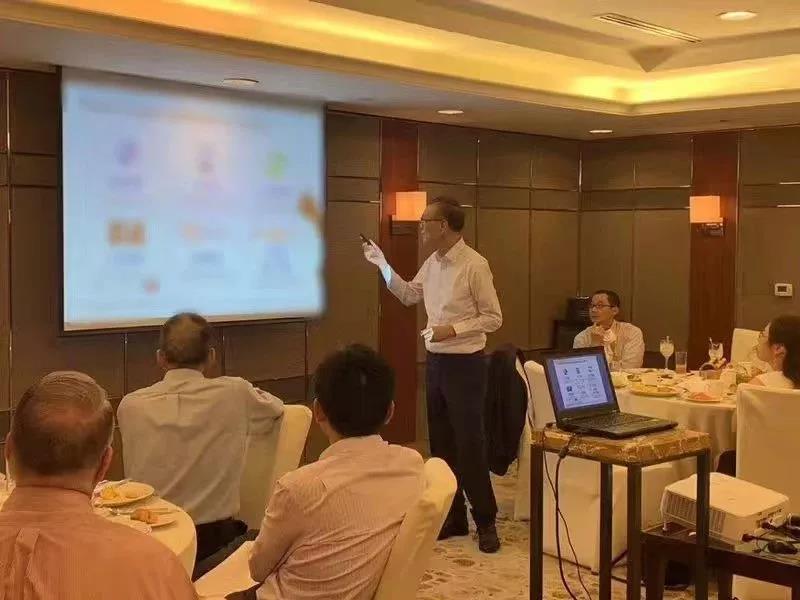
Nonetheless, on April 17, the National Development and Reform Commission announced that foreign ownership limits on ventures producing special-purpose vehicles and new energy vehicles will be eliminated by the end of this year. The foreign ownership cap is to be abandoned for commercial vehicles in 2020 and for conventional passenger vehicles in 2022. Foreign automakers will also no longer be limited to having only two Chinese joint ventures.
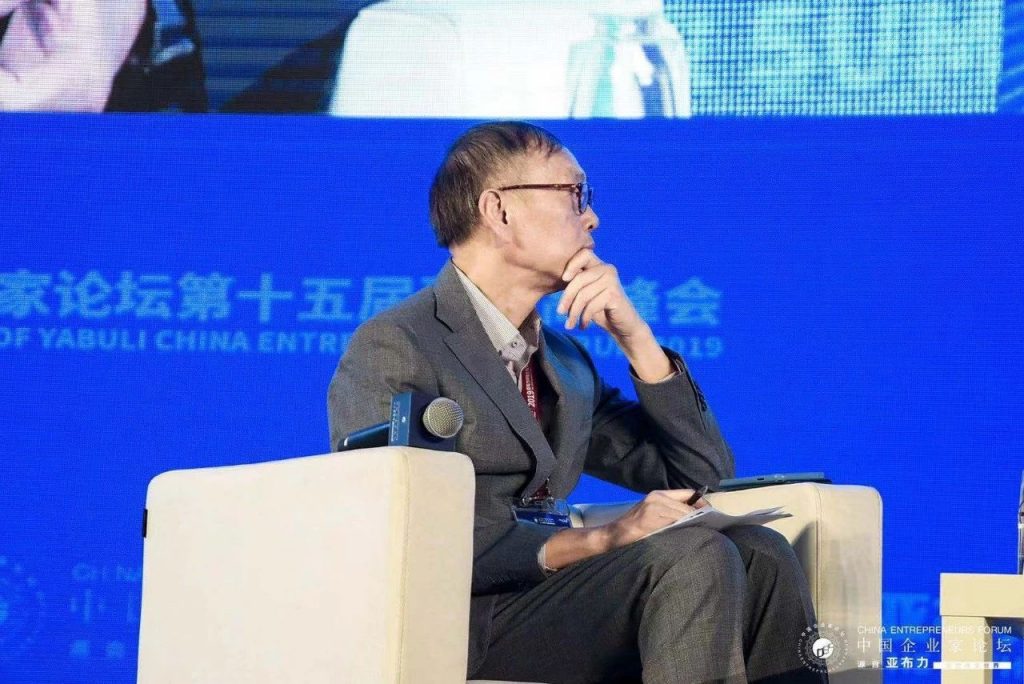
While the regulatory requirement for joint ventures will be scrapped, JVs are unlikely to disappear. Some, and perhaps most, existing joint ventures will probably remain as the foreign carmakers could find it difficult to reach agreement with their partners on restructuring ownership.

With the policy relaxation starting with new energy vehicles, wholly owned foreign carmaking ventures are likely to appear first in this area. U.S. electric car producer Tesla has expressed keenness to take this path.

Yet even with new ventures, foreign carmakers would be well advised to consider the merits of taking on Chinese partners, if not necessarily the same ones.

The leading domestic carmakers today are privately owned companies which have largely grown without the benefit of foreign joint-venture partners, such as Zhejiang Geely Holding Group, Great Wall Motor and BYD. The capabilities of local players are rapidly improving and Chinese brands now hold a 44% market share in the country. They are the pacesetters in the fastest-growing market segments — sport-utility vehicles and electric vehicles.

However, the real disruption of China’s car market is not coming from its traditional manufacturers. The prevalence of the mobile internet has made it possible for individuals to achieve personal mobility without vehicle ownership. Competing in the new business model requires more than the engineering of cars themselves, but also access to a digital ecosystem of mobility services. This new service-centric business model fundamentally transforms the car into a transportation and digital services platform and alters the economics for commercializing connected, electric and autonomous vehicle innovations.

Baidu, like rival Chinese internet companies, is investing in self-driving technologies, seeing the vehicles as a platform to offer a range of lifestyle services. © Reuters

Chinese mobility startups are quickly emerging and expanding, backed by deep-pocketed internet services companies including Tencent Holdings, Alibaba Group Holdings, and Baidu. All three companies are working on self-driving technologies. Both Tencent and Alibaba are also major shareholders of ride-share leader Didi Chuxing. Tencent has also invested in new electric carmaker Nio while Alibaba has invested in rival Xpeng Motors.

The internet companies are seeking to transform automotive hardware into an intelligent platform for a wide variety of online and offline lifestyle services. It is likely that the future mobility revolution will be largely led by Chinese digital companies and their ecosystem partners, especially in areas such as ride hailing and car sharing. Foreign automakers can gain an edge by seeking allies among these Chinese companies rather than taking advantage of their new freedom to operate independently.

Indeed, new forms of Sino-foreign collaboration are likely to surface as companies recognize the need for joint ventures that bring together complementary capabilities. At the same time, the removal of the compulsory joint venture structure will likely eliminate the last inhibitor that has discouraged foreign carmakers from making more use of China as an export platform.

The rapid evolution of China’s automobility industry now requires every participant, Chinese or foreign, to bring relevant capabilities to the world’s largest mobility marketplace. In this emerging arena, all players will have to apply a collaborative innovation model that matches local needs with global capabilities.

Beijing’s decision to scrap its automotive foreign ownership limits is a recognition that China’s industry has become a pacesetter for commercializing new mobility technology thanks to its advanced digital economy. The new policy will alter the industry’s competitive dynamics and accelerate commercialization of new mobility innovations at scale. It is up to foreign carmakers to find their own forward.

Bill Russo is managing director of Gao Feng Advisory Co., a global strategy and management consulting firm with roots in China, and a former Chrysler vice president for Northeast Asia. Edward Tse is Gao Feng’s chief executive.


SCMP | Mindset for Success

By Edward Tse | SCMP
April 20th, 2018

Edward Tse says while foreign companies clamour for China to speed up its market reforms, they need to rethink their strategies to survive in an increasingly competitive business environment

At this year’s Boao Forum, President Xi Jinping reiterated China’s commitment to further open the country’s market to foreign companies and improve intellectual property rights protection, an issue that has long been a concern for foreign companies operating in China.

A couple of weeks before Xi’s speech, at a press conference at the end of China’s Two Sessions, Premier Li Keqiang said China would not force foreign companies to transfer their proprietary technology to China.

Source: Google

While some say the plans lack detail, the leadership’s commitment to opening up China further for foreign business shouldn’t be underestimated.

So, what are the implications for foreign multinational corporations? Is there anything CEOs should do differently?
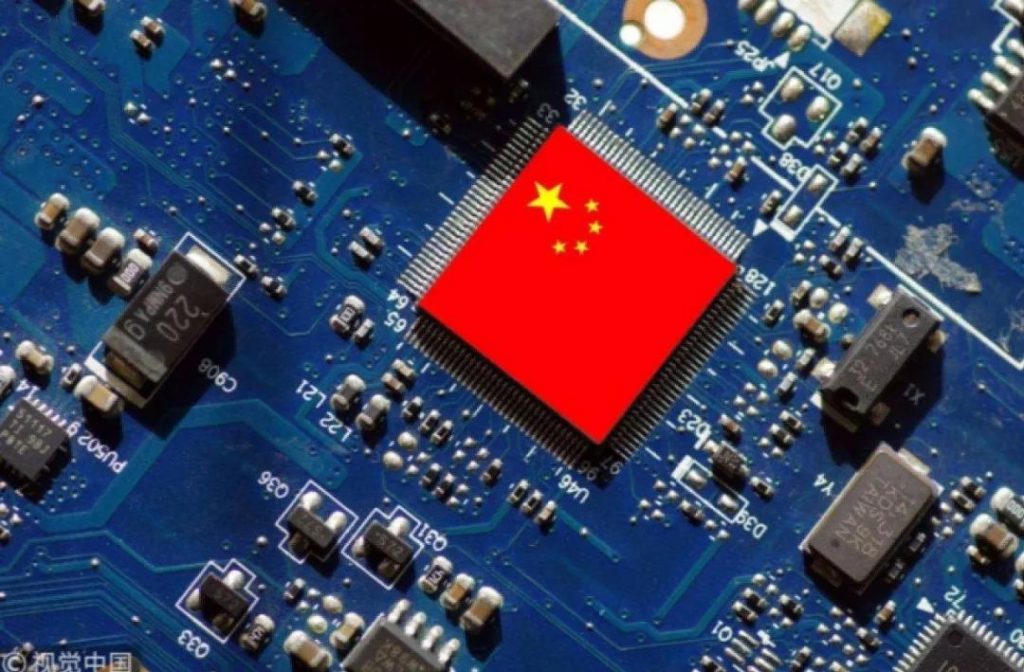

For a long time, some Western politicians, business executives, lobbyists and the media have held the view that foreign companies can’t grasp all the opportunities in China because of a lack of market access, unfair competition and poor intellectual property rights protection.

While such criticism is not unfounded, it is not the whole truth. Since its reform and opening up some 40 years ago, China has been gradually opening different sectors to foreign participation. Today, while some sectors, such as commercial banking and insurance, remain relatively closed, many others are entirely open, such as consumer products, appliances, retail and automotive parts.

Though there is a 50-50 joint venture requirement for automotive manufacturing, China’s automotive market as a whole is very open in terms of products and markets. And, Beijing has just announced it will scrap the foreign ownership restrictions in the automotive manufacturing sector over five years. In the tech sector, pundits have correctly pointed out that Facebook and Twitter are blocked in China, but they forget to mention that LinkedIn, eBay, Airbnb and Amazon e-commerce are not.

Source: Google

A remarkable development in China in recent decades has been the rapid rise of entrepreneurship. Today, China’s economy is best described as a duality (state and non-state). Business innovation, often enabled by technology, is thriving, driven largely by entrepreneurial companies, such as Alibaba and Tencent, which are now some of the world’s largest by market capitalisation. Droves of young people are being entrepreneurial, aspiring to be the next Jack Ma or Pony Ma. An increasing number of fast-growing, sizeable innovative companies are emerging that have built large ecosystems of collaborative partnerships.

China has found its own development path, the “China development model”. At the top, the central government actively plans the direction of the country. At the grass-roots level, entrepreneurship is thriving, driving economic growth. In the middle, local governments compete and sometimes collaborate in clusters of cities within regions. This model has become a major source of resilience for China’s growth.

Given this evolution, corporate decision-makers need an informed and sophisticated view of the country to devise an effective China strategy.

First, their strategy requires a thorough understanding of the China context, which is evolving in a peculiar and multidimensional manner. While China’s reform has been largely gradual, changes can at times be abrupt and rapid. Too often, foreign companies enter China with a market strategy at the business-unit level, using a linear, incremental approach. By focusing on the micro conditions, they often miss the big picture.

Second, China should be at the core of any global strategy. The speed of development, uniqueness, complexity and strategic importance of China requires foreign multinationals to fully embrace China as an integral part of their strategy and organisation, not just one of many markets.

Third, companies should participate in China’s thriving innovations, rather than being bystanders due to a lack of awareness or unwillingness to take risks. Companies could consider engaging in businesses that may not be their traditional core but could provide opportunities for growth, and also form ecosystems with Chinese companies.

I am not advocating diversifying aimlessly. However, I have seen numerous cases when CEOs missed opportunities in China because they either didn’t know about them or felt they needed to focus on their “core competencies”. As a result, they also missed out on the chance to learn from Chinese consumers and the best Chinese companies.

For example, by investing in Autohome, a leading Chinese online automotive advertising platform, Telstra, an Australian telecom and media company, whose core business in China is restricted by foreign participation rules, made a profit of around US$2.5 billion in less than 10 years.

Source: Baidu

Fourth, foreign multinationals should train their China managers to be thought leaders and place them at senior levels. Too often, they treat their managers in China merely as operational people. Strategy and major decisions come from the global or regional headquarters, making it difficult for businesses to come up with an effective strategy for China.

Finally, foreign companies need to shorten their decision-making process and become more agile and flexible. After all, China is evolving fast and competition is intense. Chinese companies are known for bring fast, nimble and innovative. Foreign multinationals should become “more Chinese than the Chinese”.

The rise of China and the simultaneous development of technology are changing the country – and the rest of the world – fast. China is on the verge of a sustained, generational rise that will generate even more opportunities, and challenges, for global businesses. Foreign companies need to figure out how to deal with this.

Clamouring for equal and full market access is not entirely fruitless but that is not where the real game is being played. China will reward those who are innovative and discover new ways of creating value. This requires foreign multinationals to approach China with a different mindset.

China will continue to open up and embrace the rest of the world, perhaps not all in one go, but its direction is clear. CEOs and boards should ask themselves: “How can we capture the potential that China offers us?”

Edward Tse is founder & CEO, Gao Feng Advisory Company, a global strategy and management consulting firm with roots in China. A pioneer in China’s management consulting profession, he led the Greater China operations for two major international management consulting firms for 20 years and is widely known as China’s leading global business strategist. He is author of The China Strategy (2010) and China’s Disruptors (2015).


创新的国度:不论政治,中美两国共享相似的创业文化

文 | 谢祖墀

潜在的中美贸易战是当下全球关注的头条新闻。表面看来,这是美国总统唐纳德•特朗普在践行“美国第一”的竞选口号,也是他将中国视为“战略竞争者”战略中的一部分。

然而目前这种僵局最根本的原因可以追溯到西方国家,尤其是美国,对中国所存在的根本上的不信任。2018年3月3日《经济学人》的封面故事“西方国家如何错读了中国”印证了这一点。根据此篇文章,西方国家期待在把中国融入全球贸易体系的同时将中国的政治经济体系转变成资本主义政治经济,或者简单来说,“他们(中国)将和我们一样。”

然而,中国并没有走西方国家所期待的道路,相反,中国建立了适合于自己的发展模式。在对西方所定义的市场经济保持持续渐进的开放的同时,中国政府依然保持了强大的掌控能力。

当西方国家仍然认为有且只有一种合适的治理方式时,公允地来说,根据实际情况的不同,适合某个国家在某个特定时期的发展道路,很大程度上跟其他国家在不同发展阶段里的发展道路是可以不同的。考虑到过去十年发生的事件,例如2008年的金融危机、唐纳德•特朗普当选美国总统和十多年来缓慢增长的经济,西方政治家和专家们期待每个国家都应该追随西方走过的道路和完全融入西方体系的观点未免过于自负。

Source: Google

另一方面,中国政府帮助中国民众从基本生存状态中解放出来,让许多人如今享受到小康生活。美国历史学家弗朗西斯福山(Francis Fukuyama)在他2014年出版的《Political Order andPolitical Decay》一书中指出,撇除意识形态的不同观点,很难说所有国家只有一种合适的治理方式。

然而除了这些差异外,中国和西方国家之间,尤其与美国之间有着很多相似之处。

中国过去四十年来最令人印象深刻的发展之一就是民营企业的崛起。在中华人民共和国成立的三十年间,民营经济并不是它的经济的一部分,直到文化大革命末期邓小平决定容许进行民营企业的试验。

过去四十年中国发生了翻天覆地的变化。在20世纪90年代末,中国工业领域的国有部分和非国有部分的总营业额和总利润几乎一样。而如今,工业领域中的非国有部分在总营业额和总利润两方面都已经是国有部分的大约四倍。

根据中国社会科学院人口与劳动经济研究所的一项研究表明,中国的新经济——涵盖了从电子商务到网约车服务的基于互联网的商业,在2010年到2016年间的增速是中国整体GDP增速的两倍。新经济相关的公司几乎都来自民营部门。

Source: Google

中国领先的民营企业例如阿里巴巴、腾讯、百度、京东、小米和滴滴出行都被认为是具有高度创新能力的。这些科技创业公司相较于阶级分明的国有企业,更像美国硅谷的公司。中国和美国的创业者都勇于冒险,愿意去接受不确定性并积极地寻求财务回报。这些中国公司都很年轻,并常以硅谷的公司作为榜样。

中国的科技公司也倾向于通过“生态系统”来构建合作伙伴关系。当市场上出现新的机会时,这些公司往往会考虑要不要“跳过去”来抓住这些新的机会,即便它们并不拥有经营新业务所需要的所有能力。它们常利用合作伙伴构建“生态系统”或者“平台”来弥补跳跃的能力欠缺。从合作的立场来说,生态系统的概念包含开放、包容、平等和共赢的思想。这些概念听起来很熟悉,是不是?

随着中国的科技公司寻找创新的灵感或具体工具时,他们经常把目光转移到西方的创新中心,尤其是美国的硅谷、西北部和波士顿地区。中国的科技公司和投资人已经投资了不少美国的初创科技公司。根据《纽约时报》报道,中国的投资者在2010至2016年间投资了300多亿美元在美国的高科技产业上。

根据 CB Insights,腾讯自2011年起已经投资了超过35亿美元在41个硅谷的高科技创业公司,并成为了美国高科技领域的第二大非本土投资者。同时,美国的风险基金例如红杉资本、IDG资本,也在投资中国的科技公司并取得了不错的投资回报。

Source: Google

中美的科技公司和他们的投资者,在思维方式和做事方法上有极多相似的地方,并在多年来建立了很多的共同利益。因此,尽管政治方面,也许一些西方国家对中国没有按他们自以为是的路来走感到失望,但从商业的角度来说,中国和西方,尤其与美国的创新中心,有着很多的共同点并采用了非常相似的理念。实际上,中国和美国的科技生态系统已经相互交织并且很难分割。

中国的成语“求同存异”指在允许差异存在的情况下寻找共同点。西方国家尤其是美国也应该用这种求同存异的目光来看待中国。中国正处于持续崛起的边缘,习近平主席已经明确中国将要在全球领导力和治理上扮演越来越重要的角色。通过更加关注这些相似点,全球的贸易和商业都将获益。

英文原稿于2018年3月29日在《南华早报》发表,版权归该报所有。

关于作者:
谢祖墀博士(Dr. Edward Tse)是高风管理咨询公司(Gao Feng Advisory Company)的创始人兼首席执行官。中国管理咨询业的先行者。过去的20年里,他创立并领导了两大国际管理咨询公司在大中华区的业务。外界评价他为“中国的全球领先商业战略家”和 “谢博士之于中国企业界就如大前研一之于日本企业界”。他曾为数以百计的公司(总部设在中国及其它地区)咨询过所有关键战略和管理方面的业务,涉及中国的各个方面和中国在全球的地位。他还为中国政府在战略、国有企业改革和中国企业走出国门等方面做过咨询。他已发表200多篇文章并出版了4本书,其中包括于国际获奖的《中国战略》和《创业家精神》。谢博士获得了加州大学伯克利分校工程学博士、MBA以及麻省理工学院的工程学学士、硕士。